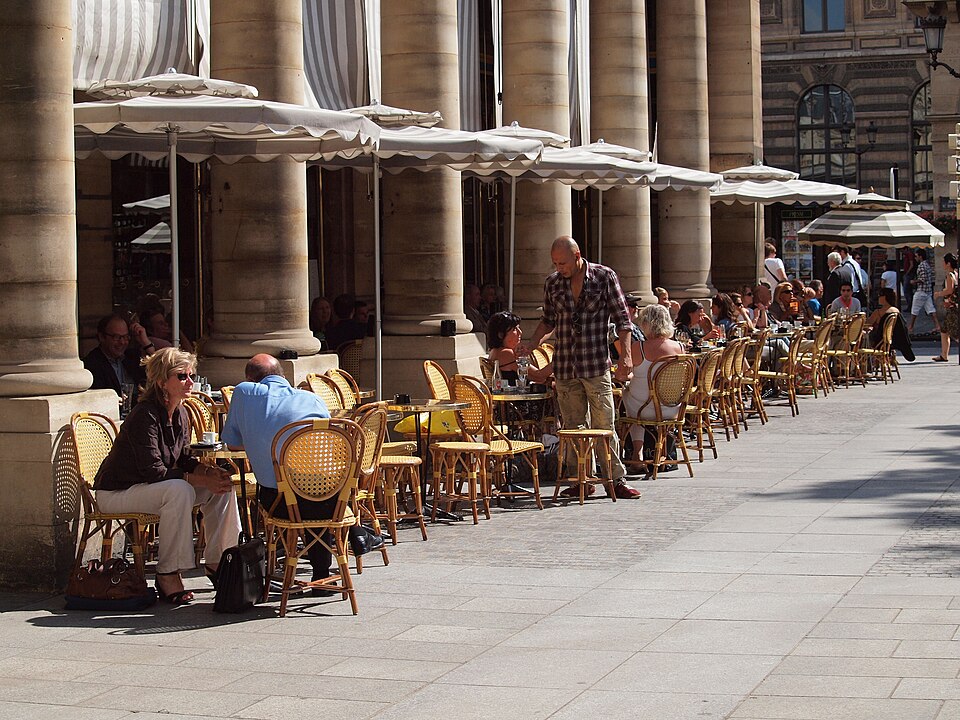
How dining works in Paris
Paris eats on a fixed rhythm: lunch from about noon to 2 p.m., dinner from about 7:30 p.m. In between, most traditional kitchens close, and a bistro at 3:30 p.m. will usually offer you a drink and nothing else.
Places that serve all day advertise service continu. Brasseries, cafés, bouillons and crêperies usually do, which helps when jet lag makes you hungry at odd hours.
Different from home
Your server is a career professional, paid a salary, and nobody is trying to turn your table. The meal is yours for the evening, and the bill will not appear until you ask for it. Catch the server's eye and say l'addition, s'il vous plaît. Waving or snapping is rude. A server who leaves you alone is simply being polite.
Reservations and TheFork
Book dinner almost everywhere except cafés, brasseries and bouillons. Most restaurants take online bookings on their own site or through TheFork (LaFourchette in French), the Paris equivalent of OpenTable. Many list discounts there of 20 to 50 percent off à la carte prices on quieter nights; drinks and set menus are usually excluded.
The hottest bistros release tables online two to four weeks ahead and fill within minutes. For Michelin-starred restaurants, book one to three months out and expect to give a card number; no-show fees of €50 to €200 (about $56 to $224) per person are common.
Many restaurants confirm by text the day before and may give away your table if you do not reply or arrive 15 minutes late without calling.
Terrace, inside or at the bar
At cafés, the same drink can carry two or three prices: standing at the counter (au comptoir) is cheapest, and a terrace table often costs most. An espresso might cost €1.50 to €2.50 (about $1.70 to $2.80) at the bar and a euro or two more outside.
Terraces are where smokers sit. Smoking is banned indoors, and a 2025 rule extended the ban to parks, beaches and bus shelters, but café terraces were left out. If smoke bothers you, sit inside.
Lunch formules: the best deal in town
The weekday lunch formule or menu du jour is how Parisians eat well for less. You choose two courses (starter and main, or main and dessert) or all three for a fixed price, often €18 to €32 (about $20 to $36) at a neighborhood bistro. Dinner from the same kitchen often costs far more. Look for the chalkboard (ardoise) by the door.
The bill, water and bread
- Service compris. Service is built into every menu price by law. Rounding up or leaving €2 to €5 (about $2 to $6) for a good meal is generous. Card terminals sometimes prompt for a tip; you can skip it. See Money for details.
- Water. A carafe of tap water is free and safe. If you just ask for "water," you may get a €6 (about $7) bottle of Evian.
- Bread is free and refilled. It goes on the tablecloth, not a side plate.
- No free refills on soda or coffee. Ice is rare unless you ask (des glaçons).
- Closures. Many independent bistros close Sunday and Monday, and some close for two to four weeks in August.
For what to say at the table and the unwritten rules, see Etiquette. For a menu decoder, dish glossary and how to order steak, see French Food.
Restaurant types decoded
Café
For coffee, a glass of wine, a croque-monsieur, a salad or an omelet. Food is simple and often reheated. You can sit for hours over one coffee, and the people-watching is the main attraction.
Bistro
A small, often family-run restaurant with a short menu of classics: terrine, steak frites, duck confit, crème caramel. Tables are close together; book ahead.
Brasserie
Big brass-and-mirrors rooms that began as Alsatian beer halls, serving shellfish platters, choucroute, tartare and onion soup nonstop, often until midnight.
Bouillon
Nineteenth-century workers' canteens revived since 2017. Classic French dishes at very low prices in grand old dining rooms. Fast service, lines at peak times, few or no reservations.
Néo-bistro
Young chefs cooking creative, market-driven food in casual rooms, often as a set tasting menu with natural wine. The style is also called bistronomie. These are the hardest tables to book.
Wine bar (bar à vin, cave à manger)
A wine shop or bar serving small plates, charcuterie and cheese, often natural wine. Great for a light dinner.
Crêperie
Breton restaurants serving savory buckwheat galettes and sweet crêpes, with cider in a bowl. Montparnasse, where Breton trains arrive, has a cluster.
Fine dining (gastronomique)
Michelin-level restaurants with tasting menus and sommeliers. Dress smartly, though jackets are rarely required. Lunch is the affordable way in.
Also useful: a salon de thé (tea room) for pastries and brunch, and a traiteur, a deli with takeaway dishes for picnics and apartment stays.
Where to eat, by budget
These are long-established places. Hours change, so check each restaurant's site the week you go. Price tiers reflect a main course per person: $ under €20, $$ €20–40, $$$ €40–90, $$$$ over €90 or tasting menus only.
Bouillons and cheap classics
Bouillon Chartier Grands Boulevards
A vast 1896 dining hall at 7 rue du Faubourg-Montmartre, with waiters in black waistcoats writing your bill on the paper tablecloth. Starters start around €1 and mains around €7, and a full meal can come in under €20. It is open every day from 11:30 a.m. to midnight and takes no reservations; the line moves fast. Sister branches on boulevard du Montparnasse and by Gare de l'Est are often less crowded.
Bouillon Pigalle and Bouillon République
The places that relaunched the bouillon craze. Big rooms, service from late morning to midnight every day, very low prices for French classics, and a cheerful crowd of locals and visitors. Both now take online reservations, which saves a long wait at peak times.
Bouillon Julien
A 1906 Art Nouveau room at 16 rue du Faubourg-Saint-Denis, with painted glass panels and carved mahogany, serving bouillon-priced classics every day until midnight. It takes reservations, and it is one of the cheapest ways to eat in a truly beautiful Paris dining room.
Bouillon Racine
Another listed Art Nouveau interior near the Sorbonne, a little more upscale than the other bouillons, with reliable French classics. Book ahead for dinner.
L'As du Fallafel
The famous falafel pita on rue des Rosiers, stuffed with fried eggplant, cabbage and tahini. Get it to go from the window for the fastest line. It closes from Friday afternoon through Saturday for the Sabbath.
Breizh Café
The crêperie that made buckwheat galettes fashionable, using organic flour and Breton butter, with a long list of craft ciders. It now has more than a dozen Paris branches, including the Marais, Montorgueil, Odéon and rue Cler. Book online or arrive early.
Classic brasseries and famous cafés
Le Train Bleu
A gilded 1901 dining room upstairs in the train station, with painted ceilings of the cities the trains served. The food is classic and pricey. The lounge bar, open from 7:30 a.m., is a cheaper way to see the setting before a train south. Book only on its own site or TheFork; the restaurant warns of fake booking sites.
Bofinger
Founded in 1864 at 5–7 rue de la Bastille, with a stained-glass dome and an Alsatian menu of choucroute and seafood towers. Open every day including holidays, which makes it a good Sunday or Monday option.
La Coupole
The 1927 Art Deco brasserie of the Lost Generation era, with painted pillars, seafood platters and a lamb curry served at the table since the early days. Huge, lively and open from 8 a.m. to midnight every day.
Le Grand Colbert
A grand 19th-century brasserie at 2 rue Vivienne that many Americans know from the film Something's Gotta Give. Open daily from noon to midnight; book ahead. Order the roast chicken and stay for the room.
Café de Flore and Les Deux Magots
Neighboring literary cafés of Sartre, Beauvoir, Hemingway and Baldwin. You pay heavily for the setting, with a coffee costing several times the street average. Go once for a hot chocolate or breakfast and enjoy it.
Beloved bistros and néo-bistros
Le Bistrot Paul Bert
The textbook Paris bistro: zinc bar, chalkboard menu, a great steak au poivre and one of the city's best Paris-Brest pastries. Book a few days ahead.
Chez Janou
A Provençal bistro at 2 rue Roger-Verlomme, off the Place des Vosges, with dozens of pastis on the shelf and a chocolate mousse served from a giant bowl. Open daily for lunch and dinner; book for dinner.
Septime and Clamato
Septime, the néo-bistro that defined the style, serves a set menu Monday to Friday only; bookings open online at 10 a.m. for the following three weeks and go fast. Next door, its seafood bar Clamato is open daily and takes no reservations, so it is far easier to get into.
Watch out
The worst meals in Paris are next to the biggest sights. Warning signs: photo menus in six languages and a host on the sidewalk steering you in. Rue de la Huchette, the Champs-Élysées and the Eiffel Tower area are the main offenders. Walk ten minutes away and look for a short handwritten menu.
Michelin-starred Paris
The 2026 Michelin Guide for France, announced on March 16, 2026, kept nine restaurants in Paris at three stars. The big news was a demotion: L'Ambroisie on the Place des Vosges, a three-star fixture for decades, dropped to two stars.
| Three-star restaurant (2026) | Area | Known for |
|---|---|---|
| Kei | 1st | Kei Kobayashi's French cooking with Japanese precision |
| Plénitude | 1st, Cheval Blanc hotel | Arnaud Donckele's sauce-centered menus, in the Samaritaine building |
| Arpège | 7th | Alain Passard's vegetable-focused cooking from his own farms |
| Alléno Paris au Pavillon Ledoyen | 8th | Yannick Alléno in a historic pavilion off the Champs-Élysées |
| Le Cinq | 8th, Four Seasons George V | Christian Le Squer's classic haute cuisine |
| Épicure | 8th, Le Bristol | Palace-hotel French cooking overlooking a garden |
| Le Gabriel | 8th, La Réserve | Jérôme Banctel's refined, spice-tinged menus |
| Pierre Gagnaire | 8th | One of France's most inventive chefs, on rue Balzac |
| Le Pré Catelan | 16th, Bois de Boulogne | Frédéric Anton in a Napoleon III pavilion in the park |
Tasting menus at this level typically run several hundred euros per person before wine; check each restaurant's site, and look for a lunch menu, the most affordable way in. Book one to three months ahead. The 2026 guide also promoted Hakuba (1st), Alliance (5th) and Virtus (12th) to two stars, and gave first stars to 11 Paris restaurants, including Monsieur Dior by Yannick Alléno and Pilgrim.
Save money
One-star restaurants often serve weekday lunch menus at a fraction of the dinner price, from the same kitchen. Also look at Michelin's Bib Gourmand list on the Michelin Guide site, which flags good-value restaurants.
Bakeries, pastry and viennoiserie
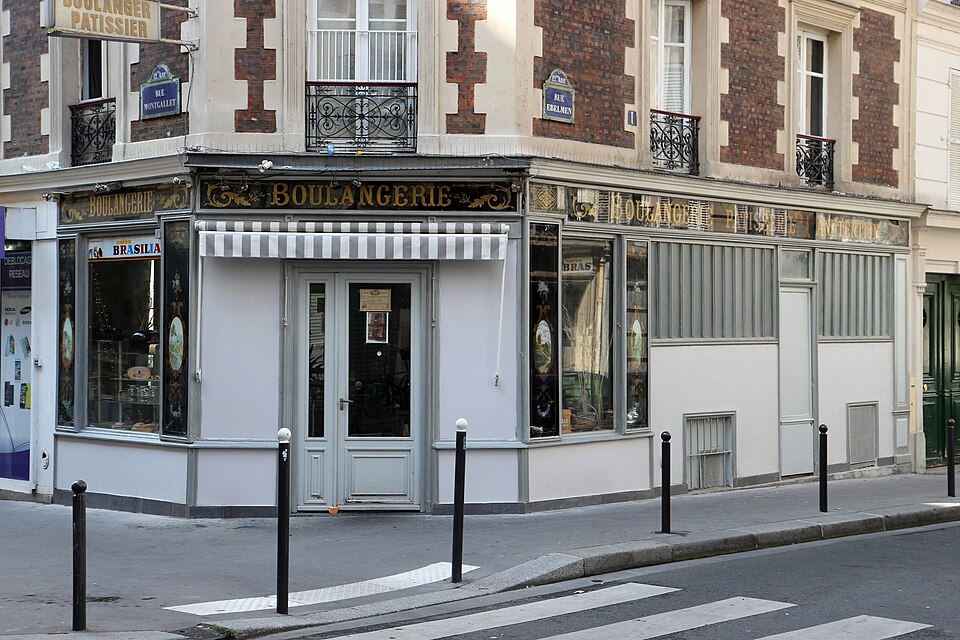
Paris has more than a thousand bakeries, and the one on your corner is probably good. Most close one or two days a week, posted on the door. A line at 7:30 a.m. or 7 p.m. is a good sign.
The 2026 best baguette in Paris
Every year the City of Paris holds the Grand Prix de la baguette de tradition française. The 2026 winner, announced in late February, is Sithamparappillai Jegatheepan of Fournil Didot, 103 rue Didot in the 14th arrondissement, on his first try at the contest. He receives €4,000 (about $4,480), and by tradition the winner supplies the Élysée Palace with bread for a year. The bakery sits on a residential street in the south of the 14th.
When ordering, ask for une tradition instead of une baguette. A baguette de tradition is defined by law: flour, water, salt and yeast or sourdough only, with no additives, giving a crisper crust and creamier crumb for a few cents more. Ask for it bien cuite if you like a dark crust.
Famous bakeries and pâtisseries
Poilâne
The original 1932 shop, with round sourdough loaves from a wood-fired oven below. Buy a quarter loaf and a bag of punitions butter cookies.
Stohrer
Founded in 1730, the oldest pâtisserie in Paris, credited with inventing the rum baba. Its painted interior is a listed monument.
Du Pain et des Idées
Christophe Vasseur's old-style shop at 34 rue Yves-Toudic, known for its pain des amis and pistachio-chocolate escargots. It has long closed on weekends.
Pierre Hermé
Known for the Ispahan (rose, raspberry, lychee) and some of the most celebrated macarons in Paris; the 72 rue Bonaparte shop is the classic stop.
Ladurée
The pastel-green macaron house. The rue Royale shop is the historic one, with a tearoom.
Angelina
A Belle Époque tearoom since 1903, famous for very thick hot chocolate and its chestnut Mont-Blanc. Expect a weekend line.
Viennoiserie guide
- Croissant au beurre: the all-butter croissant. Some bakeries also sell a cheaper croissant ordinaire made with other fats.
- Pain au chocolat: two batons of dark chocolate in croissant dough. In the Southwest they call it a chocolatine.
- Pain aux raisins or escargot: a spiral with pastry cream and raisins, now often flavored with pistachio or praline.
- Chausson aux pommes (apple turnover) and kouign-amann (a caramelized, buttery Breton cake).
- Chouquettes: small puffs topped with pearl sugar, sold by the bag or by weight. Kids love them.
Pastries to try at least once: éclair, Paris-Brest, millefeuille, tarte Tatin, flan pâtissier, Saint-Honoré and a fruit tart in season. For a quick lunch, most bakeries sell a formule of sandwich, drink and pastry for around €8 to €12 (about $9 to $13).
Insider tip
Bakeries that place in the baguette contest, or in the professional bakers' croissant and galette contests, post the certificate in the window. A "lauréat" sign from any recent year is a reliable signal.
Markets and food streets
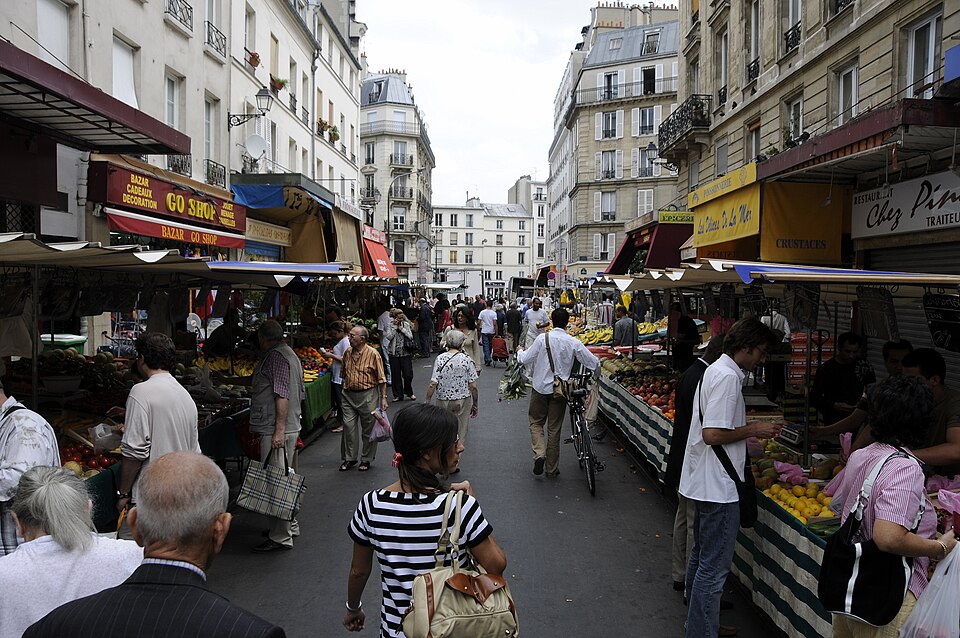
Paris has more than 70 open-air markets plus about a dozen covered ones. Open-air markets run mornings, roughly 7 a.m. to 1:30 p.m. (to about 2:30 p.m. on Sunday); arrive by 10. Prices are per kilo, and many vendors prefer to pick fruit for you, so ask before touching.
| Market | Area | Type | Days | Good for |
|---|---|---|---|---|
| Marché des Enfants Rouges | 3rd, rue de Bretagne | Covered, early 1600s | Tue–Sun (closed Mon) | Lunch at Moroccan, Japanese, Italian and French stalls |
| Marché d'Aligre and Marché Beauvau | 12th | Open-air plus covered hall | Tue–Sun mornings | Cheap produce, cheese, a small flea market, wine bar next door |
| Marché Bastille | 11th, bd Richard-Lenoir | Open-air | Thu and Sun mornings | One of the biggest; Sunday is the show |
| Marché Raspail | 6th | Open-air | Tue and Fri; organic market Sun | The Sunday organic market and its potato galettes |
| Marché Président-Wilson | 16th | Open-air | Wed and Sat mornings | Upscale produce, chefs' suppliers, near the Trocadéro |
| Marché Saxe-Breteuil | 7th | Open-air | Thu and Sat mornings | Eiffel Tower views between stalls |
Covered markets keep longer hours, often reopening in the late afternoon, and nearly all close Monday. See the City of Paris market listings at paris.fr for every market and its days.
Food streets
Market streets are lined with bakeries, cheese shops and produce stands. They are liveliest Tuesday to Saturday and Sunday morning.
- Rue Montorgueil (2nd): pedestrian, central, with Stohrer, cafés and fishmongers.
- Rue Cler (7th): the classic market street near the Eiffel Tower, good for picnic supplies before the Champ de Mars.
- Rue des Martyrs (9th) and rue Mouffetard (5th): pastry, cheese and produce shops, busiest on weekend mornings.
- Rue Sainte-Anne (1st–2nd): Paris's Japanese and Korean quarter for ramen, udon and gyoza.
- Avenue de Choisy and avenue d'Ivry (13th): Chinatown, with Vietnamese pho shops and big Asian supermarkets.
- Belleville (19th–20th): Chinese, Vietnamese and North African food side by side, at low prices.
Cheese, chocolate and ice cream
Cheese shops
A good fromager ages cheese in its own cellars. Say how many people and when you will eat it, and they will pick cheeses ripe for that day. Ask for vacuum packing (sous vide) for travel, and read Shopping & Bringing It Home for US customs rules on cheese and meat.
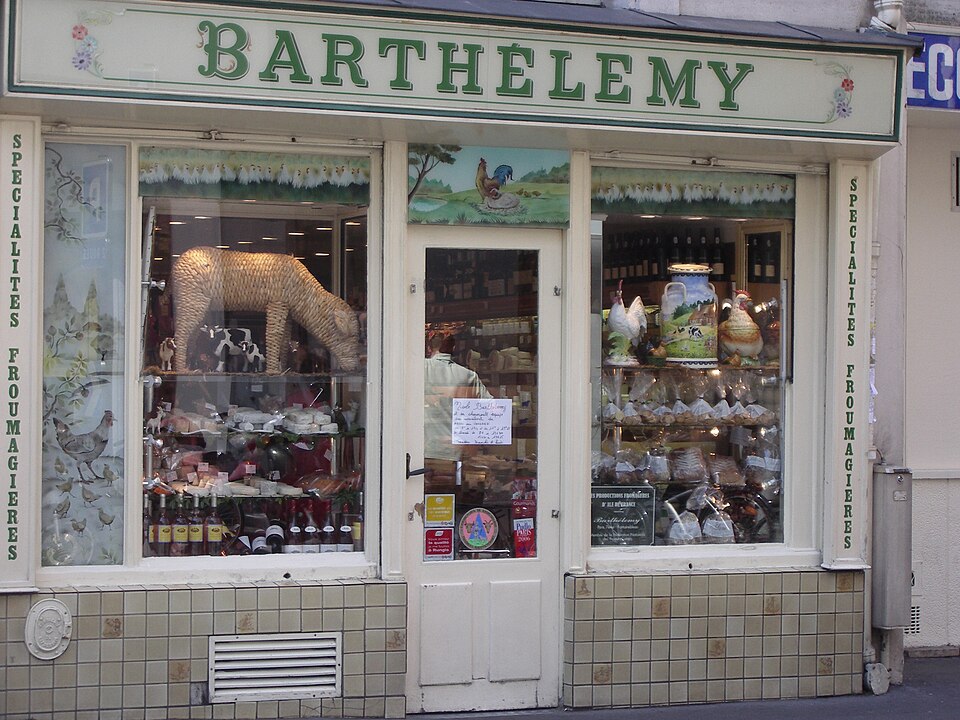
Barthélémy
A tiny, old-fashioned shop long known as a supplier to the Élysée Palace, famous for its Mont d'Or in winter and perfectly aged Comté.
Laurent Dubois
Run by a Meilleur Ouvrier de France (France's top craft honor). The Maubert shop in the Latin Quarter is easy to combine with Notre-Dame.
Quatrehomme
Another shop led by a Meilleur Ouvrier de France, at 62 rue de Sèvres near Le Bon Marché, with branches on rue des Martyrs and in the 12th and 13th. Known for its aged Beaufort and Comté.
Chocolate
- Patrick Roger: chocolate sculptures in the windows and intense ganaches; several shops, including place de la Madeleine.
- Jacques Genin (3rd, rue de Turenne): caramels, pâtes de fruits and a millefeuille assembled to order.
- À la Mère de Famille (9th, rue du Faubourg-Montmartre): a confectioner since 1761 with a beautiful old storefront.
- Debauve & Gallais (7th, rue des Saints-Pères): chocolatier to the French kings since 1800.
For hot chocolate, try Angelina (rue de Rivoli), Carette (Trocadéro and Place des Vosges) or the chocolat à l'ancienne at Café de Flore. French hot chocolate is thick, rich and served without whipped cream unless you ask for chantilly.
Ice cream
Berthillon, on rue Saint-Louis-en-l'Île on the Île Saint-Louis, has been the city's benchmark since 1954. The original shop has traditionally closed Monday and Tuesday and for part of the summer, but many cafés on the island sell its scoops. In the Marais, Une Glace à Paris, at 15 rue Sainte-Croix-de-la-Bretonnerie and co-founded by a Meilleur Ouvrier de France, is excellent; it opens Wednesday to Sunday afternoons. A double scoop typically costs €5 to €7 (about $6 to $8).
Coffee, breakfast and brunch
How to order coffee
Ask for un café and you get an espresso. There is no bottomless drip coffee.
- Un café or un express: espresso.
- Un allongé or café américain: espresso topped with hot water, the closest to American coffee.
- Une noisette: espresso with a dash of milk.
- Un café crème or un crème: espresso with steamed milk, close to a latte. Mostly a morning drink.
- Un déca: decaf.
Specialty coffee
Classic cafés sell atmosphere more than great coffee. For flat whites, filter coffee and oat-milk lattes, Paris has a strong specialty scene. Long-standing names include KB (where rue des Martyrs meets avenue Trudaine in the 9th, plus a big roastery café near Bastille), Ten Belles (10 rue de la Grange-aux-Belles by the Canal Saint-Martin, plus branches in the 6th and 11th) and Coutume (rue du Faubourg-Poissonnière in the 9th and other shops). Many close by 5 or 6 p.m.
Breakfast
The French breakfast is small: coffee, a croissant or a tartine (half a baguette with butter and jam), and maybe orange juice. Cafés sell this as a formule petit-déjeuner, usually for about €8 to €15 (about $9 to $17). Hotel breakfast buffets often cost €20 to €40 (about $22 to $45) per person, so compare before booking a rate that includes it.
Brunch
Weekend brunch is a Paris institution, usually served from about 11 a.m. to 3 or 4 p.m. as a set menu. Holybelly, at 5 rue Lucien-Sampaix in the 10th, serves pancakes and excellent coffee daily from 9 a.m. to about 4 p.m. It takes no reservations and seats groups of six at most, so expect a line on weekends. Tea rooms, hotels and many cafés also do brunch; book ahead for Sunday.
Wine and cocktail bars
Paris drinking culture centers on a glass of wine with friends from 6 to 8 p.m., called the apéro, often with a plate of charcuterie. Many bars run a happy hour in the early evening. A glass of house wine typically costs €5 to €9 (about $6 to $10), and a craft cocktail €13 to €18 (about $15 to $20) in the center.
Le Baron Rouge
A standing-room wine bar at 1 rue Théophile-Roussel, with barrels on the bar and cheap glasses. On weekends from mid-September to late April, oysters are shucked outside. Open daily (shorter hours on Sunday and Monday), no reservations; perfect after the Sunday Aligre market.
Willi's Wine Bar
A friendly wine bar and restaurant at 13 rue des Petits-Champs, opened in 1980 by an Englishman and known for Rhône wines and its art posters. Open Monday to Saturday, noon to 11 p.m.
Harry's New York Bar
An American bar since 1911, where the Bloody Mary and the Sidecar are said to have been born. Wood paneling, college pennants and a piano bar downstairs.
Little Red Door
A regular on world's-best-bar lists, with a concept menu built on local producers. Arrive early or expect a wait.
Bar Hemingway
A small wood-paneled bar in the Ritz named for its most famous regular. Cocktails are very expensive, so think of it as a once-a-trip splurge.
For rooftop bars, jazz, clubs and late nights, see Shopping & Nightlife in Paris. For French wine regions and how to read a wine list, see Wine.
Different from home
The legal drinking age in France is 18, and bars rarely card. Ordering a beer gets you a demi (about 8.5 oz, 25 cl) unless you ask for a pinte. Drinks are paid for when you leave, not per round, and there is no need to tip a bartender per drink.
Eating well on a budget
If you eat like a local, Paris costs less than New York or San Francisco. A day of excellent food can cost €35 to €50 (about $39 to $56) per person.
- Make lunch your main meal and order the formule.
- Eat at a bouillon for dinner: three courses with wine for well under €30 (about $34).
- Buy a bakery sandwich. A jambon-beurre (ham and butter on baguette) is a Paris staple at about €4 to €7 (about $4.50 to $8).
- Get crêpes from a street stand, falafel in the Marais or pho in the 13th.
- Shop at Monoprix, Franprix, Carrefour City or a market for picnic food and apartment breakfasts.
- Drink the free tap water and the house wine (vin de la maison, by the carafe or pichet).
- Use TheFork discounts and stand at the counter for coffee.
For daily budgets and cost examples, see Money and Budget Calculator.
Picnicking: spots and rules
A picnic of bread, cheese, charcuterie, fruit and a bottle of wine is one of the best meals in Paris and costs €15 to €25 (about $17 to $28) for two. Pick up a corkscrew (tire-bouchon) and plastic cups at Monoprix.
- Square du Vert-Galant: the tree-shaded tip of the Île de la Cité, at water level below the Pont Neuf.
- Champ de Mars: lawns facing the Eiffel Tower, sometimes fenced off for events.
- Canal Saint-Martin: locals sit on the canal edge on warm evenings.
- Parc des Buttes-Chaumont (19th): hilly lawns where sitting on the grass is allowed.
- Luxembourg Gardens and Tuileries: grab one of the green metal chairs; most lawns here are off-limits.
- Seine banks: the car-free quays near the Musée d'Orsay and on the Île Saint-Louis.
Watch out
Signs reading pelouse interdite mean keep off the grass, and park guards enforce it. Parks close at dusk, with closing times posted at the gates. Police can ban drinking alcohol in public in specific areas and hours, which often happens along the canals and some Seine quays on summer evenings, so check for posted notices. Barbecues are banned in parks, and you must take your trash with you.
Food tours and cooking classes in English
A guided tasting walk early in your trip teaches you what to order for the rest of it. Tours usually last about three hours and include enough food for lunch; cooking classes run two to five hours. Expect roughly €100 to €200 (about $112 to $224) per person, and book a week or more ahead in spring and fall.
Paris by Mouth
Small-group tasting walks in the North and South Marais, the Left Bank and Saint-Germain, plus a cheese workshop, from the team behind one of the best English-language Paris food sites.
La Cuisine Paris
An English-speaking cooking school at 80 quai de l'Hôtel-de-Ville, overlooking the Seine, with classes on macarons, croissants, sauces and market-to-table cooking.
Le Cordon Bleu Paris
The famous school where Julia Child trained runs workshops and demonstrations for the public at its campus on quai André-Citroën and at the Hôtel de la Marine on Place de la Concorde. Check each workshop's language before booking.
Dietary needs
Paris restaurants are more flexible than their reputation, but substitutions are less routine than in the US. Tell your server at the start and keep the request simple. Under EU law, restaurants must be able to tell you which of 14 major allergens are in each dish, including gluten, nuts, peanuts, milk, eggs, fish, shellfish and sesame.
Insider tip
Carry a card in French that explains your allergy or diet in two sentences, and show it to the server. Useful words: allergie, sans gluten (gluten-free), maladie cœliaque (celiac), fruits à coque (tree nuts), arachides (peanuts), sans lactose. More phrases are on French Phrases.
Vegetarian and vegan
Say je suis végétarien (or végétarienne) or je suis vegan. Watch for lardons in salads, meat stock in soups and sauces, and fish offered as "vegetarian." Bistros usually have one vegetarian main; Asian, Lebanese and Indian restaurants offer more.
- Le Potager de Charlotte (rue de la Tour-d'Auvergne in the 9th, and the 17th): fully vegan, plant-based French cooking, with Sunday brunch.
- Hank (Marais): vegan burgers and pizza, cheap and fast.
- Arpège: the three-star restaurant where vegetables are the main event.
- Passage Brady (10th): a covered arcade of inexpensive Indian and Pakistani restaurants with many vegetarian dishes.
Gluten-free
Many restaurants now mark gluten-free dishes. Galettes at crêperies are made from buckwheat, which is gluten-free, but many crêperies add wheat flour or cook on shared griddles, so ask for 100 percent buckwheat (100 % sarrasin). Chambelland (11th) is a dedicated gluten-free bakery using rice and buckwheat flours. Macarons are made from almond flour and are naturally gluten-free, though not certified.
Kosher
The Marais around rue des Rosiers has been the heart of Jewish Paris since the 19th century. Look for a Beth Din of Paris certificate in the window, since many places sell kosher-style food without supervision. Certified restaurants close from Friday afternoon to Saturday night. Larger kosher communities, with many more restaurants, are in the 17th, the 19th and around rue Richer in the 9th.
Halal
Halal butchers and restaurants are common in Belleville, Barbès and along rue Jean-Pierre-Timbaud in the 11th, and signs say so. The tea room at the Grande Mosquée de Paris in the 5th, by the Jardin des Plantes, has long served mint tea and pastries in a tiled courtyard; check that it is open before you go. For tagines and couscous, ask at the counter whether meat is halal.
Add it to a route in the trip builder, or ask us to plan the hotels, trains and guides for you.