Shopping basics
Most shops open around 10 a.m. and close at 7 or 8 p.m., Monday through Saturday. Small independent boutiques may open at 11, close for lunch, or stay shut on Monday. Food shops are the early birds: bakeries open by 7 a.m., and many neighborhood shops close on Sunday afternoon and Monday.
Prices include 20 percent VAT (TVA), so the price on the tag is what you pay. As a non-EU resident, you can claim much of that tax back when you spend more than €100 (about $112) in one store on the same day. The process, the electronic PABLO kiosks at the airport and the US customs allowance are covered on Shopping & Bringing It Home.
For clothing and shoe sizes, see the size charts on Converters. French sizes run differently from US sizes, and many boutiques do not stock above a French 44 (US 12) for women.
Different from home
Say bonjour when you walk into any shop and merci, au revoir when you leave. In small boutiques, staff expect to help you, so ask before pulling items off the shelves or unfolding sweaters. Returns are not a legal right in French stores the way Americans expect; many chains accept them within 30 days, but small shops may offer only an exchange or store credit. Ask before you pay.
Department stores
The grands magasins are sights in their own right, with domes, rooftops and food halls. All four below are in Sunday-trading zones and open seven days a week, with shorter hours on Sunday.
Galeries Lafayette Haussmann
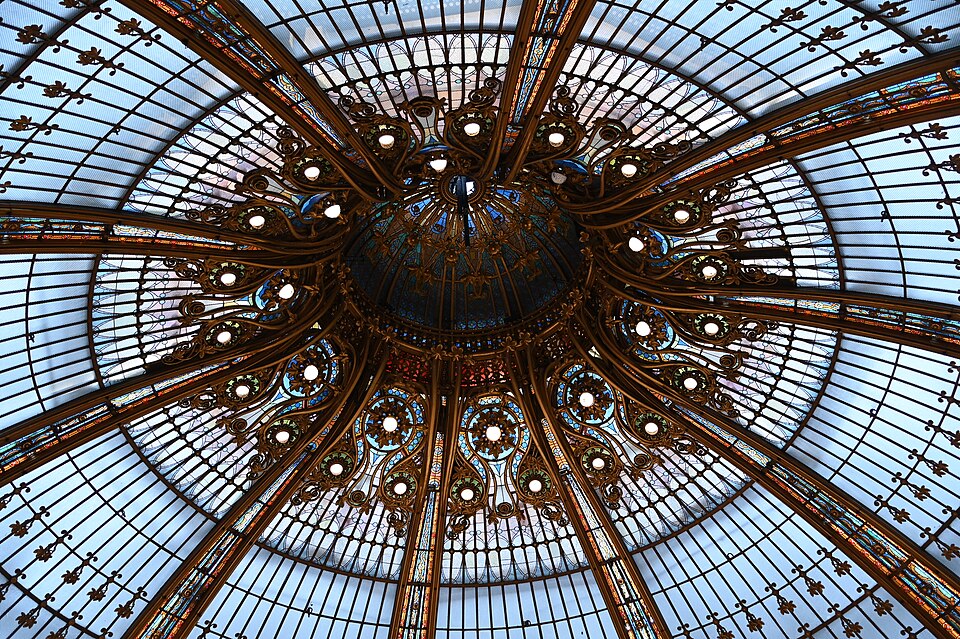
The 1912 stained-glass dome is the photo; stand on the glass walkway that juts out under it if you have a head for heights. The free rooftop terrace has one of the best views in Paris, from the Opéra roof to the Eiffel Tower; it closes in bad weather. The Gourmet food hall, with a deli on the ground floor and restaurants above, is in the separate home building across rue de Mogador. International visitors can ask at the welcome desk about the current tourist discount offer, which you can combine with the VAT refund.
Printemps Haussmann
The rival store next door, with its own stained-glass dome and a seasonal rooftop terrace with views across the city. It also offers international visitors a tourist discount, and its beauty floor is enormous.
Le Bon Marché
The world's first modern department store, opened in 1852, and the calmest of the four. Expect a carefully chosen mix of designer and French brands, Left Bank shoppers rather than tour groups, and La Grande Épicerie de Paris, the city's most beautiful food hall, next door.
La Samaritaine
Reopened in 2021 after a 16-year restoration by LVMH, with an Art Nouveau peacock fresco, a glass-roofed atrium and a Seine-side wing that houses the Cheval Blanc hotel. The store, at 9 rue de la Monnaie, leans toward fashion, beauty and watches and is open daily from 10 a.m. to 8 p.m. Go for the architecture even if you buy nothing.
Save money
Bring your passport. You need it for the department stores' tourist discount and for the VAT refund form. Stores can usually combine purchases from different departments on one day into a single refund file, so do your big shopping in one store in one visit.
Shopping streets and neighborhoods
Luxury streets
Avenue Montaigne (8th) has the couture flagships: Dior's huge 30 Montaigne store and museum, Chanel, Prada, Valentino and more. Rue du Faubourg Saint-Honoré and rue Saint-Honoré (1st and 8th) stretch from Hermès's historic shop at number 24 to Goyard and dozens of designer boutiques. Place Vendôme is the address for high jewelry: Cartier, Boucheron, Van Cleef & Arpels. The Champs-Élysées is mostly chains and flagships now, with Louis Vuitton, Guerlain, Sephora and Ladurée the best-known stops.
At Hermès and Chanel, popular bags are rarely available to walk-in shoppers. Hermès allocates its famous leather bags to clients with purchase histories, so go in expecting to browse.
The Marais
The Marais (3rd and 4th) is the best neighborhood for an afternoon of shopping, and most shops open on Sunday. The upper Marais around rue de Bretagne, rue Charlot, rue de Poitou and rue Vieille-du-Temple is full of French designers, concept stores and perfume houses. The lower Marais around rue des Francs-Bourgeois and rue des Rosiers has the familiar French chains: Sézane, Maje, Sandro, A.P.C., Diptyque. The Marais is also the center of vintage and secondhand shopping.
Saint-Germain-des-Prés
On the Left Bank, the streets between Saint-Sulpice and Le Bon Marché (rue du Cherche-Midi, rue du Four, rue de Grenelle, rue Bonaparte) mix French designer boutiques, shoe shops, antique dealers and art galleries. The galleries on rue de Seine and rue des Beaux-Arts are open to browse for free. The famous pharmacy on rue du Four and the pastry shops on rue Bonaparte make this an easy shopping half-day.
Other areas
- Rue Saint-Honoré and Palais-Royal (1st): small designers, perfumers and the arcades of the Palais-Royal garden.
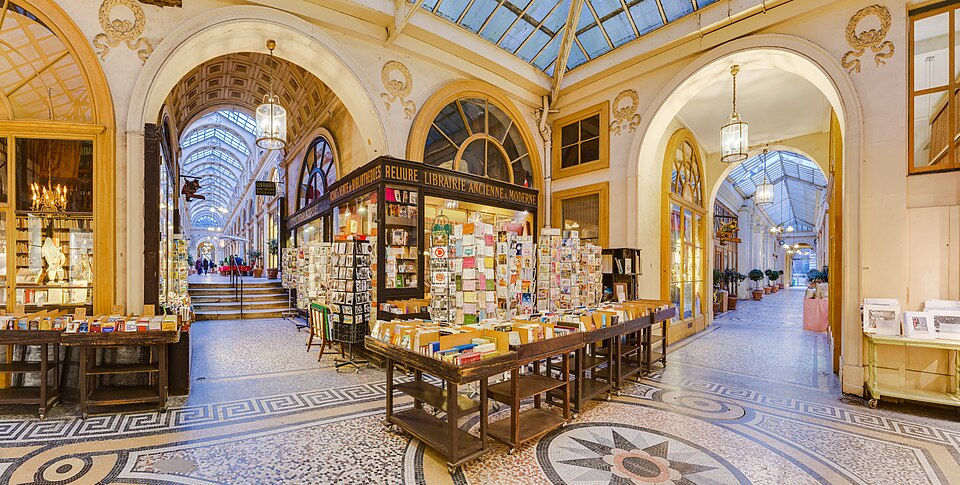
- Covered passages (2nd and 9th): 19th-century glass-roofed arcades such as Galerie Vivienne, Passage des Panoramas and Passage Jouffroy, with old bookshops, toy shops and stamp dealers.
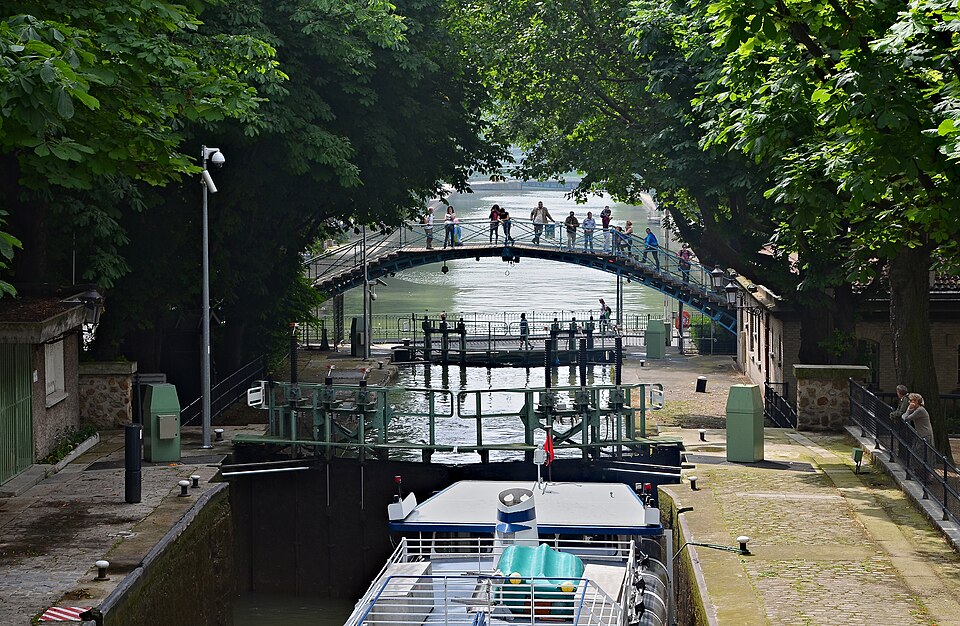
- Canal Saint-Martin (10th): independent shops, design and stationery.
- Rue des Martyrs (9th): food shops and small boutiques.
- Forum des Halles (1st): a big underground mall at the hub of the Métro, useful for basics.
Flea markets and vintage
Marché aux Puces de Saint-Ouen
Just outside the northern edge of Paris at Porte de Clignancourt, Saint-Ouen calls itself the largest antiques and secondhand market in the world, with more than a thousand dealers spread across about a dozen separate markets and over 5 million visitors a year. Each market has its own character: Vernaison is a maze of small stalls with old kitchenware, prints and toys; Paul Bert and Serpette have high-end furniture, lighting and designer vintage; Dauphine is covered and good in the rain.
It is open Saturday and Sunday from 10 a.m. to 6 p.m. and Monday from 11 a.m. to 5 p.m., including public holidays; many stalls stay closed on Monday. Take Métro line 4 to Porte de Clignancourt, line 13 to Garibaldi or line 14 to Saint-Ouen, then walk. Check the official market site before going.
Watch out
The walk from Porte de Clignancourt runs under the ring-road overpass through a stretch of street sellers offering counterfeit goods and stolen phones. It is crowded and pickpockets work it. Keep your bag zipped and in front of you, ignore the street sellers, and head straight for rue des Rosiers in Saint-Ouen, where the real markets begin. The Saint-Ouen stop on line 14 avoids most of it.
- Go Saturday or Sunday between 11 a.m. and 3 p.m. for the most open stalls. Mornings are calmer for serious buying.
- Bargaining is expected. Ask politely for the best price (c'est votre meilleur prix ?); 10 to 20 percent off is a realistic target.
- Bring cash for small items. Larger dealers take cards and arrange international shipping.
- Many dealers speak English and are used to shipping furniture to the US. Get the shipping quote in writing.
- Have lunch at one of the market restaurants: Ma Cocotte is the best known.
Marché aux Puces de Vanves
Smaller, friendlier and cheaper, Vanves has about 380 professional dealers along avenue Marc-Sangnier and avenue Georges-Lafenestre in the 14th, at the southern edge of the city. It is the only flea market inside the Paris city limits and runs every Saturday and Sunday morning of the year, from early morning to about 1 or 2 p.m. Look for old postcards, linens, silverware, costume jewelry and café glassware. Arrive early: dealers start packing around 1 p.m. Take Métro line 13 to Porte de Vanves.
Vintage
For curated vintage clothing, the Marais has the most shops, especially around rue de la Verrerie and rue du Temple. Emmaüs charity shops (the French equivalent of Goodwill) are cheaper and messier. For designer resale, dépôts-vente (consignment shops) in the 16th and 7th sell nearly new luxury pieces at a fraction of the original price.
Bookstores, pharmacy beauty and food gifts
Bookstores
Shakespeare and Company
The English-language bookstore at 37 rue de la Bûcherie, founded by George Whitman in 1951 as heir to Sylvia Beach's original shop. The upstairs reading room and the beds where young writers sleep are real. It opens daily (from noon on Sunday) until 7 to 9 p.m.; expect a line on weekends. The café next door opens at 9 a.m. Until December 19, 2026, Métro line 4 skips Saint-Michel for works, so use the RER B or C.
Galignani
Opened in 1801, it calls itself the first English bookshop on the Continent. It is quieter than Shakespeare and Company, with big art and fashion sections, under the arcades across from the Tuileries.
The bouquinistes
About 230 booksellers work from some 900 green boxes on the river walls, selling old books, prints, posters and postcards, a trade that goes back to the 16th century. The stalls open when the weather is fair, usually from late morning, and are busiest on weekends. Prices vary; ask.
Librairie Gallimard and others
For French books, the bookshop of the great publisher, or any independent librairie. French law caps book discounts at 5 percent, so independents survive and prices match everywhere.
Pharmacy beauty
French pharmacies sell dermatologist brands at prices well below US stores: La Roche-Posay, Avène, Bioderma, Caudalie, Nuxe, Embryolisse, Klorane and Avène's thermal water sprays. The famous big-box pharmacies keep prices low and stock everything.
- City Pharma (rue du Four, 6th): the best-known discount pharmacy, very crowded. Go when it opens or late on a weekday.
- Pharmacie Monge (place Monge, 5th): another discount favorite, with English-speaking staff and tax-free paperwork.
- Monoprix: the supermarket chain carries many of the same brands, plus its own good-value cosmetics.
If you buy €100 or more at one pharmacy, ask for the tax-free form. For sunscreen, check which filters are approved by the FDA if you care; many European sunscreens use filters that are not.
Food gifts that travel
- Mustard from Maille (place de la Madeleine), where you can fill a stoneware jar from the tap.
- Salted-butter caramels, chocolate bars and tins of cookies from Grande Épicerie, Galeries Lafayette Gourmet or a chocolatier.
- Tea from Mariage Frères (Marais, Saint-Germain and elsewhere).
- Fleur de sel from Guérande, herbes de Provence, piment d'Espelette.
- Canned foie gras, rillettes or sardines (shelf-stable and sealed).
- Macarons last two or three days unrefrigerated; buy them on your last morning.
- Hard cheese, vacuum packed. Check US rules first: what you can bring home.
Sales periods and Sunday shopping
Les soldes
France allows official sales (soldes) only twice a year, for four weeks each, on dates fixed by law. Discounts start around 30 percent and deepen to 50 to 70 percent by the end. The rule: winter sales start on the second Wednesday of January (the first if the second falls after the 12th), and summer sales start on the last Wednesday of June (the second-to-last if the last falls after the 28th). Some border départements use different dates.
| Sales period | Expected dates in Paris |
|---|---|
| Winter 2027 | Wednesday, January 6 to Tuesday, February 2, 2027 |
| Summer 2027 | Wednesday, June 23 to Tuesday, July 20, 2027 |
These dates follow the legal formula. The government confirms them each year, usually in the fall, so check before you plan a trip around them. The first Saturday is chaos in the department stores; weekday mornings are calmer. Outside the sales, you will see promotions and private sales (ventes privées) year-round.
Sunday shopping zones
Most of France still closes on Sunday, but Paris has 12 international tourist zones (zones touristiques internationales) where shops may open every Sunday and until midnight. They include the Champs-Élysées, Haussmann (the department stores), Le Marais, Saint-Germain, Rennes–Saint-Sulpice, Saint-Honoré–Vendôme, Les Halles, Montmartre, Maillot-Ternes, Beaugrenelle, Bercy Village and Olympiades. Outside them, supermarkets may open until 1 p.m. on Sunday, and food markets run Sunday morning.
Going out: where and when
A Paris evening starts late. Parisians meet for an apéro around 7, eat dinner around 8:30 or 9, and move on to bars after 10:30. Clubs fill after 1 a.m. and run until 5 or 6. Most bars close by 2 a.m.; clubs and some bars hold late licenses.
Le Marais
Cocktail bars, wine bars and the center of LGBTQ+ nightlife around rue des Archives and rue Vieille-du-Temple. Busy every night of the week.
Oberkampf and Bastille
Rue Oberkampf, rue Jean-Pierre-Timbaud and rue de Lappe are packed with cheap bars, live music venues and a young crowd.
Pigalle and South Pigalle
Once the red-light district, now the city's cocktail-bar capital, with music venues along boulevard de Clichy and rue des Martyrs.
Canal Saint-Martin
Relaxed bars and wine bars along the canal, with people sitting on the edge in summer.
Saint-Germain and the Latin Quarter
Historic cafés, jazz cellars and student bars. Quieter and older than the Right Bank.
Belleville
Cheap bars, artists' hangouts and a view over Paris from the top of the Parc de Belleville.
Wine bars, cocktail bars and rooftops
For the best wine bars and the classic cocktail bars (Harry's New York Bar, Little Red Door, the Ritz's Bar Hemingway), see the bar section of Eating & Drinking in Paris. A few more ideas for evenings out:
- Pigalle cocktail bars: the area around rue Frochot and rue Henry-Monnier has the highest density of good cocktail bars in Paris. Craft cocktails cost about €13 to €18 (about $15 to $20).
- Hotel bars: palace hotels like the Ritz, the Bristol and the Shangri-La serve cocktails from €25 to €35 (about $28 to $39) in grand rooms, a fine way to see them without staying there.
- Natural-wine bars: the 10th and 11th are full of them. A glass usually costs €6 to €10 (about $7 to $11).
Rooftop bars
Paris has fewer rooftops than New York because of strict height limits, which is also why the views from them work so well. Most are seasonal, open roughly May to September and weather-dependent. Expect cocktails from €16 to €25 (about $18 to $28) and lines at sunset.
- Galeries Lafayette and Printemps: the department-store terraces are free, and both have seasonal bars or restaurants.
- Le Perchoir: a small group of rooftop bars in eastern Paris that helped start the trend.
- Hotel rooftops: several new hotels have rooftop bars with Eiffel Tower views; the higher the hotel's star rating, the stricter the dress code.
Jazz clubs
Paris has loved jazz since the 1920s, when African American musicians found more freedom here than at home. Rue des Lombards near Châtelet has three clubs on one block. Most clubs run one or two sets a night, often around 7:30 and 9:30 p.m., and sell tickets online. Expect roughly €20 to €40 (about $22 to $45) per person for a concert, with drinks extra; jam sessions are often free or cheap.
Duc des Lombards
A seated, serious listening room with top French and international names. Book ahead for headliners.
Sunset-Sunside
Two rooms in one building at 60 rue des Lombards: the Sunset in the cellar and the Sunside upstairs. The fall 2026 calendar mixes French players with visiting Americans such as Delfeayo Marsalis and Jeremy Pelt.
Le Baiser Salé
A small, friendly club with Latin, Afro and funk-tinged jazz, tributes and album launches, often with two sets a night.
Caveau de la Huchette
A medieval cellar where people swing-dance to live bands every night. Featured in La La Land. Pay at the door; dress to move.
New Morning
A bigger concert hall for jazz, soul and world music, where legends from Chet Baker to Prince have played. Its fall 2026 lineup includes Kurt Rosenwinkel, Steve Coleman and a Miles Davis centenary tribute.
Cabarets
The Paris cabaret is a polished revue of dancers, feathers, sequins and variety acts, closer to a Las Vegas showroom than a burlesque club. Dinner shows are expensive and the food is banquet-level, so most Americans get better value from the show-with-Champagne option. Book directly on the cabaret's website at least a few weeks ahead in high season.
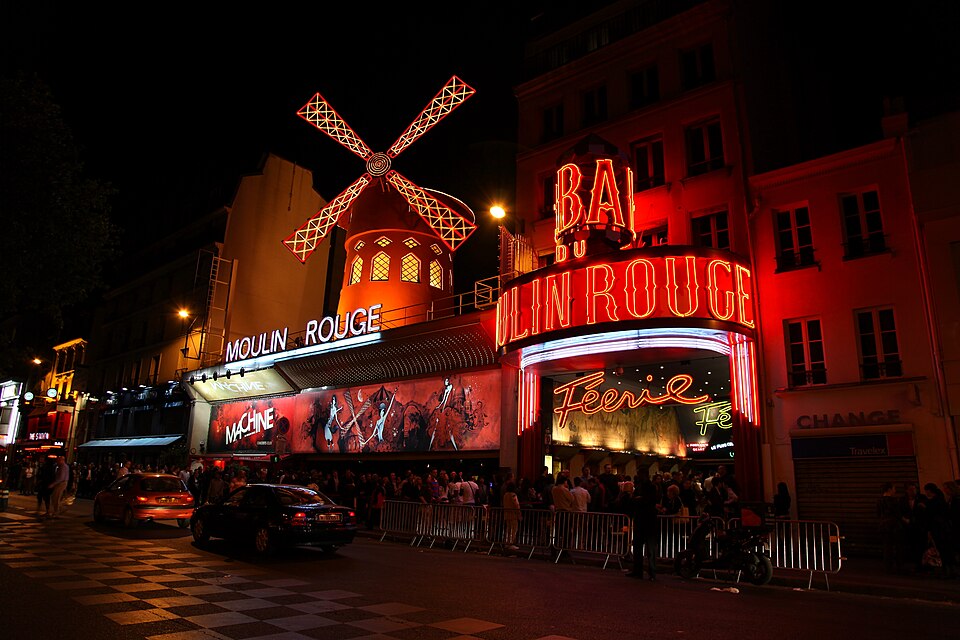
Moulin Rouge
The original, since 1889, under the red windmill. The revue Féerie, running since 1999, has about 80 performers and ends with the French cancan. Shows at 9 p.m. and a late show (doors around 10:45 p.m.), each with an optional half bottle of Champagne; the dinner show starts at 7 p.m. with Toulouse-Lautrec, Belle Époque and vegetarian menus. The official site lists prices only on the booking page, and they vary by date and seating, so compare the show-only and dinner options there. Dress is elegant: no shorts, flip-flops, sneakers or sportswear, though a jacket and tie are not required. Children 6 and up may attend with an adult; the show includes topless dancing. Book on the official site or by phone at +33 1 53 09 82 82.
Crazy Horse
A more artistic show built around lighting and choreography, with nude dancers; the current show is Totally Crazy. Prices start at €75 (about $84) for the show alone, €90 (about $101) with a half bottle of Champagne, and run to €195–350 (about $218–392) for premium seats and backstage tours. Shows at 8 and 10:30 p.m. Sunday to Thursday, and at 7, 9:30 and 11:45 p.m. on Fridays and Saturdays. The venue recommends it for ages 16 and up, and elegant dress is appreciated: no sneakers, sportswear or shorts.
Paradis Latin
The oldest cabaret in Paris, in a hall rebuilt by Gustave Eiffel's firm. Its current revue, L'Oiseau Paradis, has more of a musical-theater feel, and the setting is less touristy. It also stages a family show for children. Check prices on its site.
Le Lido
The famous Champs-Élysées cabaret ended its feathers-and-sequins revue in 2022, when the Accor hotel group turned the hall into Lido2Paris, now also billed as the Théâtre du Lido, a stage for musicals such as Hello, Dolly! and Singin' in the Rain (September 17, 2026 to January 10, 2027). There is no classic Lido revue anymore; check its site for what is playing.
Insider tip
The late Moulin Rouge show is usually easier to book than the 9 p.m. Doors open well before the show and close 10 minutes before curtain, and latecomers can be refused without a refund. Staff assign seats, tables are shared and tight, and photos and video are banned.
Opera, ballet and classical music
Opéra national de Paris
The national opera has two houses. The Palais Garnier (1875) in the 9th is the gilded jewel box of The Phantom of the Opera, used mostly for ballet and some opera. The modern Opéra Bastille (1989) in the 12th has better sightlines and hosts most of the operas. The season runs from September to July.
- Book on the official site only: operadeparis.fr. Resale sites charge several times face value.
- Seats go on sale in stages, months ahead. Create an account and note the opening date for your performances.
- Cheapest seats are in the upper tiers or have restricted views, and cost a small fraction of the top price. At Garnier, some side-box seats see very little of the stage; check the seat-view photos before you buy.
- Sold out? Check the official resale platform on the opera's site, where subscribers resell seats at face value, and look again in the last days before the performance. Under-28s get large discounts through the opera's youth offers.
- Surtitles appear in French and English at most performances.
- Dress: there is no formal dress code. Smart casual is normal; premieres and galas are dressier.
Even without performance tickets, you can tour the Palais Garnier by day: the grand staircase, the foyers and, when there is no rehearsal, the auditorium with its Chagall ceiling. Self-guided visits cost €25 (about $28) for adults from outside the EEA and €20 for ages 13 to 25, and are free for children 12 and under. Booking online is mandatory; no visit tickets are sold on site. See Paris Sights.
Classical music
- Philharmonie de Paris (19th, Parc de la Villette): Jean Nouvel's 2015 concert hall, where the Orchestre de Paris plays most of its season, with superb acoustics and many affordable seats. Monthly "Philharmonie Tuesdays" bring special deals, and the Philharmonie des Enfants is a hands-on music space for ages 4 to 10.
- Sainte-Chapelle: evening chamber concerts (Vivaldi's Four Seasons, Bach, Mozart) under the stained glass. The playing is pleasant, and the setting is spectacular in summer evening light. Buy from the official concert organizers and compare prices, which vary by seat.
- Church concerts: Saint-Eustache, La Madeleine and Saint-Germain-des-Prés host frequent concerts, and some organ recitals are free.
- Radio France (16th): the radio orchestras perform in its auditorium at low prices.
Theater and comedy in English
French theater is mostly in French, but options in English exist. Some productions at the Comédie-Française and other major theaters run with English surtitles; look for "surtitré en anglais" on the listing. Stand-up comedy in English has a following in Paris, with shows in small venues across the Marais and Pigalle. The one-man show How to Become a Parisian in One Hour? has poked fun at French habits for English-speaking audiences for many years; check whether it is currently playing. Check current listings on Offi or the venues' sites.
Clubs and LGBTQ+ nightlife
Clubs
Paris club culture centers on techno and house, with venues open Thursday to Saturday. Entry typically costs €15 to €25 (about $17 to $28), and doors get strict after midnight. Dress is casual but neat, and groups of men may be turned away at popular doors.
- Rex Club (2nd): a Grands Boulevards institution for techno since the late 1980s.
- La Machine du Moulin Rouge (90 boulevard de Clichy, 18th): a multi-room concert venue and club next to the Moulin Rouge, with club nights from midnight to 6 a.m. on Fridays and Saturdays and a rooftop-style Bar à Bulles.
- Péniches: barges moored along the Seine by the Bibliothèque François-Mitterrand in the 13th, such as Petit Bain, host parties, concerts and summer terraces.
LGBTQ+
Paris is one of Europe's most welcoming cities for LGBTQ+ travelers, and same-sex couples holding hands draw little attention in central neighborhoods. The Marais has the main concentration of gay bars around rue des Archives, rue Sainte-Croix-de-la-Bretonnerie and rue Vieille-du-Temple, busy from early evening. Paris Pride (Marche des Fiertés) is held on a Saturday in late June. For more on LGBTQ+ travel in France, see Travel by Interest.
After dark: the Seine, late food and getting home
The Seine at night
Paris is beautiful after dark, and the cheapest way to enjoy it is to walk. Cross the Pont des Arts, walk the quays of the Île Saint-Louis, and watch the Eiffel Tower sparkle: for five minutes at the start of every hour after dark, 20,000 bulbs flash across the tower. The Trocadéro, Pont de Bir-Hakeim and the Champ de Mars are the best viewpoints.
An evening boat cruise lasts about an hour; Bateaux-Mouches, for example, charges €17 (about $19) online or €20 standard for adults, and Vedettes du Pont Neuf and Bateaux Parisiens are similar. Dinner cruises cost several times more, and you pay mostly for the view. For more, see Paris Sights.
Late-night food
Many kitchens close by 10:30 or 11 p.m. Brasseries such as Bofinger and La Coupole serve until about midnight, and Au Pied de Cochon near Les Halles is long famous for late-night onion soup. After midnight, your options are kebab and falafel shops, pizza by the slice, Asian noodle bars around Belleville and the 13th, and 24-hour convenience stores.
Last Métro and night buses
The Métro runs from about 5:30 a.m. until last trains reach the end of each line around 1:15 a.m., or 2:15 a.m. on Friday, Saturday and the night before public holidays. The last train through your station may pass well before that, so check the RATP or Bonjour RATP app if you are cutting it close. Some lines run all night on special occasions such as the Fête de la Musique and New Year's Eve.
After the Métro stops, Noctilien night buses run about every 15 to 60 minutes on routes radiating from Châtelet and the main train stations, using regular bus tickets. They are safe but slow and sometimes rowdy. For transport details, see Getting Around Paris.
Taxis and ride-hailing
Uber, Bolt and the G7 taxi app all work in Paris. Taxis are plentiful at stands outside train stations and major hotels, and you can hail one with its roof light on. Night fares are higher. Only use licensed taxis with a roof sign and meter; refuse anyone soliciting rides at the exit of a club or station.
Watch out
In October 2026, after violent protests over the cost of living, the Paris police imposed overnight curfews (11 p.m. to 6 a.m.) around Place de la République and Les Halles, and the RATP closed Châtelet, Les Halles and République stations from 10 p.m. on several nights. Rail unions and the CGT federation also called strikes starting November 5, 2026. Measures like these can return at short notice, so check the news and the RATP app before a night out, and avoid demonstrations.
Stay safe
Paris is generally safe at night, but pickpocketing and drink spiking happen. Keep your phone off the table at terrace bars, watch your drink, and avoid walking alone in quiet areas around Gare du Nord, Barbès, Stalingrad and the Pigalle side streets late at night. Emergency number: 112. See Safety for scams and what to do if something goes wrong.
Add it to a route in the trip builder, or ask us to plan the hotels, trains and guides for you.