How Spain's art fits together
Spain's art is easiest to enjoy once you see it as layers laid down by different peoples over 2,000 years. Romans built the aqueducts and theaters. The Muslim rulers of al-Andalus, who held parts of the peninsula from 711 to 1492, left the horseshoe arches, tiled courtyards and water gardens of the south. Christian kingdoms pushed south and raised Romanesque and Gothic churches along the way, and a Jewish community that lived here for well over a thousand years left synagogues and whole neighborhoods.
Then came the Golden Age of painting, when Spain's empire paid for Velázquez and his peers, followed by Goya, the bridge to modern art. Around 1900, Barcelona produced Gaudí and the Catalan modernisme movement (the local cousin of art nouveau), and the 20th century gave the world Picasso, Miró and Dalí. Since the 1990s, Spain has added landmark contemporary buildings such as the Guggenheim in Bilbao.
The layers often sit on top of one another. In Córdoba a Renaissance cathedral stands inside an 8th-century mosque. In Seville the cathedral bell tower is a 12th-century minaret. In Toledo you can walk from a synagogue to a mosque to a cathedral in 15 minutes. That mixing is what makes Spain different from Italy or France, and it rewards a little background before you go.
Different from home
Many of Spain's greatest buildings are working churches. Expect visiting hours that stop for Mass, a ticket price for tourists outside service times, and a request to cover shoulders and knees. Hats come off inside. See etiquette for more on dress in churches.
Prehistoric and Roman Spain
The oldest art in Spain is on cave walls in the green north. The bison of Altamira, near Santillana del Mar in Cantabria, were painted roughly 14,000 to 36,000 years ago. The original cave is closed to protect the paintings, so nearly every visitor sees the excellent full-size replica (the Neocueva) at the Altamira museum next door. Book a time slot in summer. See northern Spain.
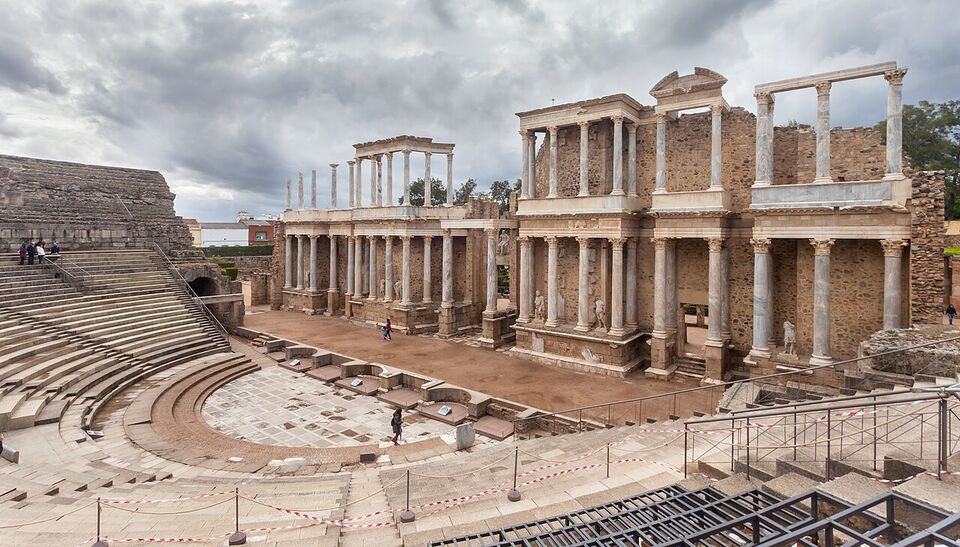
Rome ruled Hispania for about six centuries and built on a grand scale. These are the sites that repay a detour:
Segovia aqueduct
About half a mile (800 m) of granite arches built without mortar, rising about 93 feet (28.5 m) over the main square. It is free to see and an easy day trip from Madrid by high-speed train.
Mérida
Augusta Emerita has Spain's richest Roman remains: a theater still used for a classical drama festival each summer, an amphitheater, a long bridge over the Guadiana and the National Museum of Roman Art, a brick building by architect Rafael Moneo.
Tarragona
Tarraco was a provincial capital. A seaside amphitheater, circus vaults and walls sit in a small city about an hour from Barcelona by train. See the Costa Brava and Catalonia.
Itálica
Just outside Seville, the ruined city where the emperors Trajan and Hadrian had family roots, with one of the largest amphitheaters of the Roman world and fine floor mosaics.
Lugo and A Coruña
Lugo keeps a complete circuit of Roman walls you can walk on top of. In A Coruña, the Tower of Hercules is a Roman lighthouse still in use. See Galicia.
Moorish Spain: al-Andalus
For most Americans, this is the part of Spain that looks least like anywhere else in Europe. Islamic architecture here favors geometry, calligraphy, carved plaster, glazed tile and the sound of running water, with plain outer walls hiding rich interiors. Three cities in Andalusia hold the great monuments, and they fit into a week by train.
Córdoba: the Mosque-Cathedral
The Mezquita was begun in the 780s and enlarged over two centuries into a forest of more than 800 columns topped by striped red-and-white double arches. After the Christian conquest a cathedral was built right in the middle in the 1500s. Arrive at opening time or come for the early free entry window when it is offered, and allow 90 minutes. Nearby, the ruined 10th-century palace city of Medina Azahara is a UNESCO site reached by shuttle bus. See Córdoba.
Granada: the Alhambra
The Nasrid Palaces of the Alhambra, built mostly in the 1300s, are the high point of Islamic art in Western Europe: the Court of the Lions, ceilings carved like honeycombs, walls covered in poetry. Entry to the palaces is timed to the half hour and sells out, so book as soon as your dates are fixed. Our Alhambra tickets page explains the ticket types and how to avoid resellers. See also Granada.
Seville: the Giralda and the Alcázar
The cathedral's bell tower, the Giralda, began life as the minaret of the 12th-century Almohad mosque; you climb it on ramps wide enough for a horse. The Real Alcázar is a royal palace largely rebuilt in the 1360s for the Christian king Pedro I by craftsmen trained in Islamic styles. That blend has a name, mudéjar (Islamic-style art made under Christian rule), and you will see it all over Spain. Book Alcázar tickets online for a set time. See Seville.
Beyond Andalusia
Toledo keeps two small mosques, including the 10th-century Cristo de la Luz. Zaragoza's Aljafería is an 11th-century Islamic palace now home to the Aragonese parliament. Teruel, in Aragon, has brick-and-tile mudéjar towers recognized by UNESCO.
Insider tip
Moorish buildings are designed to be seen slowly and in changing light. If you can, stay overnight in Granada and Córdoba so you see the Alhambra from the Mirador de San Nicolás at sunset and walk Córdoba's old quarter after the day-trippers leave.
Jewish Spain
Before the expulsion of 1492, Spain had one of the largest Jewish communities in the world, and the culture it produced is called Sephardic (from Sefarad, the Hebrew name for Spain). Much was destroyed or converted, but enough survives to plan a trip around.
- Toledo: the Synagogue of Santa María la Blanca, with white horseshoe arches, and the 14th-century Synagogue of El Tránsito, which houses the national Sephardic Museum.
- Córdoba: a small 14th-century synagogue in the old Jewish quarter (judería), a short walk from the Mezquita, and a statue of the philosopher Maimonides, born in the city.
- Girona: the narrow stone lanes of the Call, one of the best-preserved Jewish quarters in Europe, with a museum of Jewish history.
- Smaller towns: Hervás in Extremadura, Besalú in Catalonia (with a medieval ritual bath) and Ribadavia in Galicia.
The Red de Juderías, a network of Spanish towns with Jewish heritage, publishes routes and guided visit information. See travel by interest for heritage travel ideas.
Romanesque and Gothic: the cathedral road
As Christian kingdoms expanded south, they built in the styles spreading across Europe. The best Romanesque work (thick walls, round arches, carved capitals) lines the route of the Camino de Santiago across the north. The great Gothic cathedrals came later, from the 1200s to the 1500s.
Santiago de Compostela
The cathedral at the end of the Camino. Inside, the Pórtico de la Gloria, carved by Master Mateo and finished in 1188, is one of the masterpieces of medieval sculpture. Visits to the portico are timed and limited, so book ahead.
León
The cathedral has some of the finest medieval stained glass in Europe; on a sunny morning the nave fills with colored light. Gaudí's Casa Botines stands a few blocks away. See Salamanca and Castile.
Burgos
Lacy spires, a star-vaulted lantern over the crossing and the tomb of El Cid. A UNESCO site since 1984 and an easy stop between Madrid and the Basque Country.
Toledo
A huge Gothic cathedral packed with art, including a sacristy hung with paintings by El Greco and Goya and the baroque Transparente altarpiece lit through a hole in the vault.
Seville
The largest Gothic cathedral in the world, built on the mosque site, with a gold-covered main altarpiece and the monumental tomb of Christopher Columbus.
Barcelona
Santa Maria del Mar, built in the 1300s in barely half a century, is the purest example of Catalan Gothic: wide, plain and full of air. The cathedral in the Gothic Quarter is busier and more ornate. See Barcelona sights.
In Catalonia's Pyrenees, the Vall de Boí has a cluster of small Romanesque churches recognized by UNESCO; their original painted apses were moved to the MNAC museum on Barcelona's Montjuïc in the early 20th century, and the museum's Romanesque rooms are among the best anywhere.
Renaissance and baroque
The University of Salamanca's carved sandstone facade is the showpiece of the Spanish style called Plateresque (because it looks worked like silver); students hunt for a tiny frog on it for luck. Philip II's monastery-palace of El Escorial, northwest of Madrid, is the opposite: severe granite, built from 1563 to 1584. In Santiago, the baroque Obradoiro facade frames the end of the Camino.
Save money
Most cathedrals charge visitors somewhere around €8 to €16 (about $9 to $18) outside service times, usually with an audio guide. Attending Mass is free, though you cannot wander or take photos then. Some cathedrals, including Seville's, have offered limited free visits on certain days; check the official site before you go.

From El Greco to Goya
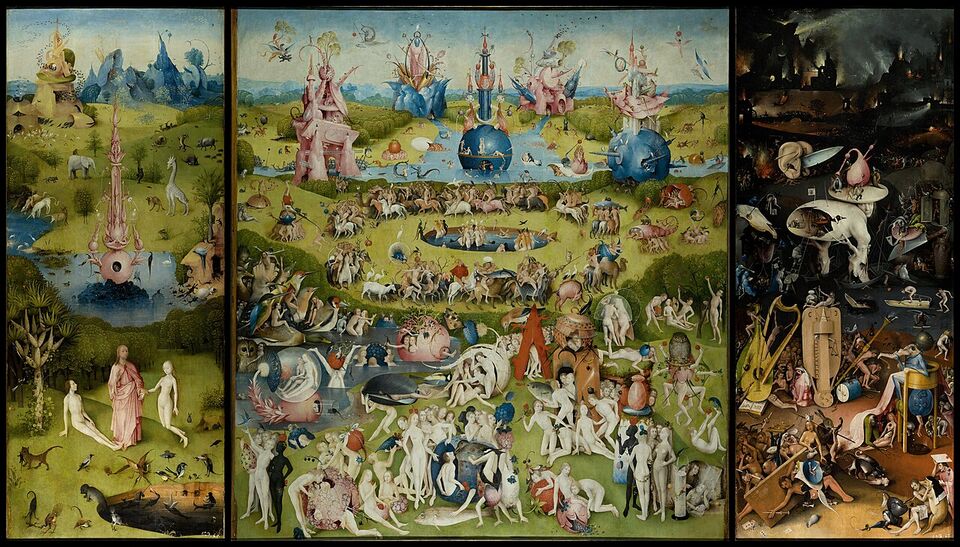
Spain's painting golden age ran roughly from 1580 to 1680, and most of it hangs in Madrid's Prado. Learn five names and you will get far more out of any Spanish museum.
- El Greco (1541–1614): born on Crete, worked in Toledo. Stretched figures, acid colors, spiritual intensity. His Burial of the Count of Orgaz is still in the Toledo church of Santo Tomé, painted for that wall.
- Diego Velázquez (1599–1660): court painter to Philip IV and, for many painters since, the greatest of them all. Las Meninas (1656), in the Prado, is the single painting to see in Spain.
- Francisco de Zurbarán and Bartolomé Esteban Murillo: the Seville school, from austere monks to soft-focus Madonnas. Seville's Museo de Bellas Artes, in a former convent, is the place to see them together.
- José de Ribera: a Spaniard who worked in Naples, known for dramatic light and dark.
- Francisco de Goya (1746–1828): court portraits, the war scenes of The Third of May 1808, and the haunting Black Paintings he made on the walls of his own house, all in the Prado. His ceiling frescoes in Madrid's small chapel of San Antonio de la Florida are free to see.
Later Spanish painting is lighter. Joaquín Sorolla painted sunlit beaches around 1900; his house in Madrid is a museum. The house itself is closed for restoration, but the museum's new extension building on Calle Zurbano has opened, so check what is on before you go.
Madrid's Golden Triangle
Three world-class museums sit within a 15-minute walk of one another along the Paseo del Prado, and the boulevard and the Retiro park beside it were named a UNESCO World Heritage site in 2021. Most people can enjoy two in a day; three is too many. For hours, ticket links and neighborhoods, see Madrid sights.
| Museum | Best for | Ticket | Free entry | Allow |
|---|---|---|---|---|
| Museo del Prado | Velázquez, Goya, El Greco, Bosch, Titian, Rubens | €15 (about $17); reduced €7.50 | Last two hours: Mon–Sat 6–8 pm, Sun and holidays 5–7 pm | 3 hr |
| Museo Reina Sofía | Picasso's Guernica, Dalí, Miró, modern Spain | €12 (about $13) | Mon and Wed–Sat 7–9 pm; Sun 12:30–2:30 pm; closed Tue | 2 hr |
| Thyssen-Bornemisza | A survey of Western art, Impressionists, American painters | €14 (about $16) | Mondays 12–4 pm, permanent collection | 2 hr |
The Prado opens 10 am to 8 pm Monday through Saturday and 10 am to 7 pm on Sundays and holidays, closes only on January 1, May 1 and December 25, and shortens hours on January 6, December 24 and December 31. Free-hour lines can be long, and the free slots are limited by capacity, so they suit a second visit better than a first.
Save money
The Paseo del Arte card costs €32.80 (about $37) and covers one visit to each of the three museums within 12 months, against about €41 (about $46) bought separately. Visitors over 65 pay the reduced €7.50 (about $8) at the Prado with proof of age.
Insider tip
At the Prado, go straight to the Velázquez rooms on the main floor when the doors open, then work outward. Guernica at the Reina Sofía is on the second floor of the Sabatini building, the museum's original wing.
The Thyssen is the one Americans tend to underrate. Built from a private collection, it fills the gaps the Prado leaves: early Italian panels, Dutch landscapes, Impressionists, German Expressionists and a strong group of American painters, including Edward Hopper and Georgia O'Keeffe.
Gaudí and modernisme
Barcelona grew rich in the late 1800s, and its new bourgeoisie paid architects to build in a style of their own, mixing Gothic, Moorish and natural forms with tile, iron and stained glass. Antoni Gaudí (1852–1926) was the genius of the movement, but he had company. See Barcelona sights for tickets and timings.
Sagrada Família
Begun in 1882 and still under construction, Gaudí's basilica is the most visited monument in Spain. On June 10, 2026, the centenary of Gaudí's death, the central Tower of Jesus Christ was blessed and inaugurated; at 566 feet (172.5 m) it makes this the tallest church in the world. Work on the Glory facade continues. On November 1, 2026 the official ticket page said the basilica was temporarily closed to the public, with no reopening date given; check sagradafamilia.org before you plan around a visit. Read Sagrada Família tickets before you book.
Casa Batlló and La Pedrera
Two Gaudí apartment buildings a few blocks apart: Batlló with its bone-like balconies and dragon roof, La Pedrera (Casa Milà) with its wavy stone facade and rooftop of sculpted chimneys.
Park Güell
A hillside garden suburb that never sold, with the mosaic lizard, the serpentine bench and city views. The monumental zone requires a timed ticket.
Palau Güell and Casa Vicens
Quieter early works: the dark, grand townhouse he built off La Rambla and his first major house, covered in tile, from the 1880s.
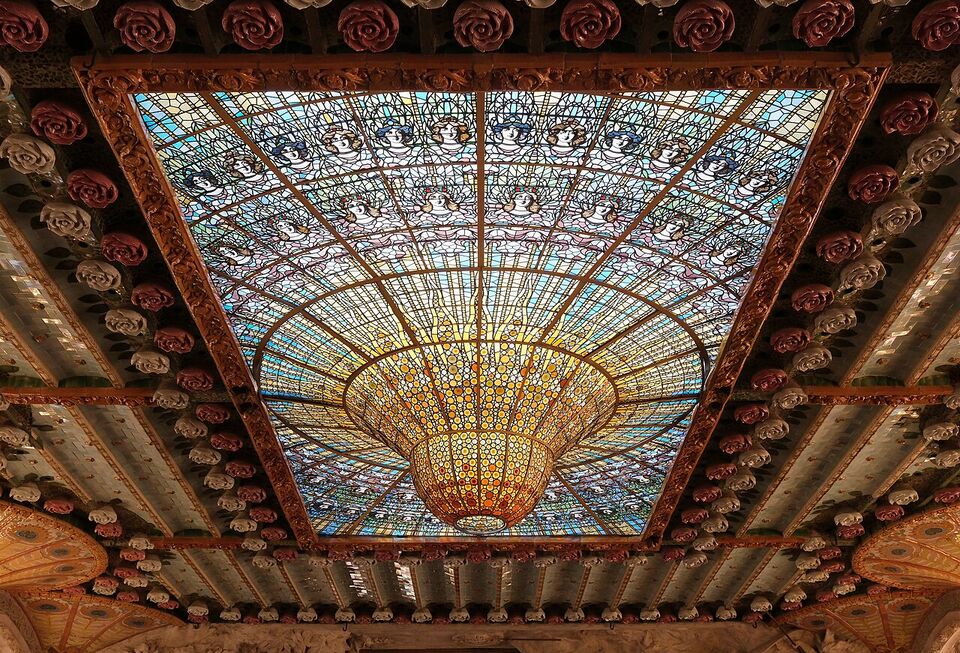
Palau de la Música Catalana
Lluís Domènech i Montaner's concert hall has a stained-glass skylight that hangs like an upturned bell. Hearing a concert there is the most memorable way to see it.
Sant Pau
Domènech i Montaner's former hospital, a garden city of tiled pavilions, a 15-minute walk up the avenue from the Sagrada Família and far less crowded.
Gaudí also built outside Barcelona: the Colonia Güell crypt in a former factory village just west of the city, the playful El Capricho in Comillas on the Cantabrian coast, Casa Botines in León and the Episcopal Palace in Astorga on the Camino. Gaudí died after being struck by a tram in June 1926, and Barcelona is marking the 2026 centenary with exhibitions and events through the year.
Watch out
Gaudí sites sell timed entries, and resale sites charge large markups for the same slots. Buy on each monument's official website, check the date and time twice, and carry your passport or ID, since names can be checked. The Passeig de Gràcia crowds are prime pickpocket territory; see safety.
Picasso, Miró and Dalí
The three great Spanish modernists each have a home base you can visit, and following them is a fine way to see Málaga, Barcelona and the Costa Brava.
Pablo Picasso (1881–1973)
Born in Málaga, trained in Barcelona, famous in Paris. The Museu Picasso in Barcelona, in a row of medieval palaces in El Born, is strongest on his early years and his 1950s variations on Las Meninas. The Museo Picasso Málaga covers his whole career, and his birthplace on the Plaza de la Merced is a small museum. Guernica, his 1937 response to the bombing of a Basque town, is in Madrid's Reina Sofía. See Málaga and the Costa del Sol.
Joan Miró (1893–1983)
The Fundació Joan Miró on Montjuïc, in a white building by Josep Lluís Sert, holds the largest collection of his work, with views over Barcelona. On Mallorca, the Fundació Pilar i Joan Miró in Palma preserves the studios where he spent his last decades. See Mallorca and the Balearics.
Salvador Dalí (1904–1989)
The Dalí Theatre-Museum in Figueres, which he designed in a former theater and where he is buried, is about an hour from Barcelona by train. Locals talk of a Dalí Triangle: Figueres, his seaside house at Portlligat near Cadaqués (small timed groups, book well ahead) and the castle he gave his wife Gala at Púbol. Doing all three takes a car and a full day. See Costa Brava and Girona.
Contemporary Spain
Spain spent heavily on cultural buildings from the 1990s on, and several are now destinations in their own right.
- Guggenheim Museum Bilbao (Frank Gehry, 1997): the titanium building that changed how cities think about museums. Richard Serra's huge steel spirals fill the largest gallery. See the Basque Country.
- City of Arts and Sciences, Valencia: Santiago Calatrava's white complex in the old riverbed of the Turia, with an opera house, science museum and aquarium. See Valencia.
- Las Setas (Metropol Parasol), Seville: a giant wooden canopy from 2011 with a rooftop walkway best at sunset.
- Centro Botín, Santander: Renzo Piano's gallery cantilevered over the bay, opened in 2017.
- Chillida Leku, near San Sebastián: a sculpture park around a Basque farmhouse, showing the iron and stone work of Eduardo Chillida. His Comb of the Wind sits on the rocks at the end of San Sebastián's Ondarreta beach.
- Málaga: alongside the Picasso museum, the city has the Carmen Thyssen collection of Spanish painting and an outpost of Paris's Centre Pompidou on the port.
Three art-lover's routes
- Day 1
Madrid
Prado at opening; lunch around 2 pm; Thyssen in the afternoon. Evening walk through the Retiro, then the Reina Sofía's free evening hours for Guernica.
- Day 2
Toledo
About 35 minutes by train from Madrid's Atocha station. El Greco's Burial of the Count of Orgaz, the cathedral, both synagogues and the Cristo de la Luz mosque. Back to Madrid for dinner at 9.
- Day 3
Córdoba
The Mezquita at opening time, the judería and the synagogue, then the patios of the old town. When the line is running normally, Córdoba is about two hours from Madrid on the high-speed train (see the warning below).
- Day 4
Granada
A morning Alhambra slot (booked weeks earlier), the Royal Chapel where Ferdinand and Isabella are buried, and sunset from the Albaicín.
- Day 5
Seville
The cathedral and Giralda, the Alcázar, the Museo de Bellas Artes for Murillo and Zurbarán, and Las Setas at dusk. Fly home from Seville or take the train back to Madrid.
Watch out
After a fatal collision near Urda (Toledo) on October 28, 2026, high-speed trains between Madrid and Andalusia were suspended; Renfe stopped selling tickets on the route until December 13, 2026, though service may return sooner. Check Renfe, Iryo and Ouigo before you plan this route, and consider flying or taking a long-distance bus in the meantime.
A northern route works too: Bilbao's Guggenheim and Fine Arts Museum, Chillida Leku and San Sebastián, then Burgos and León on the way to Santiago. For Barcelona, give Gaudí and modernisme two full days and add a day for Figueres and Girona. Our planning guide has full sample itineraries, and getting around covers the trains.
Tickets, timing and what trips people up
- Book the big two first. The Alhambra and the Sagrada Família are the only Spanish sights that routinely sell out weeks ahead. Book them before your hotels if you can, then plan the days around the slots. (The Sagrada Família's ticket page showed it temporarily closed on November 1, 2026, so check its status first.)
- Use official sites. Search results are full of resellers with official-looking names. Buy from the monument's own site or its named official partner.
- Check closing days. Many museums close Monday (the Reina Sofía closes Tuesday). Some churches close to visitors on Sunday mornings for Mass.
- Use free hours wisely. They are real, but lines and capacity limits make them better for a short second visit than a first one.
- Bring ID. Senior, student and youth reductions require proof. Over-65 discounts at most museums apply to any visitor with proof of age, but some free entries are for EU residents only, such as the Royal Palace's free afternoons.
- Dress for churches. Shoulders and knees covered; carry a light scarf in summer.
- Mind the bags. Larger backpacks go to a cloakroom at most museums, and many sights ban suitcases. Plan check-out times accordingly.
- Photography. Not allowed in the Prado's galleries; rules vary elsewhere, so look for the signs and never use flash.
- Midday heat. In Andalusia from June to September, put outdoor sights like the Alhambra gardens and Itálica first thing in the morning. See when to go.
Insider tip
Spaniards visit museums late. The hour after lunch, roughly 2 to 4 pm, is often the quietest time in the galleries, especially in summer when tour groups have left for the day.
For more on Spain's culture, read our pages on festivals, where Holy Week processions carry centuries-old sculpture through the streets, and flamenco.
Add it to a route in the trip builder, or ask us to plan the hotels, trains and guides for you.