Overview
Seville is the capital of Andalusia and the city that most Americans picture when they think of Spain: orange trees in the squares, horse carriages outside a Gothic cathedral, flamenco in back rooms and tapas bars spilling onto the sidewalk at 10 p.m. It is also very livable. The old center is flat, compact and mostly pedestrian, and you can walk from the cathedral to Triana across the river in 15 minutes.
The city's history shows in layers. It was a Roman town, then for five centuries a Moorish one (Isbiliya), and after 1248 a Castilian royal city. In the 1500s and 1600s it held the monopoly on trade with the Americas, which paid for the cathedral, the palaces and the painters Velázquez and Murillo. Two world's fairs, in 1929 and 1992, left the Plaza de España and much of the modern city.
Give Seville three full days. That covers the Real Alcázar, the cathedral and Giralda, the Plaza de España, Triana and a flamenco show, with time for long lunches. Seville is the natural base for Córdoba, about 45 minutes away by train, and for the white towns, Jerez and Cádiz. It pairs with Granada and Madrid on the classic first trip (see planning your trip).
The Real Alcázar
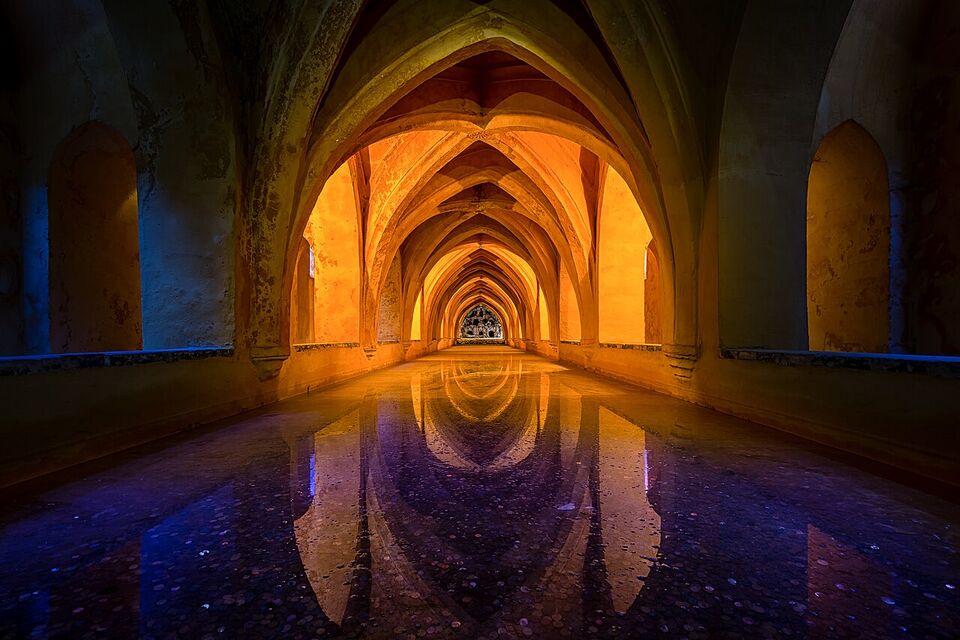
The Alcázar is a royal palace still used by the Spanish royal family, and the oldest in Europe still in use. Most of what you see was built for the Castilian king Pedro I in the 1360s by craftsmen from Granada and Toledo, in the Moorish style called mudéjar: carved plaster, tiled walls, cedar ceilings and courtyards with pools. The Courtyard of the Maidens and the Hall of the Ambassadors, with its gilded dome, are the highlights. Behind the palace are extensive gardens with fountains, pavilions, orange trees and peacocks.
Plan 2 to 3 hours, with time in the gardens. TV fans will recognize the palace as the Water Gardens of Dorne from Game of Thrones.
Tickets and hours
| Ticket | Price | Notes |
|---|---|---|
| General | €15.50 (about $17) | Also covers some city museums, including the Triana Ceramics Center |
| Upper Royal Quarters (Cuarto Real Alto) | €5.50 (about $6) extra | Guided visit to the rooms the royal family uses; limited places |
| Reduced | €8 (about $9) | Over 65 and students 14–30, with ID shown at the gate |
| Children up to 13 with an adult | Free | You still need a free ticket for the child |
Entry runs from 9:30 a.m. to 5 p.m. from October to March and 9:30 a.m. to 7 p.m. from April to September, with the grounds cleared about 45 minutes later. The Alcázar is closed on January 1, January 6, Good Friday and December 25. The ticket office in the Patio de Banderas opens at 9 a.m. and takes cards only.
Buy on the official site, alcazarsevilla.org, which links to the official ticket shop. Time slots for mid-morning sell out days ahead from March to June and in October. Many sites with similar names are resellers or tour companies charging much more, so check the address before you pay.
Insider tip
Take the first entry slot of the day and go straight through the palace rooms before the tour groups arrive, then slow down in the gardens. If you want the Upper Royal Quarters, book them at the same time as your main ticket; they have far fewer places.
The cathedral and the Giralda
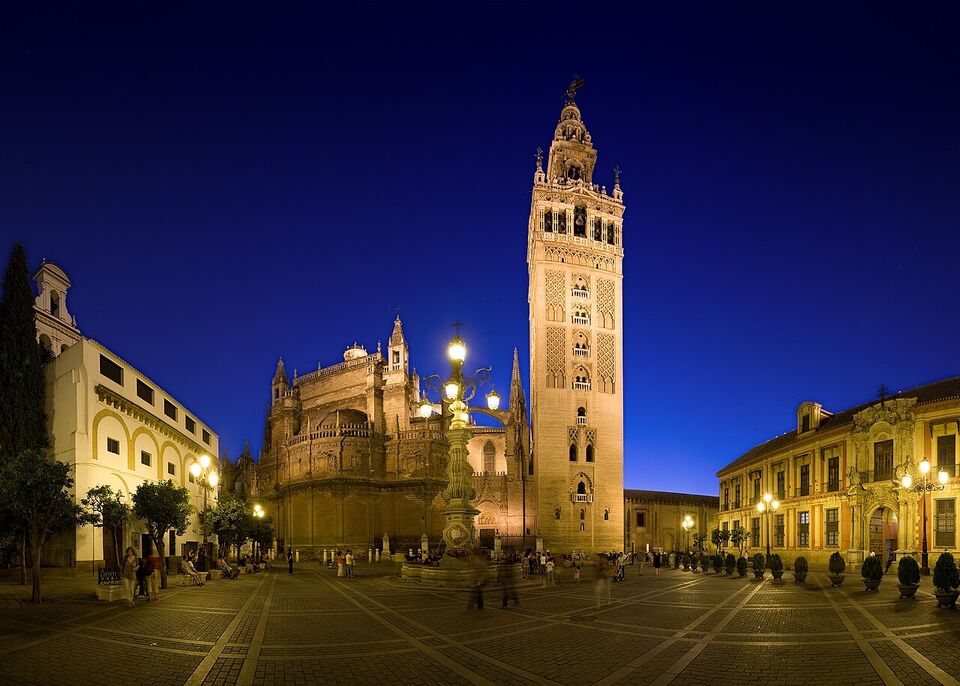
Seville's cathedral is the largest Gothic cathedral in the world, built from 1401 on the site of the city's great mosque. Inside are the golden main altarpiece, often called the largest in Christendom, the tomb of Christopher Columbus (carried by four figures representing the kingdoms of Spain), and paintings by Murillo and Zurbarán. The Patio de los Naranjos, the orange-tree courtyard where worshippers once washed before prayer, survives from the mosque.
The bell tower, the Giralda, was the mosque's minaret, with a Renaissance belfry added on top. You climb it by 35 ramps, built wide enough for a man on horseback, rather than stairs, so the climb is gentler than it sounds. The view over the rooftops is the best in the city. Plan about 1 hour 30 minutes for the cathedral and the tower together.
Tickets and hours
| Ticket (cathedral and Giralda) | Online | Ticket office |
|---|---|---|
| General | €13 (about $15) | €14 (about $16) |
| Reduced (over 65, students up to 25) | €7 (about $8) | €8 (about $9) |
| Guided visits, including the rooftops | €20 (about $22) | €21 (about $24) |
| Audio guide | €5 (about $6), or €4 (about $4.50) in the app | |
Visiting hours are Monday to Saturday 10:45 a.m. to 6 p.m. (ticket office closes at 5 p.m.) and Sunday 2:30 p.m. to 7 p.m. (ticket office closes at 6 p.m.). Hours change for services and festivals, especially during Holy Week. For a congress in December 2026, the cathedral announced that from December 4 to 7 the visit covers only the Giralda and an exhibition, with no cultural visit on December 8; check the site for updates. Children up to 13 with an adult go free. Buy on the official site, catedraldesevilla.es, to save the euro and skip the ticket line.
The rooftop tour (visita a las cubiertas) takes you along the roofs and buttresses, and sells out first. Dress code is relaxed by Spanish church standards, but cover your shoulders and avoid beachwear.
Watch out
Around the cathedral and the Alcázar, women may press a sprig of rosemary into your hand "for luck", then read your palm and demand payment, sometimes while someone else works your pockets. Keep your hands to yourself, say no, gracias and keep walking.
More sights
Plaza de España and María Luisa Park
The huge semicircular plaza built for the 1929 Ibero-American Exposition, with tiled benches for each Spanish province, a canal with rowboats and arcades of shade. Next to it, the María Luisa Park is the city's green lung. Go early morning or near sunset; at midday it is an oven.
Barrio de Santa Cruz
Whitewashed lanes, tiny plazas and flowerpots between the cathedral and the Alcázar walls. It is pretty and touristy by day; wander it again after 9 p.m., when the day crowds have gone.
Metropol Parasol (Las Setas)
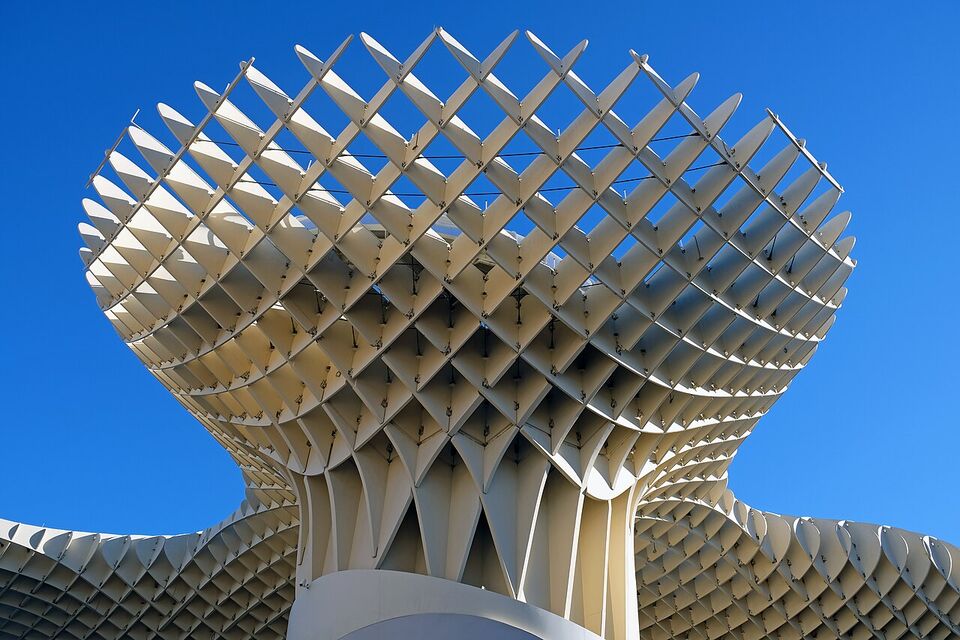
The giant waffle-like wooden canopy locals call "the mushrooms", with a walkway on top and Roman ruins in the basement. Open 9:30 a.m. to 1 a.m.; sunset and the evening light show (April to October) are the best times. Buy at setasdesevilla.com.
Archivo de Indias
The archive of Spain's American empire, in a Renaissance merchants' exchange. Rotating exhibitions show original documents, maps and letters from the colonies, including what is now the US Southwest and Florida.
Casa de Pilatos and Palacio de las Dueñas
Two aristocratic palaces still owned by noble families. Casa de Pilatos mixes mudéjar tiles, Renaissance courtyards and Roman statues; Las Dueñas, the Alba family's home, has a courtyard garden and a lemon tree the poet Antonio Machado wrote about.
Museo de Bellas Artes
One of Spain's best art museums after the Prado, in a former convent, strong on Murillo, Zurbarán and Valdés Leal. Closed Mondays. Nearby, the Hospital de la Caridad's chapel is another Murillo treasure.
Torre del Oro and the Maestranza
The 13th-century Almohad watchtower on the Guadalquivir holds a small naval museum. Nearby, the Real Maestranza bullring offers guided tours of the ring and its museum on days without a bullfight.
Triana
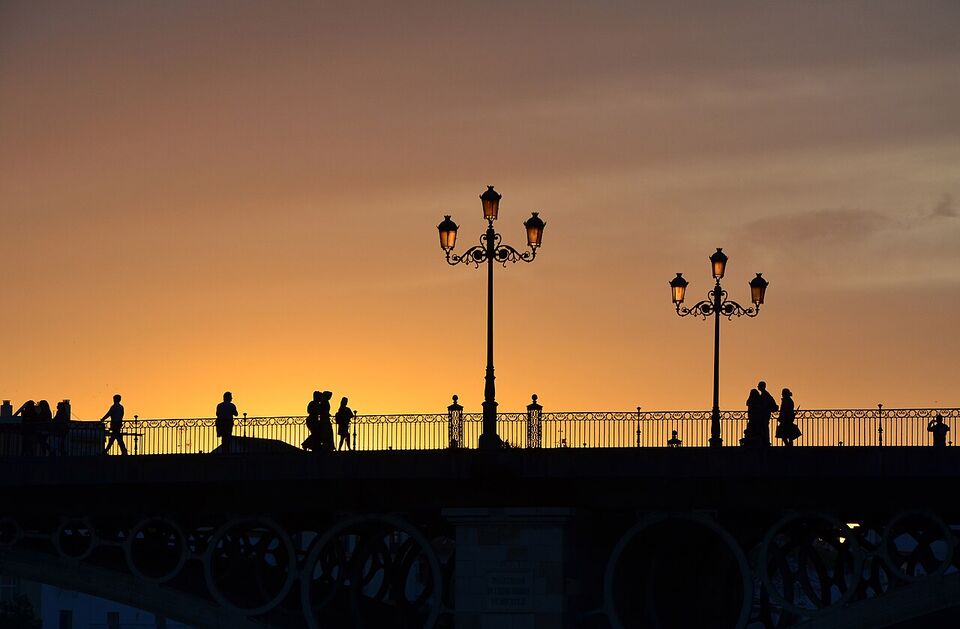
Across the Isabel II bridge (locals call it the Triana bridge) is Triana, the old potters' and sailors' quarter and one of the cradles of flamenco. Start at the Mercado de Triana, the covered market built over the ruins of the Castillo de San Jorge, once the seat of the Inquisition. The castle's ruins are now a free museum on the Inquisition's history.
From the market, walk Calle San Jacinto and Calle Alfarería, where ceramic workshops still sell tiles (azulejos) and plates. The Centro Cerámica Triana, in a restored pottery factory, explains the craft and is included in the Alcázar's general ticket. In the evening, Calle Betis along the river has bars with the best view of the old city.
Save money
Keep your Alcázar ticket: the general admission also covers the Triana Ceramics Center and several other city museums. Many of Seville's best sights, such as the Plaza de España, the Archivo de Indias, Santa Cruz and the riverfront, cost nothing.
Where to stay
Stay inside or close to the old center so you can walk everywhere and take a midday break at your hotel, which matters from May to September. Many hotels are in old townhouses built around a central patio; rooms facing the patio are quiet but can be dark.
- Santa Cruz and the cathedral area. The most central and the most touristy, with lanes too narrow for taxis in places. Best for a short first visit.
- Arenal. Between the cathedral and the river, near the bullring, with good tapas bars and easy taxi access.
- Alfalfa and San Bartolomé. Lively plazas and bars with more locals, a 10-minute walk from the cathedral.
- Feria and Alameda de Hércules. Seville's alternative quarter, with a Thursday flea market on Calle Feria, a younger bar scene and the city's LGBTQ+ nightlife. Noisy on weekends.
- Triana. Across the river, more residential and local, with the old city 15 minutes' walk away.
At the top end, the Hotel Alfonso XIII, built for the 1929 exposition next to the Alcázar, is Seville's grand hotel $$$$. Expect $$ to $$$ for a comfortable boutique hotel in the center in spring, and two or three times normal rates during Holy Week and the April Fair, often with minimum stays. See where to stay in Spain for booking tips and the rules on holiday apartments; Seville has limited new tourist flats in its busiest central neighborhoods.
Eating and tapas
Seville is one of Spain's great tapas cities, and it eats on Spanish time. Lunch runs from about 2 to 4 p.m., and kitchens reopen for dinner at 8:30 or 9 p.m.; locals eat at 10. Between those hours, many restaurants serve nothing hot. The good news is that you can graze: order a couple of tapas at the bar, move on, and order a couple more somewhere else.
Different from home
At a busy tapas bar, nobody seats you and nobody brings a menu. Squeeze up to the counter, catch the bartender's eye, and order a drink and one or two dishes. The bill is often chalked on the bar in front of you. Pay when you leave, and round up or leave small change; tipping 15 to 20 percent is not expected (see money).
What to order
- Espinacas con garbanzos: spinach and chickpeas with cumin and fried bread, a Seville classic with Moorish roots.
- Solomillo al whisky: pork tenderloin in a garlicky whisky sauce, a local favorite.
- Cazón en adobo: chunks of dogfish marinated in vinegar, cumin and paprika, then fried.
- Pringá: the shredded meats from a stew, served in a small roll (montadito).
- Carrillada: braised pork cheeks, soft enough to cut with a fork.
- Pescaíto frito: mixed fried fish, best in Triana and the Arenal.
- Jamón ibérico from the hills of Huelva and queso (cheese) to share.
To drink, order a caña (small draft beer; the local brand is Cruzcampo), a glass of chilled manzanilla or fino sherry, or a tinto de verano (red wine with lemon soda), which locals drink far more than sangría. In summer, try salmorejo and gazpacho, the cold tomato soups.
For atmosphere, the bars around the Alfalfa, Calle Feria and the Mercado de Triana are full of locals, and El Rinconcillo, near the Santa Catalina church, claims to be the city's oldest bar, dating from 1670. Avoid the restaurants with photo menus facing the cathedral. For more, see Spanish food and sherry and wine.
Watch out
Seville's famous orange trees grow bitter oranges, used for British marmalade. Don't pick them, and don't eat them. In late winter the fruit drops onto the sidewalks, and the blossom in March and April (the azahar) perfumes the whole city.
Flamenco in Seville
Seville, Jerez and Cádiz form the heartland of flamenco, and Seville has more shows than anywhere. You have three broad choices. A tablao is a dedicated flamenco venue with nightly shows of 1 hour to 1 hour 30 minutes, often with dinner. Small cultural centers in the old town offer shorter, intimate shows of about an hour with a few dozen seats. And peñas, members' clubs that welcome visitors on some nights, are the most authentic and the least predictable.
The long-running Casa de la Memoria on Calle Cuna is a good choice for an intimate show; buy online, since its small room sells out in season. The Museo del Baile Flamenco, founded by the dancer Cristina Hoyos, has exhibits on the history of the dance and evening shows. Triana has a few bars where locals sing late at night, mostly on weekends.
A short show at a cultural center costs far less than a tablao with dinner; check current prices when you book. The city's flamenco festival, the Bienal de Flamenco, takes place in September and October of even-numbered years. For the full picture, see where to see flamenco in Spain.
Holy Week and the April Fair
Semana Santa: March 21–28, 2027
Seville's Holy Week is the most famous in Spain. From Palm Sunday to Easter Sunday, some 60 religious brotherhoods (hermandades) carry huge floats (pasos) of Christ and the Virgin through the streets, accompanied by bands, candles and hundreds of robed penitents. The processions walk from their home churches to the cathedral and back, some for 12 hours or more. The high point is the Madrugá, the night of Holy Thursday into Good Friday (March 25–26, 2027), when the most revered images are out all night.
Crowds are enormous and the old center becomes a maze of closed streets. Seats along the official route are rented to locals by the season, so most visitors watch standing along the side streets, which is often more moving anyway. Get a printed or app timetable of routes (itinerarios) and pick a spot an hour early.
Different from home
The penitents (nazarenos) wear tall pointed hoods called capirotes. This tradition is centuries older than the Ku Klux Klan and has no connection to it; it is a sign of penance and anonymity. Many Americans are startled the first time they see it, and it is respectful to keep that reaction to yourself.
Feria de Abril: expected April 12–18, 2027
Two weeks after Easter, Seville builds a temporary town of more than 1,000 striped tents (casetas) on the fairground in Los Remedios, across the river. For six days, Sevillanos dress in flamenco dresses and riding suits, parade in horse carriages, and eat, drink and dance sevillanas until dawn. The fair opens on Monday night with the pescaíto (a fried-fish dinner) and the lighting of the main gate at midnight, and ends with fireworks the following Sunday night.
Most casetas are private, open only to members and their guests. A handful of public casetas run by city districts and associations let anyone in. The best way to experience the fair is to go in the afternoon to watch the horses and carriages, then visit the public tents, and drink rebujito (manzanilla sherry with lemon-lime soda) like everyone else. The city announces the official dates each year; check visitasevilla.es before you book.
Save money
Hotel prices in Seville can double or triple during Holy Week and the fair. If you want to see the city but not the festivals, the weeks just before Holy Week and just after the fair have the same spring weather at much lower prices. For festivals across Spain, see the festival calendar.
Getting there and around
By train
High-speed trains arrive at Santa Justa station, about a 20-minute walk or a short taxi ride from the cathedral. From Madrid, Renfe's AVE, Iryo and Ouigo all run the route; the fastest trains normally take about 2 hours 30 minutes. After a fatal collision near Urda (Toledo) on October 28, 2026, high-speed trains between Madrid and Andalusia were suspended; Renfe stopped selling tickets on the route until December 13, 2026, though service may return sooner. Check Renfe, Iryo and Ouigo before you plan, and consider flying (about 1 hour from Madrid) or taking a long-distance bus in the meantime. Trains within Andalusia, such as Málaga–Seville, were reported running normally. Earlier in the year, after the January 2026 derailment near Adamuz, in Córdoba province, the line closed for about a month, and temporary speed limits near Córdoba were still adding time in October 2026. When the line is running, advance fares on the low-cost operators can be under €30 (about $34); last-minute fares are much higher. Córdoba is about 45 minutes away, and regional trains run to Jerez (about 1 hour 10 minutes) and Cádiz (about 1 hour 45 minutes). See getting around Spain.
By air
Seville's airport (SVQ) is about 6 miles (10 km) east of the center, with flights from Madrid, Barcelona and many European cities, but no nonstops from the US; most Americans connect in Madrid or another European hub, or fly into Madrid and take the train. The airport bus (line EA) runs to the center in about 35 minutes, stopping at Santa Justa, the Prado de San Sebastián and the Plaza de Armas. Taxis charge an official fixed fare to the center, posted at the rank. See flights.
In the city
Walk. The old center is compact, flat and full of streets too narrow for cars. A short tram line (Metrocentro) runs from the San Bernardo area past the cathedral to the Plaza Nueva, and a metro line serves the suburbs. City buses (Tussam) cover the rest. Taxis are white with a yellow stripe and inexpensive by US standards.
Watch out
Do not drive into the old center. Much of it is restricted to residents and hotel guests, enforced by cameras, and the streets are a tangle of one-way lanes. If you are starting a road trip, pick up your rental car on the way out of town, at the station or the airport, on the last morning. See driving in Spain.
Heat and the seasons
Seville is one of the hottest cities in Europe. From late June to early September, afternoon highs often reach 100–105°F (38–41°C) and occasionally more, and nights stay in the 70s°F (low to mid 20s°C). Locals stay indoors from 2 to 6 p.m., and so should you: see the sights from 9 a.m. to 1 p.m., rest, and go out again after 8 p.m.
The best months are March to May and late September to November, with highs of 70–85°F (21–29°C). Winter is mild and sunny, with highs around 60–65°F (16–18°C), though old buildings can be chilly inside; bring a sweater. Rain falls mostly between October and April, often in short, heavy bursts. See when to go and the November and December pages.
Watch out
Summer heat in Seville is a real health risk, especially for older travelers and children. Carry water, wear a hat, and plan indoor afternoons. If someone shows signs of heatstroke (confusion, hot dry skin, vomiting), call 112. See health and safety.
Practical tips
- Safety. Seville is safe by US big-city standards, but petty theft happens in crowds, at Holy Week processions, at the fair and on the tram. Keep your phone out of back pockets.
- Closures. Most shops close on Sundays, small shops often close from about 2 to 5:30 p.m., and some family restaurants close for a few weeks in August.
- Emergencies. Call 112. The US has a consular agency in Seville and its embassy in Madrid; check details on the embassy site before you go.
Day trips from Seville
Córdoba
The Mezquita-Catedral, the Jewish quarter and the Roman bridge. Easy as a day trip, better with one night so you can see the Mezquita free at 8:30 a.m.
Carmona
A hilltop town of Roman tombs, Moorish gates, churches and a parador with views over the plain. A good first taste of small-town Andalusia.
Itálica
The Roman city where the emperors Trajan and Hadrian were born, with one of the largest amphitheaters of the Roman world and mosaic floors, just outside Santiponce. Closed Mondays; go in the morning, since there is little shade.
Jerez and Cádiz
Sherry bodegas and dancing horses in Jerez, then the old port of Cádiz and its beaches. Better as an overnight or part of a road trip.
Ronda, the white towns and Doñana
Ronda's bridge over its gorge and the hill towns around it, plus the wetlands of Doñana. Possible by bus, much better by car over two or three days; see the Andalusia road trip.
Three days in Seville
- Day 1
Alcázar and cathedral
First slot at the Real Alcázar, then the gardens. Lunch at 2 p.m. in the Arenal. Cathedral and Giralda late afternoon (book online), then a walk through Santa Cruz and tapas around the Alfalfa.
- Day 2
Plaza de España and Triana
Plaza de España and María Luisa Park early, then the Archivo de Indias. Rest in the afternoon. Cross to Triana for the market, the ceramics center and sunset on Calle Betis, then a flamenco show.
- Day 3
Palaces, art and Las Setas
Casa de Pilatos or the Palacio de las Dueñas in the morning, then the Museo de Bellas Artes. Afternoon break. Metropol Parasol at sunset, and dinner around Calle Feria or the Alameda.
For longer routes that include Seville, see planning your trip, all destinations and the trip builder.
Add it to a route in the trip builder, or ask us to plan the hotels, trains and guides for you.