
Overview
Spain is the heart of the Mediterranean cruise map. Barcelona is the busiest cruise port in Europe and a major embarkation point for Americans, Palma and Málaga are on most western Mediterranean itineraries, Cádiz is the gateway to Seville and Jerez, and the Canary Islands fill the winter season. Spain's northern ports, Bilbao, A Coruña and Vigo, appear on British Isles, Atlantic and repositioning cruises.
Most ports are close to their city centers, and many are walkable. With good planning you can do a shore day on your own for a fraction of the price of a ship excursion. The catch is time: eight or nine hours in port, Spanish lunch hours, timed-ticket monuments and the occasional strike or protest. This page covers each major port, how to get into town, what to do with the day, and what has changed for cruise passengers in 2025–2026.
Different from home
Spanish cities eat lunch at 2 p.m. and dinner at 9 p.m. or later, so a ship that sails at 6 p.m. leaves before any proper restaurant dinner service. Plan on lunch as your main meal ashore. Tapas bars serve through the afternoon in big cities, but many restaurants close their kitchens from about 4 p.m. to 8 p.m. See Spanish food.
What's changing for cruise passengers
Spain's busiest destinations are pushing back against cruise crowds, and the changes affect your costs and your day.
- Barcelona's cruise tax: passengers on calls of under 12 hours already pay a combined Catalan tax and city surcharge of about €11 (about $12). In 2026 the city gave initial approval to raising its share in steps to €24 (about $27), the ceiling now allowed by Catalan law, for about €30 (about $34) in total by 2030. The first step depends on the city's tax ordinances for 2027, so check the current rate for your sailing. Cruises that start or end in Barcelona are not charged the higher transit rate. Your cruise line collects it with port fees, so you will not pay it at the gangway.
- Fewer terminals in Barcelona: under a plan agreed between the city and the port, the Adossat Wharf will go from seven cruise terminals to five by 2030, with three of the oldest torn down and replaced by one new, larger terminal. The city is also discussing an annual cap on cruise passengers.
- Palma's cap: Palma allows no more than three cruise ships a day, only one of them carrying more than 5,000 passengers. Under a renewed agreement with cruise lines, the average daily maximum of cruise passengers in peak season falls from 8,500 to 7,500 from 2027 to 2029.
- Protests: residents in Barcelona, Palma, Málaga and the Canaries have held large demonstrations against mass tourism in recent summers, a few aimed at cruise passengers. They are mostly peaceful but can block streets; walk around them. See safety.

Barcelona
Barcelona is a port of call on most western Mediterranean cruises and the start or end point of many more. Large ships dock at the cruise terminals on the Adossat Wharf (Moll Adossat), at the far end of the port, about 2 miles (3 km) from the Columbus monument at the foot of La Rambla. Smaller ships use the terminals at the World Trade Center (Moll de Barcelona), a 10-minute walk from La Rambla.
Getting into town
- Shuttle bus: a paid shuttle runs from the Adossat terminals to the Columbus monument (Mirador de Colom) on days with ships in port; buy a round trip at the terminal. From there, walk up La Rambla or take the metro at Drassanes (Line 3).
- Taxi: taxis wait at each terminal and take about 10 minutes to the Columbus monument or 20–30 minutes to the Sagrada Família, depending on traffic. Official taxis are black and yellow and use the meter, with set supplements for the port.
- On foot: from Adossat, the walk is long and runs beside a busy road. The shuttle is better.
A shore day
With eight hours, pick one big Gaudí site and one neighborhood. A classic day: taxi to the Sagrada Família on a timed ticket booked weeks ahead, then walk or taxi down the Passeig de Gràcia past Casa Batlló and La Pedrera, lunch in the Eixample, and the Gothic Quarter and the Boqueria market on the way back to the ship. Park Güell also needs a timed ticket. See Barcelona sights and Sagrada Família tickets.
Watch out
Barcelona has some of Europe's busiest pickpockets, and cruise passengers on La Rambla, at the Boqueria and on metro Line 3 are prime targets. Carry a copy of your passport, not the original, unless the ship or a ticket requires it, and keep your phone off cafe tables. See Barcelona and safety.
Starting or ending a cruise in Barcelona
Fly in at least a day before embarkation. Transatlantic flights are delayed often enough that same-day arrivals are a gamble, and Barcelona deserves a day or two anyway. From the airport (BCN) to the cruise terminals is about 20–30 minutes by taxi. Hotels near the port and in the Gothic Quarter or Eixample work well; your hotel will charge the Catalan tourist tax plus Barcelona's city surcharge per person per night, on top of the room rate. See flights, where to stay and money.
Insider tip
If you are disembarking in Barcelona and flying home the same day, book a flight after midday. Disembarkation, baggage collection and lines at the airport's passport control (where the new Entry/Exit System registers your exit) take longer than most people expect.
Palma, Ibiza and Mahón
Palma de Mallorca
Most large ships dock at the western breakwater (Dique del Oeste), about 2.5 miles (4 km) from the cathedral, with shuttle buses to the center on busy days; smaller ships berth closer, near the ferry terminals. City bus line 1 also links the port with the seafront promenade (Paseo Marítimo) and the old town edge. The walk along the seafront to the cathedral takes about an hour and is pleasant early in the day.
In Palma, see the Gothic cathedral (La Seu) with its Gaudí-designed canopy, the Almudaina palace beside it, the old town lanes and the Santa Catalina market. With more time, the vintage wooden train to Sóller through the mountains is a classic half-day, but check that its timetable fits your all-aboard time. See Mallorca and the Balearics.
Ibiza
Big ships dock at the Botafoc wharf across the harbor from Ibiza town, with shuttles and water taxis to the center. Walk up through the walls of Dalt Vila, the UNESCO-listed old town, to the cathedral for the view. Beaches are a short taxi or bus ride away.
Mahón (Maó), Menorca
Ships sail into one of the largest natural harbors in the Mediterranean and dock along the waterfront, a steep climb or an elevator ride below the town. Mahón is small, quiet and good for a slow morning, followed by a harbor boat trip or a taxi to a beach cove.
Málaga, Cádiz and the south
Málaga
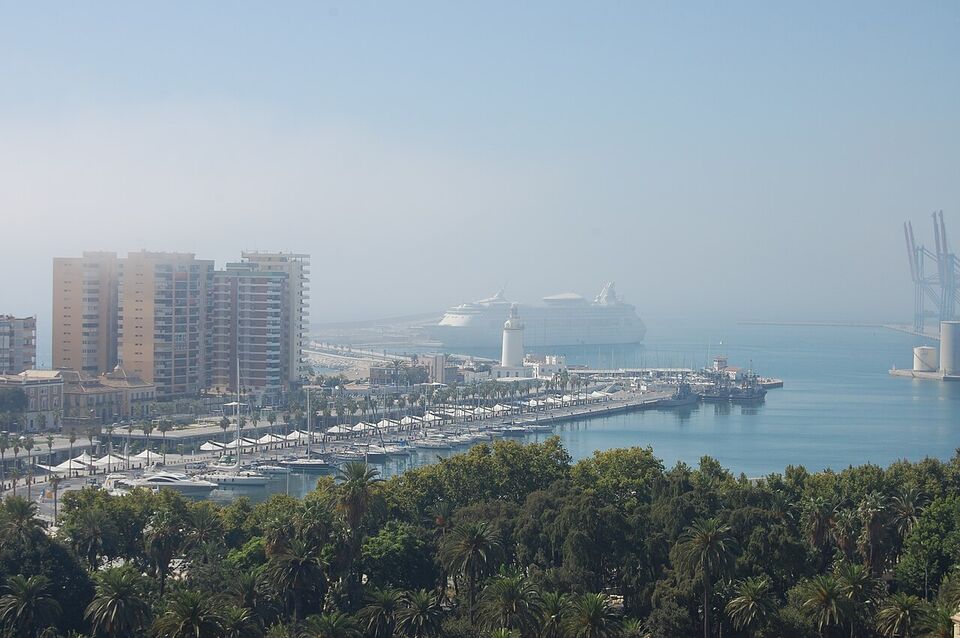
Large ships use the two terminals on the Levante side of the port, at the end of the eastern breakwater, about 1.2 miles (2 km) and 25 minutes' walk from the center along the waterfront promenades of Muelle Uno and the Palmeral de las Sorpresas. A shuttle usually runs. Small ships berth at the Palmeral terminal, minutes from town.
Málaga's center is compact: the Moorish Alcazaba and the Gibralfaro castle above it, the Roman theater, the cathedral, the Picasso Museum (book a timed ticket), and the Atarazanas market. Beaches start a 15-minute walk east. See Málaga and the Costa del Sol.
Watch out
Granada's Alhambra is about 1 hr 30 min each way by road from Málaga. With a normal port day it is only realistic on a ship's excursion or a private driver who knows the ship schedule, and only with Alhambra tickets already in hand: they are named, timed and sell out weeks ahead. Ronda is about the same distance. See Alhambra tickets.
Cádiz
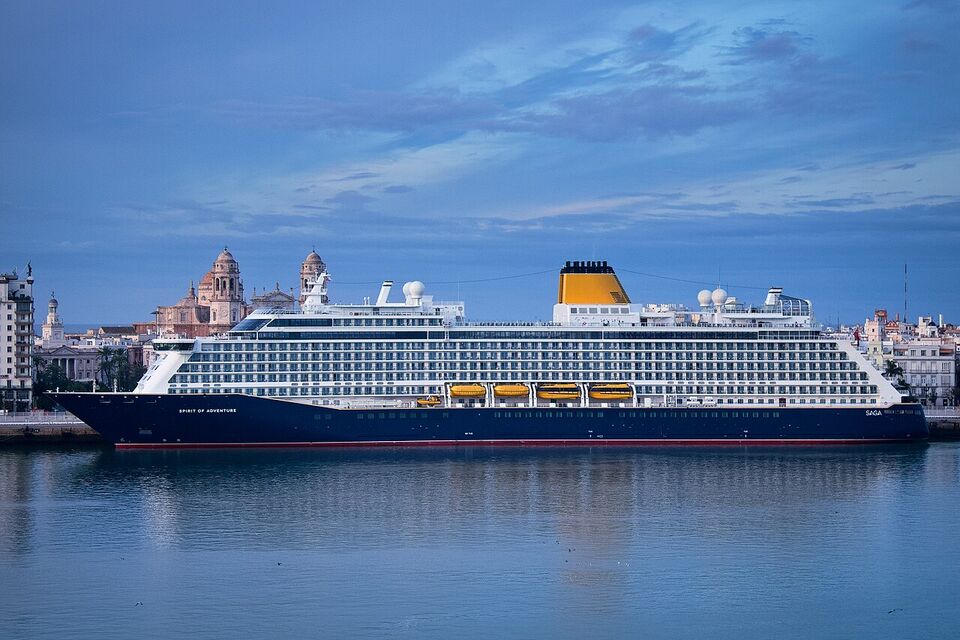
Cádiz has the best cruise arrival in Spain: ships tie up right beside the old town, and you walk off the gangway into the Plaza de San Juan de Dios in minutes. The whole peninsula is walkable, with the cathedral, the Torre Tavira's camera obscura, the Central Market and the La Caleta beach.
Cádiz is also the port for Seville and Jerez. Jerez, for sherry bodegas and the Royal Andalusian School of Equestrian Art, is about 35–40 minutes by regional train from Cádiz station, near the port. Seville is about 1 hr 45 min each way by train or road, which leaves about four hours in the city; it is doable on your own if the trains suit your times, but a ship tour carries less risk. See Seville, Andalusia and sherry and wine.
Other southern ports
- Cartagena: ships dock beside the old town; the Roman theater museum, the Punic wall and the modernist buildings are all on foot.
- Almería: a walkable center below its huge Moorish Alcazaba.
- Motril: a small port about an hour by road from Granada, used by some ships for Alhambra excursions.
- Seville by river: small ships sail up the Guadalquivir and dock at the Muelle de las Delicias, close to the Plaza de España and the Parque de María Luisa, a short walk or taxi from the cathedral.
Valencia, Alicante and Tarragona
Valencia's cruise terminals are in the commercial port, a few miles from the old town, so take the ship's or port shuttle or a taxi (about 15 minutes). The City of Arts and Sciences is on the way. In the old town, see the Central Market, the silk exchange (Lonja) and the cathedral, and have paella for lunch in a proper restaurant rather than a terrace with photos of it. See Valencia.
Alicante's terminal is close to the center; walk the palm-lined Explanada and take the elevator up to the Santa Bárbara castle. Tarragona, south of Barcelona, has Roman ruins (amphitheater, circus and walls) within walking distance of the port.
Bilbao, A Coruña, Vigo and the north
- Bilbao: most ships dock at the Getxo cruise terminal at the mouth of the estuary, about 9 miles (15 km) from the city; some use the Santurtzi industrial port. From Getxo, Bilbao's metro reaches the center and the Guggenheim in about 25–30 minutes, and the Vizcaya transporter bridge, a UNESCO site, is nearby. See the Basque Country.
- A Coruña: ships dock steps from the glassed-in balconies of the waterfront. Walk to the Roman Tower of Hercules, or take the train to Santiago de Compostela, about 30–35 minutes away, for the cathedral at the end of the Camino. See Galicia and the Camino.
- Vigo: a central dock, oysters on the Rúa da Pescadería, and about an hour by train to Santiago. In summer, ferries go to the Cíes Islands, but they need an advance authorization; see the outdoors.
- Santander, Gijón and Ferrol appear on some Atlantic itineraries; Gijón's port is outside the city, so plan on a shuttle or taxi. See northern Spain.
The Canary Islands
From October to April, ships cruise the Canaries from Spain, Madeira and northern Europe, and transatlantic repositioning cruises often stop here. Ports are close to town: Santa Cruz de Tenerife and Santa Cruz de La Palma are walk-off, Las Palmas de Gran Canaria docks near the Santa Catalina area and a short ride from Las Canteras beach, and Arrecife on Lanzarote is a small, easy town.
The big island excursions are Teide National Park on Tenerife (about an hour each way by road; the summit trail needs a permit) and the volcanic Timanfaya park on Lanzarote. Both work on your own with a rental car or taxi, but ship tours have the advantage of waiting for you. See the Canary Islands.
Watch out
The Canary Islands are one hour behind mainland Spain. Your ship may keep mainland time, or not, so check whether "all aboard" is ship time or local time. Phones switch automatically and can confuse the issue.
Doing a shore day on your own
Independent shore days save money and get you away from the tour-bus crowds. They also put the risk of missing the ship on you. Done right, it is easy.
- Book timed tickets early. Sagrada Família, Park Güell, the Alhambra, the Real Alcázar in Seville and the Picasso Museum in Málaga all run timed entry. Book in your own name, exactly as on your passport, as soon as your port day is fixed.
- Check the local calendar. Public holidays, Sunday shop closures and Holy Week processions change everything. Many museums close one day a week, often Monday. See festivals and when to go.
- Plan to be back an hour early. The ship will not wait for independent travelers. Allow for traffic and the shuttle line, and be at the gangway at least 30–60 minutes before all-aboard.
- Carry the essentials. Your ship card, photo ID, a charged phone with the port agent's number (on your daily program), a credit card and a little cash.
- Use trains where they make sense. Spanish trains are punctual, but check strike notices (posted in advance) on port days. See getting around.
- Agree taxi fares for long trips. In town, taxis use the meter. For a half-day private tour, agree the price and return time first.
Save money
Most Spanish ports are cheap to explore alone. In Cádiz, Cartagena, Málaga or A Coruña you need nothing more than walking shoes; in Barcelona and Palma, a shuttle ticket and a few metro or bus rides. A ship excursion makes the most sense for far-off sights such as the Alhambra from Málaga or Seville from Cádiz, where the ship's guarantee to wait for its own tours is worth paying for.
Money, entry and practical tips
- Entry: if your cruise starts in Spain or you arrive on a transatlantic sailing, your first Schengen entry is registered under the EU's Entry/Exit System, with fingerprints and a photo. ETIAS, the EU's travel authorization, is not running yet. Days in Spanish ports count toward the 90/180-day Schengen limit. See entry requirements and ETIAS.
- Money: contactless cards work almost everywhere; carry €20–50 in cash for small bars and markets. At ATMs and card terminals, always choose to pay in euros. See money.
- Tipping: round up or leave a euro or two at cafes and bars; 5–10 percent at a sit-down lunch is generous. Tipping is not expected the way it is in the US. See etiquette.
- Phones: switch to a Spanish or EU network on shore and turn off data roaming at sea, where ship networks charge high rates. See staying connected.
- Heat: July and August shore days in Andalusia and Valencia pass 95°F (35°C). Start early, carry water and plan indoor sights for midday. Tap water is safe. See health.
- Dress for churches: the cathedrals of Palma, Seville, Málaga and the Sagrada Família ask for covered shoulders and no very short shorts.
Thinking of staying on after the cruise? A few nights in Madrid, Seville or Granada by high-speed train make an easy extension. After a fatal collision near Urda (Toledo) on October 28, 2026, high-speed trains between Madrid and Andalusia were suspended, and Renfe stopped selling tickets on the route until December 13, 2026, though service may return sooner; check Renfe, Iryo and Ouigo before you plan, and consider flying in the meantime. See planning your trip, or let us plan it for you.
Add it to a route in the trip builder, or ask us to plan the hotels, trains and guides for you.