
Pick Madrid if you care most about art, food and nightlife, want a slightly cheaper trip, and plan to see Toledo, Segovia or Andalusia by train. Pick Barcelona if Gaudí, the Mediterranean and a beach afternoon are the point of your trip, and accept higher prices, a hefty tourist tax and the heaviest crowds and pickpocketing in Spain.
If you have a week or more, the honest answer is both: the two cities are about 2 hours 30 minutes to 3 hours apart by fast train (check the current timetable), and they are different enough (Castilian capital against Catalan port) that each makes the other better. Give Madrid three nights and Barcelona three or four, and fly into one and home from the other.
Madrid vs Barcelona at a glance
| Madrid | Barcelona | |
|---|---|---|
| Flights from the US | Iberia's hub: the most nonstops, many year-round; about 7 hours from New York | Fewer nonstops, more of them summer-only; about 8 hours from New York |
| Airport to center | Airport Express bus €5 (about $5.60), 30–40 minutes to Cibeles and Atocha; Metro and commuter train too | Aerobús to Plaça de Catalunya in about 35 minutes; R2 Nord train and Metro L9 Sud too |
| Typical central hotel for two | $$ for a good 3- or 4-star most of the year | $$ to $$$, higher from May to October |
| Tourist tax | None | About €8.40 (about $9) per person per night at a 4-star hotel, €12 (about $13) at a 5-star |
| Signature sights | Prado, Reina Sofía, Thyssen, Royal Palace, Retiro park | Sagrada Família, Park Güell, Casa Batlló, La Pedrera, Gothic Quarter, Picasso Museum |
| Timed tickets that sell out | Rarely; the Royal Palace on busy weekends | Sagrada Família, Park Güell, Casa Batlló: book days to weeks ahead |
| Beach | None; the nearest beaches, around Valencia, are about 1 hour 50 minutes away by fast train | City beaches from Barceloneta north; swimming June to September |
| Food | Tapas bars, Castilian roasts, cocido, churros, a huge market and bar scene | Catalan cooking, seafood and rice dishes, vermouth, the Boqueria and neighborhood markets |
| Nightlife | Very late and very local: dinner at 10 p.m., bars past 2 a.m. | Late too, with beach clubs and more tourist-oriented bars |
| Language | Spanish | Catalan and Spanish; signs and menus often in Catalan first |
| Crowds | Busy, but a big working city absorbs visitors | One of Europe's most visited cities; crowded old town and cruise days |
| Pickpocketing | Common around Sol, Gran Vía, the Rastro and on the Metro | Very common on Las Ramblas, the Metro, the beach and at Sagrada Família |
| Easy day trips | Toledo and Segovia by fast train in about 30 minutes; El Escorial, Ávila | Girona in about 40 minutes; Montserrat, Sitges, Figueres |
| Best for | Art lovers, food and nightlife, budget travelers, a base for central Spain | Architecture, couples, families who want a beach, a first Spain trip with sea |
| Worst for | Beach lovers; July and August heat | Travelers who hate crowds; the tightest budgets |
Sights: museums against Gaudí
Madrid
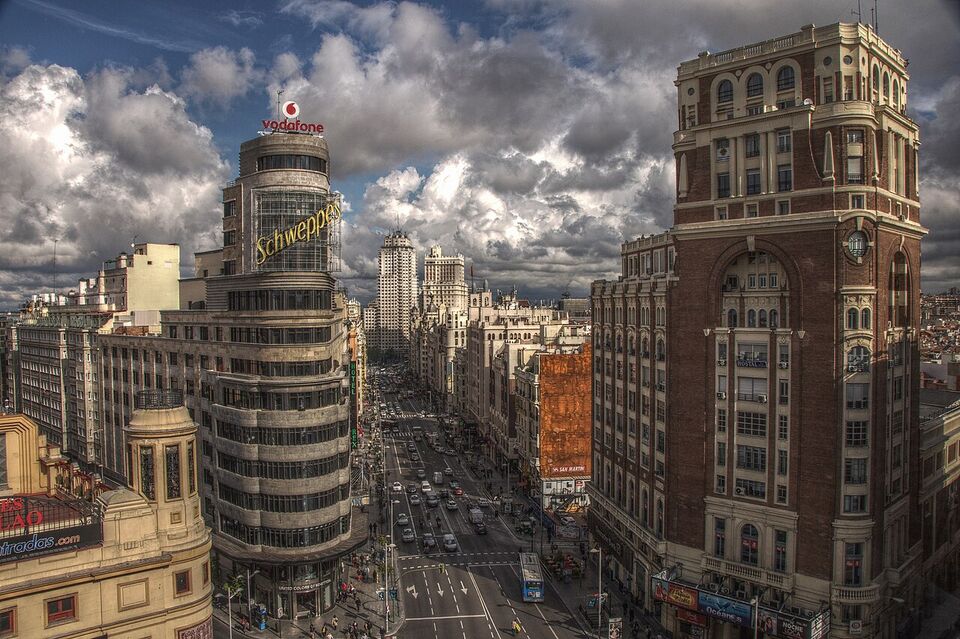
Madrid's strength is painting. Within a 15-minute walk along the Paseo del Prado you have three of the world's great art museums: the Prado (Velázquez, Goya, El Greco, Bosch, Titian), the Reina Sofía (Picasso's Guernica, Dalí, Miró) and the Thyssen-Bornemisza, which fills the gaps from Italian primitives to Impressionists and American painting. Add the Royal Palace, the Retiro park, Plaza Mayor and the Sunday Rastro flea market, and you can fill three or four days without leaving the center.
What Madrid lacks is one jaw-dropping building. It is a city you get to know by walking its neighborhoods and eating in them, and some first-time visitors find it less immediately photogenic than Barcelona. See Madrid sights.
Barcelona
Barcelona's draw is architecture. Antoni Gaudí's Sagrada Família is the most visited monument in Spain, and its central Tower of Jesus Christ was completed in June 2026, the centenary of Gaudí's death. On November 1, 2026 the official ticket page said the basilica was temporarily closed to the public, with no reopening date given; check sagradafamilia.org before you plan around a visit. Add Park Güell, Casa Batlló, La Pedrera and the wider modernisme (Catalan Art Nouveau) of the Eixample, then the medieval Gothic Quarter, the Picasso Museum, the hill of Montjuïc with the Miró foundation and the MNAC art museum, and the seafront.
The trade-off: the headline Gaudí sights all need timed tickets, and they are crowded. See Barcelona sights and Sagrada Família tickets.
Insider tip
Buy Gaudí tickets only on the official sites. The Sagrada Família sells online only, with timed entry (check its current status first); lookalike resale sites add fees and can sell slots that do not exist. In Madrid, use the Prado's free last two hours (6 to 8 p.m. Monday to Saturday, 5 to 7 p.m. on Sundays and holidays) on a weekday.
Cost: what each city really costs
Both are cheaper than Paris, London or New York, and Madrid is generally the cheaper of the two. Hotels make the biggest difference: Barcelona's rooms cost more for most of the year, and from April 1, 2026 the city charges one of Europe's highest tourist taxes. Madrid has none.
| Item | Madrid | Barcelona |
|---|---|---|
| Tourist tax, per person per night | None | €6 hostels, €7 other lodging, €8.40 at 4-star hotels, €9.50 in tourist apartments, €12 at 5-star hotels (about $7–13) |
| Tax for a couple, 4 nights in a 4-star | €0 | About €67 (about $75) |
| Central hotel, two people | $$ most of the year | $$–$$$, peaking in summer |
| Set lunch (menú del día) | Roughly €13–18 | Roughly €15–20 |
| Main course at a mid-range restaurant | $$ | $$–$$$ |
| Top art museum | Prado €15 (about $17), free in its last two hours | Picasso Museum and MNAC, both with free slots; Gaudí houses cost more |
| Airport bus | €5 (about $5.60) | A little more than Madrid's |
Barcelona's tax is collected by your hotel for up to seven nights, and the city plans to keep raising its share each year to 2029, so a five-star stay is expected to reach €15 (about $17) per person per night. Cruise passengers pay it too. Gaudí's houses are also expensive by Spanish standards: budget roughly €30 (about $34) and up for each of Casa Batlló and La Pedrera, more for the Sagrada Família with a tower. See money and budget.
Save money
If one city has to get the extra nights, give them to Madrid and spend Barcelona's on the Gaudí sights. A couple in a four-star hotel saves about €17 (about $19) a night in tax alone, before any difference in the room rate.
Hotels and areas to stay
In Madrid, the best first-time bases are around Sol and the Gran Vía (central, busy), the Barrio de las Letras (literary quarter near the Prado, full of bars), La Latina (tapas and the Rastro), Malasaña and Chueca (younger, livelier, LGBTQ+-friendly) and Salamanca (elegant, quieter, pricier). See Madrid.
In Barcelona, the Eixample is the classic choice: wide streets, Gaudí on your doorstep, easy Metro links. The Gothic Quarter and El Born put you in the medieval core but are noisy and pickpocket-heavy at night; Gràcia feels like a village; Poble-sec is good for food and value; Barceloneta is by the sea but crowded in summer. See Barcelona and where to stay.
Watch out
Barcelona plans not to renew any of its roughly 10,000 tourist-apartment licenses, so they would end by November 2028; the plan faces legal challenges, so check before booking a 2028 or later stay. Both cities have cracked down on illegal short-term rentals. Spain's national rental registration number was struck down by the Supreme Court in May 2026, so look for a license or registration number from the regional government on the listing, and expect hotels to be the more reliable choice in central Barcelona.
Food and drink
Madrid eats and drinks out more than almost any city in Europe. Go bar to bar in La Latina's Cava Baja, try a bocadillo de calamares (fried squid sandwich) near Plaza Mayor, a caña (small draft beer) with a free tapa, cocido madrileño (a chickpea and meat stew served in courses) in winter, and chocolate and churros at any hour. Markets such as San Miguel, San Fernando and Antón Martín are good for grazing. See Madrid food.
Barcelona cooks Catalan: pa amb tomàquet (bread rubbed with tomato and olive oil), seafood and rice dishes, fideuà (noodle paella), escalivada (roasted vegetables), and a revived weekend ritual of vermut (vermouth) before lunch. The Boqueria is the famous market, but Santa Caterina and the neighborhood markets of Gràcia and Sant Antoni are calmer and closer to how locals shop. See food and wine, including cava from the Penedès just outside the city.
Both cities eat late: lunch around 2 p.m., dinner from 9 p.m. Madrid runs even later. Neither expects big tips; rounding up or leaving a few euros for good service is plenty.


Getting around
Both have excellent, cheap Metro systems, and both centers are walkable. Madrid's historic core is compact, but the city sprawls, so you will ride the Metro between neighborhoods. Barcelona's center, from the port up through the Eixample, is easy on foot or by bike, and the beaches are a short Metro ride from the old town.
From the airports: Madrid's Airport Express bus costs €5 (about $6) and takes about 30 to 40 minutes to Cibeles and Atocha, running 24 hours a day from the airport (to Cibeles only at night). Madrid's Metro Line 8 and the Cercanías commuter train from Terminal 4 are other options, and taxis charge a fixed fare to the center. Barcelona's Aerobús runs to Plaça de Catalunya in about 35 minutes; the R2 Nord train from Terminal 2 and Metro L9 Sud are cheaper or more direct for some neighborhoods. See getting around and flights.
Day trips
Madrid wins on day trips. Toledo (cathedral, synagogues, El Greco) and Segovia (Roman aqueduct, Alcázar, roast suckling pig) are each about 30 minutes by fast train, and El Escorial, Ávila, Alcalá de Henares and Aranjuez are all easy. Madrid is also the hub for high-speed trains to Seville, Córdoba, Málaga, Granada and Valencia, though after a fatal collision near Urda on October 28, 2026, Madrid–Andalusia trains were suspended and Renfe stopped selling tickets on the route until December 13, 2026 (service may return sooner; check Renfe, Iryo and Ouigo, or fly). See day trips from Madrid.
Barcelona's are good too: Girona and its old Jewish quarter in about 40 minutes by fast train, the mountain monastery of Montserrat by train and rack railway, the beach town of Sitges, and Dalí's museum in Figueres. See Costa Brava and Girona.
Safety
The US State Department's advisory covers Spain as a whole: exercise increased caution (Level 2) because of terrorism and civil unrest. It also notes that pickpocketing and theft are very common, especially at airports, train stations and tourist sites, and that demonstrations happen often. Violent crime against tourists is rare in both cities.
The practical difference is theft. Barcelona has a reputation as one of Europe's pickpocketing capitals, with distraction thieves on Las Ramblas, in the Gothic Quarter, on Metro lines to Sagrada Família and the beach, and on the sand itself. Madrid's hot spots are Sol, Gran Vía, the Rastro and crowded Metro cars. In both, keep your phone off the café table, wear a cross-body bag in front, and carry a photocopy of your passport. Barcelona has also seen protests against mass tourism in recent summers, mostly peaceful. In an emergency, call 112. See safety.
Weather and seasons
Madrid sits on a high plateau about 2,100 feet (650 m) up, so it has real seasons: hot, dry summers that often reach around 90°F (32°C) or more, and cold, sunny winters with highs near 50°F (10°C) in January and frost at night. Barcelona is milder and more humid: summer highs in the low to mid 80s°F (28–29°C), winter highs around 57°F (14°C), and a sea warm enough to swim from June to September.
The best months for both are April to June and September to October. In July and August, Barcelona is the more comfortable city because of the sea, but it is also at its most crowded; Madrid empties in August as locals leave, and some family restaurants close. In winter, Madrid's Christmas lights and museums are hard to beat. See when to go, November, December and January.
By type of traveler
- First trip to Spain: Barcelona is easier to love on day one; Madrid is the better gateway to the rest of Spain. With a week, do both.
- Families: Barcelona, for the beach, the aquarium, Park Güell and the cable cars on Montjuïc. Madrid's Retiro park and its rowing boats are a good half day.
- Couples: Barcelona for the sea and sunsets from Montjuïc; Madrid for late dinners, flamenco and rooftop bars.
- Budget travelers: Madrid, for cheaper rooms, no tourist tax and free tapas culture in some bars.
- Art lovers: Madrid, without question, then the Picasso Museum and MNAC in Barcelona.
- Football fans: both. Real Madrid plays at the rebuilt Santiago Bernabéu and Atlético at the Metropolitano; FC Barcelona returned to a partly rebuilt Camp Nou in late 2025. See football.
- Cruise passengers: Barcelona is one of Europe's biggest cruise ports. See cruises.
Can you do both?
Yes, and it is the classic first Spain trip. High-speed trains link Madrid (Atocha or Chamartín) and Barcelona Sants many times a day. On past timetables the fastest took about 2 hours 30 minutes and most around 2 hours 45 minutes to 3 hours 10 minutes; trips can take longer than that now, so check the current timetable. Three companies compete on the route: Renfe's AVE, Italian-backed Iryo and French-owned Ouigo. In 2025, average fares were roughly €50 (about $56) on Ouigo, about €56 (about $63) on Iryo and up to about €74 (about $83) on the AVE; booked weeks ahead you can often pay much less, and last-minute peak trains much more.
Flying takes about 1 hour 15 minutes in the air, but with airport transfers and security it is rarely faster than the train, which runs center to center. See getting around and plan your trip.
- Book an open-jaw ticket from the US: into Madrid, home from Barcelona (or the reverse). It usually costs about the same as a round trip and saves a day of backtracking.
- Book Barcelona's Gaudí tickets and the Madrid–Barcelona train as soon as your dates are fixed, on the official Renfe, Iryo or Ouigo sites or apps.
- Spend three nights in Madrid (Prado, Royal Palace, a day in Toledo or Segovia) and three or four in Barcelona (Gaudí, Gothic Quarter, a beach afternoon or Montserrat).
- With ten days or more, add Seville and Granada from Madrid (by train when the Madrid–Andalusia line is running, otherwise by air); see Seville, Granada and Andalusia.
Choose Madrid if… / Choose Barcelona if…
Choose Madrid if
- Great paintings matter more to you than great buildings.
- You want late dinners, tapas crawls and nightlife where locals outnumber visitors.
- You want to spend less and skip the tourist tax.
- You plan day trips to Toledo or Segovia, or onward trains to Andalusia.
- You are traveling in winter, or you can live without a beach.
Choose Barcelona if
- Gaudí and the Sagrada Família are the reason you are going.
- You want the sea, a city beach and seafood on the waterfront.
- You like a compact, walkable center and Catalan culture.
- You are traveling in summer and would rather swim than sweat.
- You are fine with crowds, timed tickets and higher prices.
Still deciding? See Spain's regions, or let us help with our trip planning service.
Add it to a route in the trip builder, or ask us to plan the hotels, trains and guides for you.