Planning your trip
How many days do I need for Spain?
Seven days covers Madrid and Barcelona, or Andalusia alone (Seville, Córdoba and Granada); 10 to 14 days lets you combine the cities with Andalusia, and two weeks can add the Basque Country or a beach stay. Five days suits one city plus a day trip, such as Madrid with Toledo. Spain is roughly twice the size of Oregon, so pick two or three bases, give each at least three nights, and plan no more than one long train ride every second day. See Plan your trip.
When is the best time to go?
Mid-April to mid-June and mid-September to October, for most of the mainland. July and August are the hottest months: Seville and Córdoba average highs near 96°F (36°C), and heat waves push past 104°F (40°C); summer heat is the most underestimated hazard in Spain, and the weather service, AEMET, issues heat warnings by region. In August the coasts are packed while Madrid is half closed, with many family restaurants shut for two to four weeks. November to mid-March is cheapest, except around Christmas, New Year and Three Kings, and the Canary Islands give winter sun with highs around 70°F (21°C). See When to go and Safety.
What should I book first?
Flights, Alhambra tickets and the Sagrada Família, then trains and hotels. If your dates fall on Holy Week, Seville's April Fair, Las Fallas or San Fermín, book hotels 6 to 12 months ahead, because they sell out and prices jump. Buy Alhambra tickets the moment they go on sale for your dates, and check the Sagrada Família's status first: on November 1, 2026 its official ticket page said the basilica was temporarily closed to the public, with no reopening date given. Book long-distance trains one to three months out, once your dates are fixed. See Plan your trip.
Should I visit Madrid or Barcelona?
Most first trips include both. Pick Madrid for the Prado and Spain's great art museums, tapas and late nights, lower prices and day trips to Toledo and Segovia; pick Barcelona for Gaudí, the Gothic Quarter, the sea and a compact, walkable center. High-speed trains link them in about 2 hours 30 minutes to 3 hours 10 minutes on past timetables, sometimes longer now, so check the current timetable. Madrid has no tourist tax, while Barcelona charges about €7–12 (about $8–13) per person per night at most hotels. See Madrid vs Barcelona.
Which US cities fly nonstop to Spain, and what is the time difference?
Madrid and Barcelona are the main gateways, with nonstops from New York JFK, Newark, Boston, Washington Dulles, Philadelphia, Atlanta, Chicago, Miami, Dallas/Fort Worth, Los Angeles and San Francisco, among others; seasonal nonstops, mostly from Newark, reach Málaga, Palma, Bilbao and Santiago de Compostela. Airlines adjust routes every season, so confirm on the airline's site. Flying takes about 7 hours from New York to Madrid and about 11 from Los Angeles. Mainland Spain is 6 hours ahead of New York and 9 ahead of Los Angeles most of the year, and the Canary Islands are one hour behind the mainland. An open-jaw ticket, say into Barcelona and home from Madrid, usually costs little or nothing more. See Flights to Spain.
Will my phone, chargers and hair dryer work?
Your phone, yes, but choose how you pay for data. AT&T's International Day Pass and Verizon's TravelPass cost about $12 a day, many T-Mobile plans include some data abroad, and a travel eSIM, often $10–30 for a week or two, is usually the best value for trips of more than a few days (your phone must be unlocked). Spain uses Type C and F sockets at 230 volts, 50 Hz, so bring a plug adapter; chargers marked INPUT 100–240V need nothing more. Hair dryers, straighteners and curling irons are often 120 V only and can burn out, so use the hotel's hair dryer, which almost every Spanish hotel provides. See Phones, plugs and apps and the packing checklist.
Entry and documents
Do Americans need a visa or ETIAS for Spain?
Neither, for now. With a US passport you can visit Spain for tourism or business for up to 90 days in any 180-day period with no visa, no advance application and no entry fee. ETIAS, the EU's planned online travel authorization, is not operating as of November 2026, applications are not open, and its launch is now expected in 2027. When it starts, the fee will be €20 (about $22), free for applicants under 18 or over 70, and valid for three years or until your passport expires. Many websites with "ETIAS" in their names already take money for applications that do not exist yet, so check the official EU site before a 2027 trip. See Entry requirements.
What is the EES, and what happens when I land?
The Entry/Exit System is the EU's digital border record, fully running since April 10, 2026, and it has replaced passport stamps. At your first Schengen entry, your passport is scanned, your face is photographed and four fingerprints are taken, sometimes partly at a self-service kiosk; children under 12 are photographed but not fingerprinted. Lines have been longer and less predictable since it began, especially when several transatlantic flights land together at Madrid or Barcelona, so leave at least two to three hours before an onward train or flight on arrival day, and get to the airport three hours before a US-bound flight in summer. See Entry requirements.
How does the 90/180-day rule work?
You can spend up to 90 days in any rolling 180-day period in the Schengen area as a whole, so days in France, Portugal or Italy draw from the same 90 as your days in Spain. There is no reset on January 1: on any day, the border system counts back over the previous 180 days, and your arrival and departure days each count as a full day. The European Commission's short-stay calculator does the math, and it is the thing to run before you book anything close to the limit. See Entry requirements and Spain and its neighbors.
How long does my passport need to be valid?
At least three months past the day you plan to leave the Schengen area, and it must have been issued within the last 10 years, even if it has not expired. Fly home from Madrid on June 15, for example, and it must be good through at least September 15. The State Department recommends six months, and airlines check these rules at the gate in the US. If your passport has less than six months left, or you might add Morocco, which wants validity for your whole stay, renew before you go. See Entry requirements.
Money, cards and tipping
Is Spain expensive?
Per person per day, sharing a double room and before flights, a budget trip runs about €80–120 (about $90–135), a mid-range trip about €150–250 (about $170–280), and a comfort trip with boutique hotels or paradores about €300 (about $335) and up. A sample week for two at mid-range, three nights in Madrid and four in Barcelona in May, comes to about €2,350–3,170 (about $2,630–3,550) before flights. Andalusia, Castile and Galicia are easiest on a budget; Barcelona is the tightest. See Money and costs and the budget calculator.
Can I pay by card, and what if the machine offers dollars?
Contactless Visa and Mastercard work almost everywhere, and phone wallets are widely accepted, but carry €50–100 for small bars, markets and village shops. Know the PIN for every card, because Renfe ticket machines, parking meters, toll booths and self-service gas pumps may ask for it, and skip independent ATMs such as Euronet, which usually combine high fees with poor rates. When a card terminal, ATM or hotel desk offers to charge you in US dollars, always choose euros: that dynamic currency conversion uses a rate often 4 to 8 percent worse than your card's. See Money and costs.
How much should I tip?
Very little, and it is optional, because Spanish servers, bartenders and taxi drivers earn a full wage. Leave nothing or the small change for a coffee or a drink at the bar, coins (often €1–2) for tapas or a menú del día (set lunch), and round up or leave 5–10 percent for good service at a sit-down dinner. Round taxis up to the next euro or two, and give porters €1–2 per bag. Tip a walking tour guide €5–10 per person, more on "free" tours, where tips are the guide's pay. See Money and costs and Etiquette.
Which places charge a tourist tax?
Catalonia and the Balearic Islands, plus a few cities, per person per night at your lodging. After the April 2026 increase, Barcelona's combined total is €12 (about $13.45) in a five-star hotel, €8.40 in a four-star, €9.50 in a tourist apartment, €7 in other hotels and €6 in hostels; children 16 and under are exempt, the tax covers up to seven nights, and the city plans to raise its surcharge each year to 2029. Mallorca, Menorca, Ibiza and Formentera charge €1–4 (about $1.10–4.50) from May to October plus 10 percent VAT, and much less from November to April. Santiago de Compostela charges about €1, and Basque cities start their own taxes from January 2027, so check final rates. Madrid, Andalusia, the Valencia region and the Canary Islands have no tourist tax as of November 2026. See Money and costs and Where to stay.
Can I get the sales tax back, and what can I bring home?
Yes. Spain's VAT (IVA) is 21 percent on most goods, and as a visitor who lives outside the EU you can reclaim it on goods you take home, with no minimum purchase. Validate the form digitally at the DIVA kiosks at your last EU airport before you check your bags, and keep the goods in your carry-on. Refund companies keep a handling fee, so 12 to 15 percent of the price is a realistic return on modest purchases, and the Canary Islands use their own tax, so the mainland refund system does not apply there. As for food, olive oil, saffron, turrón (almond nougat), canned fish and hard cheese can go home with you; jamón, chorizo and other pork or meat products cannot. Your US duty-free allowance is $800 per person, including 1 liter of alcohol. See Money and costs and Shopping and bringing it home.
Getting around: trains and driving
Should I take the train or rent a car?
Take the train between big cities and skip a car in Madrid, Barcelona, Seville and Valencia, where traffic, low-emission zones and parking make it a burden. Rent one for the white towns and the Cádiz coast, the Rioja wine country, Asturias and the Picos de Europa, Galicia's Rías Baixas, the Costa Brava, Mallorca and the Canary Islands. A common pattern is to train between cities and pick up a car for two or three days at a station, then drop it before the next city. For the islands, fly or take a ferry. See Getting around Spain and Driving in Spain.
Are trains running between Madrid and Andalusia?
Not as of early November 2026. After a fatal collision between a Renfe AVE and an Iryo train near Urda (Toledo) on October 28, 2026, high-speed trains between Madrid and Andalusia (Córdoba, Seville, Málaga, Granada, Cádiz and Huelva, plus Barcelona to Andalusia through trains) were suspended. Renfe stopped selling tickets on the route until December 13, 2026, though service may return sooner, and no reopening date has been confirmed. Check Renfe, Iryo and Ouigo before you plan, and consider a domestic flight or a long-distance bus in the meantime. Madrid to Toledo and Málaga to Seville were reported running normally, and even when the line reopens, temporary speed limits near Córdoba can add time. See Getting around Spain.
AVE, Avlo, Iryo or Ouigo: which train, and is a rail pass worth it?
On the busiest routes, Renfe (with its AVE and low-cost Avlo trains), Iryo and Ouigo compete, so compare all three. Fares rise as trains fill: advance low-cost fares can be under €20 (about $22), while the same trip bought the day before on a full AVE can cost €100 (about $112) or more. The low-cost options include only a small bag and charge for larger suitcases. Booking windows run from a few weeks to several months ahead, and stations X-ray bags before long-distance platforms, so arrive 20 to 30 minutes early. The Renfe Spain Pass (4 to 10 journeys within one month) and Eurail passes are not valid on Iryo or Ouigo, and Eurail holders pay seat reservations, so a Eurail pass makes the most sense when Spain is one part of a longer trip through France, Italy or Portugal. See Getting around Spain.
Do I need an International Driving Permit, and what are the road rules?
Yes. The State Department says you must get an International Driving Permit before you arrive if you plan to drive in Spain, about $20 from AAA, and carry it with your US license and passport. Speed limits are 120 km/h (75 mph) on motorways, 90 km/h (56 mph) on other roads outside towns and 50 km/h (31 mph) in towns; there is no right turn on red, and the blood alcohol limit is 0.05 percent, stricter than the US 0.08. Most motorways are now free, though the Costa del Sol, Galicia, the Basque Country and Madrid's approaches still charge. Every city of more than 50,000 people must set up a low-emission zone, which the big ones enforce with cameras, and speed-camera fines reach you through the rental company with a handling fee. See Driving in Spain.
Madrid
How do I get from Madrid's airport into the city?
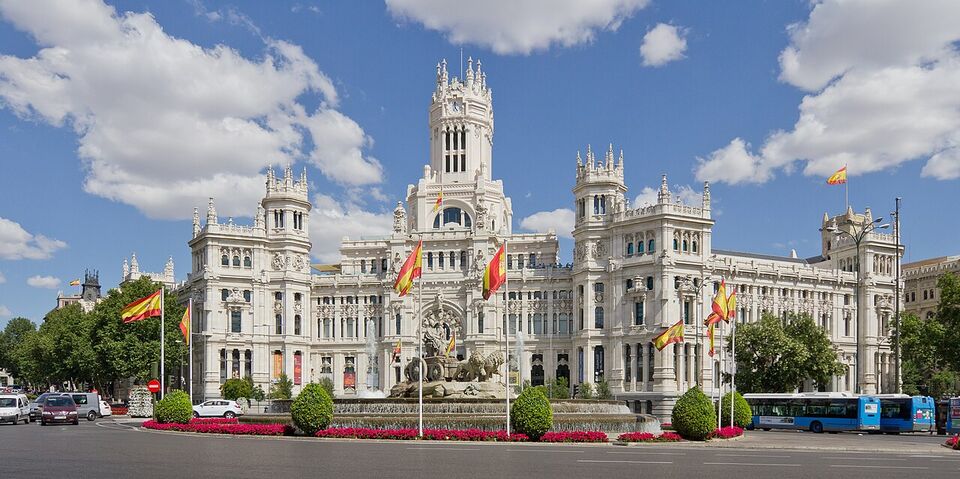
An official white taxi charges a fixed fare to anywhere inside the M-30 ring road at any hour, €33 (about $37) at last check; it is posted in the cab. The Airport Express bus runs 24 hours to Cibeles and Atocha for €5 (about $5.60), paid on board by card, in 30 to 45 minutes. Metro Line 8 reaches Nuevos Ministerios in 15 to 20 minutes for €4.50–5 including the €3 airport supplement, and from T4 only, the Cercanías commuter train reaches Atocha in about 25 minutes. Check which terminal your airline uses: T4 and its satellite are about 2 miles (3 km) from T1 to T3. See Madrid and Flights to Spain.
How many days do I need in Madrid, and where should I stay?
Three full days for the city, or four or five with a day trip to Toledo or Segovia. First-timers do best in the Barrio de las Letras (Huertas), Sol, the Habsburg streets around the Plaza Mayor or La Latina, where you can walk to the museums, the palace and the tapas bars; Huertas, five minutes from the Prado, is the best all-round base. Salamanca and Chamberí are calmer, with excellent metro links. Madrid charges no city tourist tax at the time of writing. See Madrid and Where to stay.
When are the Prado and the other big museums free?
The Prado costs €15 (about $17) with timed entry and is free for its last two hours (6 to 8 p.m. Monday to Saturday, 5 to 7 p.m. Sundays and holidays); join the line 30 to 45 minutes early. The Reina Sofía, home of Picasso's Guernica, costs €12 (about $13), is free Monday and Wednesday to Saturday from 7 to 9 p.m., and is closed on Tuesdays. The Thyssen costs €14 (about $16), with its permanent collection free on Mondays from noon to 4 p.m. The Paseo del Arte card covers one visit to each for €32.80 (about $37). The Royal Palace's free afternoons are for EU and Latin American residents only, so Americans pay €18 (about $20). See Madrid sights.
What are the best day trips from Madrid?
Segovia and Toledo are closest, about 27 and 33 minutes by high-speed train, from Chamartín and Atocha respectively; Madrid to Toledo trains were reported running normally after the Urda collision. Ávila, El Escorial, Alcalá de Henares, Aranjuez and Cuenca are all within about two hours, and Alcalá, Aranjuez and El Escorial cost a few euros by commuter train or bus. Avoid Mondays for El Escorial, Aranjuez and Cuenca's museums, and Sunday mornings for Toledo Cathedral. Toledo and Segovia are lovely for a night once the day-trippers leave. See Day trips from Madrid.
Barcelona
Is the Sagrada Família open, and how do I get tickets?
Check first. On November 1, 2026 the official ticket page said the basilica was temporarily closed to the public, with no reopening date given, so check sagradafamilia.org before you plan around a visit, and do not rely on resellers, some of which keep selling dates. In normal times, buy from the official site, which charges no booking fee: €26 (about $29) with the audioguide app, or €36 (about $40) with a tower. Tickets usually go on sale about two months ahead, carry your name and are checked against photo ID; children under 11 are free but need a ticket. See Sagrada Família tickets.
What else should I book ahead in Barcelona?
Park Güell next: its monumental zone needs a timed ticket, sold online only at parkguell.barcelona for €18 (about $20), with 30 minutes after your slot to enter and no re-entry. Casa Batlló and La Pedrera start at €29 (about $32) each, so if you only go inside one, pick Casa Batlló for color or La Pedrera for the architecture and rooftop. The Picasso Museum is free on Thursdays from 4 to 7 p.m. and on first Sundays, with a booking. The Picasso Museum, MNAC and many other museums close on Mondays, while the Gaudí sites open daily. See Barcelona sights.
How do I get from Barcelona's airport into the city?
The airport is about 8 miles (13 km) from the center. The Aerobús is the simplest choice with luggage, about 35 minutes to the center, paid by card. From T2, the Rodalies R2 Nord train reaches Sants in about 25 minutes on a regular fare (the 10-trip T-casual works). The L9 Sud metro is slow, about 50 minutes with a change, and needs its own €5.90 (about $6.60) ticket unless you have the Hola Barcelona card, which covers unlimited travel for up to 5 days. A metered taxi runs roughly €35–40 (about $40–45). See Barcelona.
How bad are Barcelona's pickpockets?
Bad enough to plan for: theft is the risk you are most likely to meet. Thieves work the metro, especially L3 (Liceu, Drassanes, Plaça de Catalunya, Passeig de Gràcia) and L1 as the doors close, plus Las Ramblas and the Boqueria, the Gothic Quarter, Sagrada Família crowds, the Aerobús and the beach at Barceloneta. Wear a zipped cross-body bag in front, keep a hand on your phone near the doors, and never hang a bag on a café chair or leave it on the sand. If you hear riders call out carteristas (pickpockets), guard your things at once. See Barcelona and Safety.
Can I rent an apartment in Barcelona?
Yes, if it is licensed. A legal Barcelona tourist apartment must show a Catalan tourist registration number starting with HUTB, and an unlicensed rental can be shut down. The city plans not to renew any of its roughly 10,000 tourist-apartment licenses, so they would end by November 2028; the plan faces legal challenges, so check before booking a 2028 or later stay. Spain introduced a national registration number for short-term rentals in July 2025, but the Supreme Court struck it down in May 2026, so what counts anywhere in Spain is the regional license number on the listing. See Where to stay and Barcelona.
Andalusia: Seville, Córdoba and Granada
How do I get Alhambra tickets, and what if they are sold out?
Buy the Alhambra General ticket at tickets.alhambra-patronato.es as soon as your Granada dates are firm: €22.27 (about $25) online or €21 (about $24) at the office, covering the Nasrid Palaces, Alcazaba, Palace of Charles V and Generalife. You choose a fixed Nasrid Palaces time, which you cannot miss, and enter each visitor's name and passport number; there are no refunds or changes, and spring, summer and fall dates sell out weeks ahead. If your date is gone, try the night visit to the Nasrid Palaces, the Granada Card or a licensed guided tour (around €40–45, about $45–50), and be wary of lookalike sites. See Alhambra tickets and Granada.
How many days do I need in Seville?
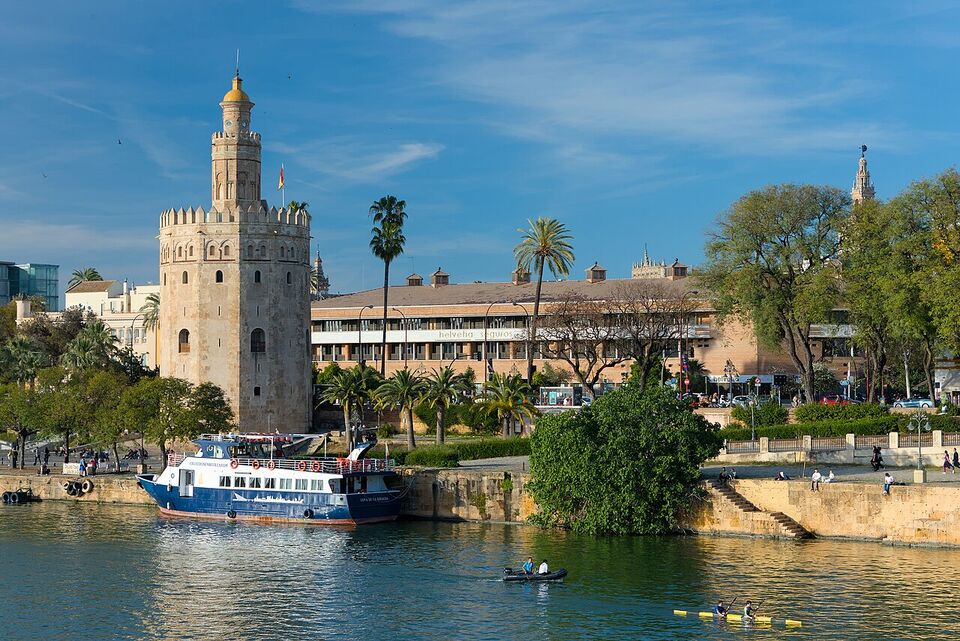
Three full days, for the Real Alcázar, the cathedral and Giralda, the Plaza de España, Triana and a flamenco show, or four to five with day trips to Córdoba, Cádiz or Carmona. Book the Alcázar's timed tickets, €15.50 (about $17), and buy cathedral tickets online at €13 (about $15) instead of €14 at the office. Getting there takes about 2 hours 30 minutes by high-speed train from Madrid when the line runs, but it was suspended after the October 28, 2026 Urda collision, so check Renfe or fly, about an hour. Seville has no tourist tax as of November 2026. See Seville.
Is Córdoba a day trip?
It works as one full day, about 45 minutes by train from Seville (check Renfe for current service), but one night lets you see the Mezquita free from 8:30 to 9:30 a.m., Monday to Saturday, when groups are not allowed (arrive by 8:20). Otherwise the Mezquita costs €15 (about $17), and on Sundays and holy days it closes from late morning to mid-afternoon for Mass. The Alcázar, Medina Azahara and most city museums close on Mondays. From Madrid it is about 1 hour 45 minutes by high-speed train when the line runs, suspended after the Urda collision; check Renfe. See Córdoba.
Do I need a car for the white towns?
To do them well, yes. Trains reach Jerez, Cádiz and Ronda, and buses reach most white towns, but slowly and only a few times a day. The simplest plan is a one-way loop: pick up a car in Seville and end in Málaga, or the reverse, with two nights in at least two bases such as Jerez, Vejer or Ronda. Give it five to seven days for the white towns, Jerez and Cádiz. You need an International Driving Permit with your US license. See Andalusia road trip and Driving in Spain.
Food and culture
When do Spaniards eat?
Late. Lunch, the main meal, runs about 2 to 4 p.m., and dinner starts at 9 p.m., often 10 p.m. in summer, on weekends and in Madrid and the south. Do not expect a restaurant kitchen to serve dinner at 6. Many Spaniards make lunch the big meal and have a few tapas and a glass of wine at 9, which costs much less than a full dinner. See Food and Etiquette.
What is the menú del día, and are tapas free?
The menú del día is a weekday set lunch with a first course, a main, dessert or coffee, bread and a drink for one price, typically €13–20 (about $15–22) in 2026, a few euros more in central Barcelona, Madrid and San Sebastián. Look for the chalkboard outside the door. Tapas are on the bill in most of Spain, but in Granada, Jaén, Almería and León a free tapa still comes with every drink. Restaurants must offer tap water free, and EU law requires them to tell you which of 14 major allergens are in each dish. See Food.
Is the siesta real, and why are shops closed?
The nap-after-lunch siesta is mostly a myth in big cities, where office workers take a long lunch and go back to work. What survives is the split day in small shops, especially in Andalusia and small towns: often open about 10 a.m. to 2 p.m. and 5 to 8:30 p.m. Chains and department stores open all day. On Sundays most shops close outside Madrid and tourist zones, though restaurants stay open, and in August family-run places in Madrid and inland cities may close for two to four weeks. See Etiquette.
Do people speak English, and do I need Catalan?
You can get through Madrid, Barcelona or Seville with English alone in hotels, big museums and tourist areas, but it thins out fast in neighborhood bars, village bakeries, pharmacies and markets, especially with people over 50, so a few dozen Spanish words help a lot. In Barcelona, signs, menus and metro announcements come in Catalan first; you do not need a word of it, but bon dia (good morning) and gràcies (thank you) go down well. Signs in the Basque Country are bilingual in Spanish and Basque. See Spanish for travelers.
Where can I see real flamenco?
Seville, Jerez, Granada and Cádiz in Andalusia, plus Madrid. Shows usually last about 1 hour to 1 hour 15 minutes and cost about €15–30 (about $17–34) in Granada's caves and small venues, while Madrid's top tablao lists show-only seats at €95.90 (about $107). Book a few days ahead, or a week or more for weekends, holidays and the best seats. The Festival de Jerez runs from February 19 to March 6, 2027. See Flamenco.
When are Holy Week and the big festivals?
Holy Week 2027 runs from Palm Sunday, March 21, to Easter Sunday, March 28. Las Fallas in Valencia is March 15–19 every year, Seville's April Fair is expected April 12–18, 2027 (confirm when the city publishes its calendar), San Fermín in Pamplona is July 6–14, and La Tomatina falls on August 25, 2027. Three Kings parades fill the streets on the evening of January 5. Book rooms 6 to 12 months ahead for Holy Week, the Feria and San Fermín, and expect trains to sell out around them. See Festivals.
Safety and health
Is Spain safe for Americans?
The US State Department rates Spain at Level 2: Exercise increased caution, because of terrorism and civil unrest, a general caution and the tier it has given France, Germany, Italy and the United Kingdom in recent years. Expect a visible police presence at stations and airports. Marches against mass tourism and housing costs happen in Barcelona, Palma, Málaga, San Sebastián and the Canary Islands; they target policy, though a few in Barcelona have sprayed diners with water pistols, so walk around them. Enroll in STEP, and save 112 and the US Embassy (Calle de Serrano 75, Madrid; +34 91 587 2200). See Safety.
Where do pickpockets and scammers work?
In Madrid, around Puerta del Sol, the Gran Vía, Plaza Mayor, the Sunday Rastro, Atocha and Chamartín stations, and on Metro Line 1 and the airport line; in Barcelona, on the metro and Las Ramblas; and around Seville's cathedral and Granada's Albaicín viewpoints. A phone on a café table is a classic loss, and luggage racks by train doors are a target at stops. Near Seville's cathedral and in Granada, women press a sprig of rosemary into your hand, read your palm and demand payment, so keep your hands to yourself and walk on. Carry one card and the day's cash, and leave your passport in the hotel safe with a photo on your phone. See Safety.
What about strikes, floods and wildfires?
Strikes by rail, airport and airline staff happen several times a year, are announced days or weeks ahead, and must keep minimum services running, so check Renfe and your airline before travel days and keep a buffer day before your flight home. From late summer into autumn, a DANA storm can cause flash floods on the Mediterranean coast, mostly from September to November; the one on October 29, 2024 killed more than 220 people around Valencia, which is open to visitors. Wildfires are a summer risk across the country, so check fire warnings before rural hikes or drives and obey evacuation orders at once. See Safety.
Can I drink the tap water, and what if I get sick?
Tap water is safe to drink almost everywhere, and restaurants and bars must offer it free on request. Call 112 in an emergency, free from any phone; any public hospital emergency department (urgencias) will treat you, and as a visitor you will be billed, often up front. Original Medicare does not cover care abroad, so buy travel medical insurance that includes evacuation. For minor problems, start at a pharmacy (green cross sign), where the pharmacists are university-trained and many speak some English; at night and on Sundays, a duty pharmacy (farmacia de guardia) is open in every area, with the address posted on every pharmacy door. No vaccines are required for entry, but be up to date on routine shots, especially measles. See Health.
Islands, neighbors and longer stays
Which islands are best in winter?
The Canary Islands, Spain's winter-sun islands, with coastal highs around 70–82°F (21–28°C) most of the year; they sit one hour behind the mainland and about 2 hours 30 minutes by air from Madrid. Give one island a week, or 10 to 14 days for two or three. The Balearics (Mallorca, Menorca, Ibiza and Formentera) are best from late May to June and September to early October; many resort hotels and beach restaurants close from November to March. See Canary Islands and Mallorca and the Balearics.
Can I add Portugal, Gibraltar or Morocco?
Yes, with a little planning. There is no direct train from Madrid to Lisbon: fly in about 1 hour 15 minutes or take the overnight bus, while the Celta train links Vigo with Porto twice daily in about 2 hours 30 minutes. Fast ferries cross from Tarifa to Tangier in about an hour. Since the border fence was removed on July 15, 2026, you walk into Gibraltar from La Línea with your passport and no routine passport check; days there do not technically count toward your 90, but with no record at the land crossing, plan as if they do. Flying into Gibraltar now means a Schengen entry check, including the EES, on arrival. See Spain and its neighbors.
Can I stay in Spain longer than 90 days?
Only with a residence visa, and the paperwork takes months. The non-lucrative visa suits retirees and people living on savings or pensions, needs €28,800 (about $32,300) a year for the main applicant plus €7,200 (about $8,100) per family member, and does not allow work, including remote work for US clients. The digital nomad visa suits remote workers for non-Spanish companies and needs about €2,849 (about $3,190) a month for one person in 2026. The golden visa closed to new applicants on April 3, 2025, and more than 183 days in Spain in a calendar year makes you a Spanish tax resident. See Long stays.