
Barcelona in brief
Barcelona is a Mediterranean port city of about 1.7 million people, the capital of Catalonia and Spain's second city. It packs Roman walls, a dense medieval core, the grid of the 19th-century Eixample with Gaudí's buildings, a city beach, and two hills (Montjuïc and Tibidabo) into an area you can cross by metro in half an hour.
It is also a city with its own language and a strong sense of itself. Street signs, menus and metro announcements come in català (Catalan) first, and many locals think of themselves as Catalan before Spanish. You do not need a word of Catalan to get by, but a bon dia (good morning) and gràcies (thank you) go down well. See our phrase guide for more.
Watch out
On November 1, 2026, the Sagrada Família's official site said the basilica was temporarily closed to the public, with no reopening date given. Check sagradafamilia.org before you build a day around it or buy a ticket anywhere else.
Most first-time visitors pair Barcelona with Madrid (see Madrid vs Barcelona) and often Andalusia. For sights and tickets, go to Barcelona sights; for the basilica alone, our Sagrada Família tickets page covers the booking in detail.
Different from home
Barcelona runs late. Lunch is 1:30 to 3:30 p.m., dinner starts around 9 p.m., and bars fill after 11. Restaurants that open at 7 p.m. for dinner are aimed at visitors. Shift your day by two hours and the city works much better.
The neighborhoods
Barcelona is a city of barris (neighborhoods), each with its own market, main square and festival. These are the ones you will spend time in.
Ciutat Vella: the old city
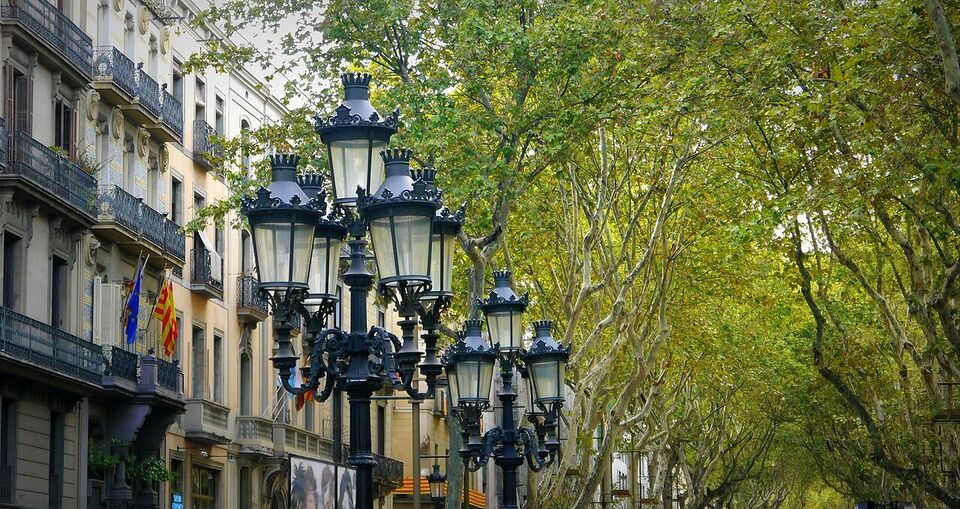
The old city runs from the port up to Plaça de Catalunya, split by Las Ramblas (in Catalan, La Rambla), the famous tree-lined promenade. It is beautiful, convenient and, in its busiest lanes, crowded and pickpocket-heavy.
- Barri Gòtic (Gothic Quarter): the Roman and medieval core around the cathedral and Plaça Sant Jaume, where the city and Catalan governments face each other. Narrow lanes, small squares, many hotels.
- El Born (Sant Pere, Santa Caterina i la Ribera): east of Via Laietana, home to Santa Maria del Mar, the Picasso Museum and the Santa Caterina market. More boutiques and wine bars, a little calmer at night than the Gothic Quarter.
- El Raval: west of Las Ramblas, with the MACBA contemporary art museum, the Boqueria market's back streets and a mixed, multicultural street life. Some blocks near the port feel rough late at night.
- La Barceloneta: the old fishermen's quarter on a triangle of land by the beach, with seafood restaurants and a local feel a few streets back from the sand.
L'Eixample
The Eixample (pronounced roughly "ay-SHAM-pla", meaning "the extension") is the grid laid out from 1860 with chamfered corners at every block. It holds Casa Batlló, La Pedrera and, at its northern edge, the Sagrada Família. Passeig de Gràcia is its grand shopping street. The Dreta (right) side is the classic upscale area; the Esquerra (left) side is more residential and the center of the city's LGBTQ+ nightlife, nicknamed the Gaixample.
The city has been turning some Eixample streets into green, car-light superilles (superblocks), with benches and play areas where traffic used to be. The ones around Carrer del Consell de Cent and Sant Antoni are pleasant places to walk.
Gràcia
Once a separate town, Gràcia sits above the Eixample on the way to Park Güell. It is a web of small streets and squares (Plaça del Sol, Plaça de la Virreina) with independent shops, cheap bars and a young, local crowd. Its Festa Major (neighborhood festival) in mid-August fills the streets with handmade decorations.
Poble-sec and Sant Antoni
Below Montjuïc, Poble-sec has one of the city's best tapas streets, Carrer de Blai, lined with bars selling pintxos (small bites on bread) for a euro or two each. Neighboring Sant Antoni is built around its restored iron market hall and has become one of the city's liveliest areas for vermouth and brunch.
Poblenou and the beaches
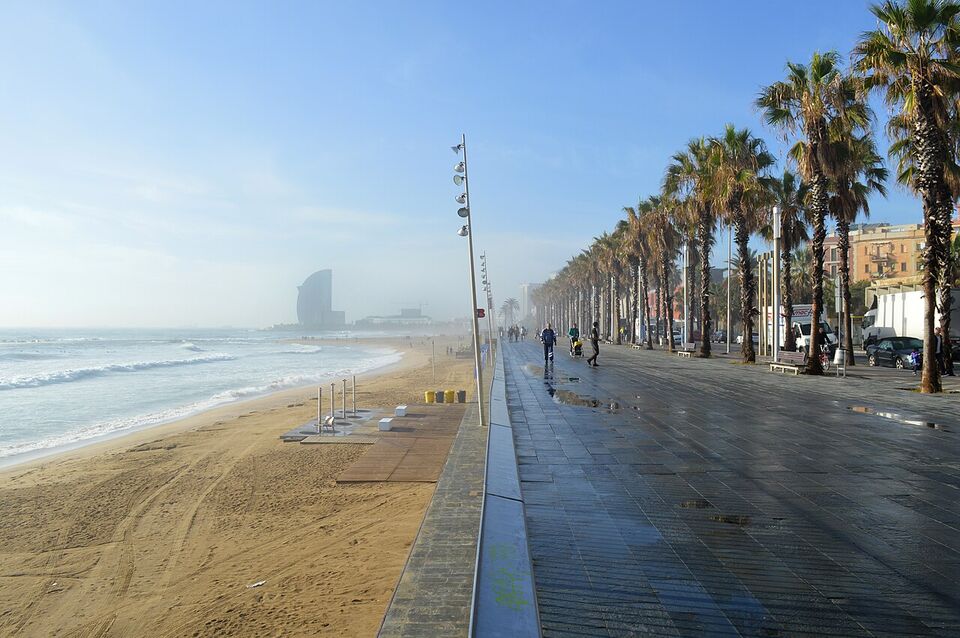
East of the old city, the former industrial district of Poblenou has design studios, the Rambla del Poblenou and quieter beaches (Bogatell, Mar Bella) than Barceloneta. It suits repeat visitors and families who want space and sand.
Upper Barcelona
Sarrià, Sant Gervasi and Pedralbes, up the hill, are leafy and well-off, with the Pedralbes monastery and the road to Tibidabo. Few visitors stay there, but they show a calmer side of the city.

Where to stay
Stay central. Barcelona is compact, and an extra 20 minutes each way on the metro adds up fast over four days. Prices peak from May to October and during big trade fairs (the Mobile World Congress in late February or early March pushes rates very high).
| Area | Best for | Typical hotel tier | Trade-offs |
|---|---|---|---|
| Eixample (Dreta) | First visits, Gaudí, shopping, easy metro | $$–$$$$ | Busy avenues; fewer cheap options |
| Barri Gòtic and El Born | Walking everywhere, atmosphere | $$–$$$ | Noisy at night, crowded lanes, more pickpockets |
| Gràcia | A local feel, couples, longer stays | $–$$ | 15–20 minutes' ride to the old city |
| Poble-sec and Sant Antoni | Tapas, value, Montjuïc | $–$$ | Fewer big hotels |
| Barceloneta and Poblenou | Beach time, families | $$–$$$ | Farther from the Eixample sights |
| El Raval | Budget stays, art, nightlife | $–$$ | Some streets feel rough late at night |
Hotel tiers are per night for two: $ under €100, $$ €100–200, $$$ €200–400, $$$$ over €400. In summer, expect even modest three-star hotels in the Eixample to sit at the top of the $$ band or above.
Watch out
Barcelona is moving to phase out tourist apartments. The city plans not to renew any of its roughly 10,000 tourist-apartment licenses, so they would end by November 2028; the plan faces legal challenges, so check before booking a 2028 or later stay. Until then, a legal apartment must show a Catalan tourist registration number (it starts with HUTB). An unlicensed rental can be shut down, and neighbors in the old city are tired of them. See where to stay in Spain for the national rules.
Getting to Barcelona
Barcelona's airport, Josep Tarradellas Barcelona-El Prat (BCN), is about 8 miles (13 km) southwest of the center. American, Delta, United and the Spanish low-cost long-haul airline Level fly nonstop from several US cities, including New York, Newark, Philadelphia, Atlanta, Boston, Miami and Los Angeles, though many routes are seasonal and schedules change each year. Our flights page lists current routes and how to connect through Madrid or other European hubs.
From inside Spain, the train is the default. High-speed trains run from Madrid's Atocha or Chamartín to Barcelona Sants in about 2 hours 30 minutes on the fastest services, though after the 2026 speed restrictions trips can take longer than the fastest timetables of past years, so check the current timetable. Three companies compete on the route: Renfe (AVE and its low-cost Avlo brand), Iryo and Ouigo. Book a few weeks out and you can often find fares under €40 (about $45); walk-up fares on busy days cost several times that. There are also fast trains to Valencia, Zaragoza, Girona, Málaga and Seville, and through trains to France.
Watch out
After a fatal collision near Urda (Toledo) on October 28, 2026, high-speed trains between Madrid and Andalusia were suspended, and Barcelona's through trains to Seville and Málaga use that line. Renfe stopped selling tickets on the route until December 13, 2026, though service may return sooner. Check Renfe, Iryo and Ouigo before you plan, and consider flying in the meantime.
See getting around Spain and Spain with France and Portugal.
Barcelona is also the biggest cruise port in the Mediterranean. Ships dock at the terminals on the Moll Adossat, south of the old city; a shuttle bus runs to the Columbus monument at the foot of Las Ramblas. Our cruise guide covers port days on your own.
From the airport to the city
BCN has two terminals, T1 and T2, about 2.5 miles (4 km) apart and linked by a free shuttle bus. Check which one your airline uses before you head back. These are the main ways into town.
| Option | From | To | Time | Cost |
|---|---|---|---|---|
| Aerobús express bus | T1 and T2 | Plaça d'Espanya, Plaça de la Universitat, Plaça de Catalunya | About 35 min | Higher than the metro; pay by card at the stop or on board |
| Metro L9 Sud | T1 and T2 | Zona Universitària or Torrassa, then change | About 50 min to the center with a change | €5.90 (about $6.60) airport ticket |
| Rodalies R2 Nord train | T2 only | Sants, Passeig de Gràcia, El Clot | About 25 min to Sants | A regular zone 1 fare; the T-casual is valid |
| Taxi | T1 and T2 | Anywhere | 25–40 min | Metered with an airport supplement; budget roughly €35–40 (about $40–45) to the center |
The Aerobús is the simplest choice with luggage, with buses every few minutes for most of the day. The train is cheapest if you land at T2 and are staying near Passeig de Gràcia or Sants. The L9 metro is slow because it skirts the city and needs a change for the center.
Save money
The 10-trip T-casual card does not work at the two L9 airport metro stations, which need their own €5.90 ticket. It does work on the R2 Nord train from T2. The Hola Barcelona travel card (unlimited travel for up to 5 days, from €12.50) does cover the airport metro, so it can pay off if you start using it the moment you land.
Getting around the city
Barcelona's metro is fast, clean and runs late: until midnight Sunday to Thursday, until 2 a.m. on Fridays, and all night on Saturdays. Most visitors need only lines L1 (red), L3 (green), L4 (yellow) and L5 (blue), plus the FGC suburban trains from Plaça de Catalunya and Plaça d'Espanya for Tibidabo, Sarrià and Montserrat.
Fares in 2026
These are the fares TMB listed in November 2026. Zone 1 covers the whole city and the airport.
| Ticket | What it gives you | Price |
|---|---|---|
| Single ticket | One trip | €2.90 (about $3.25) |
| T-casual | 10 trips, one person, with free transfers within 75 minutes | €13 (about $15) |
| T-familiar | 8 trips in 30 days, shareable | €11.50 (about $13) |
| Hola Barcelona | Unlimited metro, bus and urban trains for up to 5 days, airport metro included | From €12.50 (about $14) |
| Airport ticket | One metro trip from or to Aeroport T1 or T2 | €5.90 (about $6.60) |
For a typical four-day trip, one T-casual each covers most visitors; couples who want to share a single card should get the T-familiar instead, because the T-casual is for one person. You can also tap a contactless bank card at many gates for single fares, but the multi-trip cards are much cheaper per ride.
Walking, buses, taxis and bikes
The old city and most of the Eixample are walkable: Plaça de Catalunya to the cathedral is about 10 minutes, and to the Sagrada Família about 35 minutes on foot. Buses fill gaps the metro misses (the V and H lines run in straight lines across the grid). Taxis are black and yellow, metered and reasonable; the FreeNow and Cabify apps work, and Uber in Barcelona mostly books licensed taxis.
The city's red Bicing bikes are for residents only. Visitors can rent bikes or e-bikes from shops in the old city and use the protected lanes, which are extensive. Do not drive in Barcelona: parking is expensive, the whole metro area is a low-emission zone, and you will not need a car until you leave (see driving in Spain).
The tourist tax
Catalonia charges a per-person, per-night tax on tourist stays, and Barcelona adds a city surcharge on top. On April 1, 2026 the combined charge roughly doubled. The totals in Barcelona are now about:
| Where you sleep | Per person, per night (Barcelona total) |
|---|---|
| 5-star hotel | €12 (about $13) |
| Tourist apartment | €9.50 (about $11) |
| 4-star hotel | €8.40 (about $9.40) |
| Other hotels and lodgings | €7 (about $8) |
| Hostels | €6 (about $7) |
| Cruise passengers, stop under 12 hours | €11 (about $12) |
The tax applies for up to seven nights per stay, and children 16 and under are exempt. Hotels usually add it at checkout, even when you prepaid the room online, so a couple spending four nights in a four-star hotel should expect about €67 (about $75) on top of the bill. The city surcharge, €5 since April 2026, is planned to rise in later years (to €8 by 2029 under the council's plan), so check the current rate if you are booking for 2027 or later. Elsewhere in Catalonia the rate is lower. See money in Spain for the Balearic tax and other regions.
Pickpockets and safety
The US State Department rates Spain at Level 2, "exercise increased caution," because of terrorism and civil unrest; see our safety page for what that means. In Barcelona, the risk you are most likely to meet is theft. The city has some of the most skilled pickpockets in Europe, and they work exactly where visitors go.
Where it happens
- The metro, especially L3 (Liceu, Drassanes, Plaça de Catalunya, Passeig de Gràcia) and L1, and at the doors as they close.
- Las Ramblas and the Boqueria, where crowds make bumping normal.
- The Sagrada Família and Park Güell, while you look up or take photos.
- The beach, where bags left on towels disappear during a swim.
- Café and restaurant terraces, where a phone on the table is easy to lift under a map or a menu.
Common tricks
Watch for the "stain" (someone points out bird droppings or spills something on you and offers to help clean it), petitions and clipboards, staged crowding at metro doors, fake police asking to see your wallet, and motorbike snatches of bags and phones. Thieves also target rental cars with luggage visible, especially at service areas on the highways out of the city.
- Carry your phone in a front pocket or a zipped bag, never in a back pocket or on the table.
- Use a cross-body bag worn in front on the metro and in crowds.
- Leave your passport in the hotel safe and carry a photocopy or a photo of it.
- Split your cards and cash; keep one card back at the hotel.
- At the beach, take turns swimming or bring only what you can lose.
Violent crime against visitors is uncommon. Drink spiking has been reported in nightlife areas; watch your glass. If something is stolen, file a report (denuncia) with the Mossos d'Esquadra, Catalonia's police, for insurance; the emergency number is 112. The US Consulate General in Barcelona helps with lost or stolen passports.
Insider tip
The thieves on L3 tend to work the stops nearest the sights. If you are standing near the doors at Liceu or Passeig de Gràcia, put your hand on your phone pocket as the train pulls in. Locals do it without thinking.
Barcelona also has protests. Catalan independence marches, strikes and, since 2024, demonstrations against mass tourism happen several times a year, mostly peacefully. A few have targeted visitors with water pistols and chants; walk away and you will be fine.
Eating and drinking
Catalan cooking leans on the sea, the vegetable gardens and the pig. Start with pa amb tomàquet (bread rubbed with tomato, olive oil and salt), then try escalivada (roasted peppers and eggplant), botifarra (Catalan pork sausage) with white beans, fideuà (a paella-like dish made with thin noodles), arròs negre (rice black with squid ink) and crema catalana, the local cousin of crème brûlée. From January to March, restaurants outside the city hold calçotades, feasts of grilled spring onions dipped in romesco sauce.
The best value in town is the weekday menú del día (set lunch): a starter, main, dessert or coffee and a drink for roughly €15–20 (about $17–22) in ordinary neighborhood restaurants. Dinner à la carte costs more. On Sundays, do as locals do and have a vermut (sweet vermouth on ice with an olive and a slice of orange) with olives and potato chips before lunch.
Markets
The Boqueria on Las Ramblas is the famous one, now crowded with visitors buying fruit cups; go before 10 a.m. or eat at one of its counter bars. The Santa Caterina market in El Born, with its wavy, colored roof, and the Sant Antoni market are more local. Most markets close on Sundays and some stalls close on Monday mornings. More on markets and dishes in Spanish food and Spanish wine (Barcelona is the gateway to cava country and the Priorat).
Watch out
Paella on Las Ramblas, with a photo menu and a host on the sidewalk, is usually reheated and overpriced. Paella is a lunch dish from Valencia; locals eat it at midday, often on Thursdays or Sundays, and in places that make it to order (expect a 20 to 30 minute wait). See Valencia for the real thing.
Tipping is small: round up or leave a euro or two at a café, and about 5 to 10 percent at a sit-down dinner if service was good. Nobody expects 20 percent. Tap water is safe, though many locals dislike its taste and drink bottled.
When to visit
Barcelona's best months are late April to June and mid-September to October: warm enough for the beach at the edges of the season, with highs in the upper 60s to upper 70s °F (about 20–26°C). July and August reach the mid-80s °F (about 29–30°C) with heavy humidity, peak crowds and peak prices, and in August some family-run restaurants and shops close for two or three weeks. November to March is mild (daytime highs around 57–64°F, or 14–18°C), quieter and cheaper, with short days and occasional heavy rain.
Dates to know: Sant Jordi on April 23 (books and roses sold on every corner), Sant Joan on the night of June 23 (fireworks and bonfires on the beaches), the Festa Major de Gràcia in mid-August, and La Mercè, the city's big festival, around September 24. Public holidays close many shops, including December 25 and 26, January 1 and January 6. See when to go, festivals and our month pages for November, December and January.
How many days, and a sample plan
Three full days cover the Gaudí highlights, the old city and a beach afternoon. Four lets you add Montjuïc and Gràcia at an easy pace. With five or six, take day trips to Girona, Figueres, Montserrat or Sitges. Book the timed sights before you fly; see Barcelona sights for prices and times.
- Day 1
The old city
Start at the cathedral and walk the Gothic Quarter's Roman walls and Plaça del Rei. Cross Via Laietana to Santa Maria del Mar and the Picasso Museum (book a slot). Lunch at 2 p.m. in El Born, a slow afternoon, then the Boqueria and Las Ramblas at dusk, with your bag in front of you. Dinner at 9.
- Day 2
Gaudí
Take the first or second morning slot at the Sagrada Família, then walk down Passeig de Gràcia to Casa Batlló and La Pedrera. Menú del día lunch in the Eixample. Late afternoon in Gràcia's squares, with dinner there.
- Day 3
Park Güell and the sea
Park Güell in the morning (take the bus or a taxi up; the walk from the metro is steep). Afternoon on the beach at Barceloneta or Bogatell, seafood rice for a late lunch, and an evening walk along the waterfront to the Olympic Port.
- Day 4
Montjuïc and Poble-sec
Cable car or bus up Montjuïc for the castle views, the Fundació Joan Miró and the MNAC's Romanesque frescoes. Walk down through the gardens to Poble-sec and eat your way along Carrer de Blai.
For whole-trip routes that combine Barcelona with Madrid, Seville or the Basque Country, see planning your trip and the trip builder.
Practical details
- Sundays: many shops outside the old city and the big malls close; museums and restaurants mostly stay open. Many museums close on Mondays, though the Sagrada Família and the Gaudí houses open daily.
- Money: cards and contactless payments are accepted almost everywhere, even for a coffee. If a card machine asks whether to charge in dollars or euros, choose euros. See money.
- Power and phones: Type C and F plugs, 230 volts. See staying connected.
- Time: Barcelona is six hours ahead of New York and nine ahead of Los Angeles for most of the year.
- Dress: walking through town shirtless or in swimwear away from the beach can bring a fine. Churches expect covered shoulders and knees.
- Football: FC Barcelona returned to its rebuilt Spotify Camp Nou in late 2025 while work continues; buy only from the club's official site. See football.
- Health: pharmacies have a green cross and are the first stop for minor problems; Medicare does not cover you abroad. See health.
- Entry: Spain is in the Schengen area, and the EU's Entry/Exit System now takes fingerprints and a photo at the border. See entry rules and ETIAS.
Insider tip
Spend one evening in a neighborhood square instead of at a sight. Plaça del Sol in Gràcia or Plaça de Sant Felip Neri in the Gothic Quarter after dark, with a glass of cava and no plan, is the Barcelona most locals would recognize.
Add it to a route in the trip builder, or ask us to plan the hotels, trains and guides for you.