Overview
Valencia is easy to underrate and hard to leave. It has a medieval old town as good as any in Spain, a dry riverbed turned into a park that runs right through the city, futuristic white buildings by the architect Santiago Calatrava, wide city beaches a tram ride from the center, and the rice fields and lagoon where paella was born. It is flat, easy to bike, sunny most of the year and noticeably cheaper than Barcelona or Madrid.
With about 800,000 people, it is Spain's third-largest city and the capital of the Valencian Community. Locals speak Spanish and Valencian, a variety of Catalan, and the city's official name is València. You will see both on signs and menus; everyone will answer you in Spanish.
Valencia fits easily into a first trip: 1 hr 40 min from Madrid by high-speed train, and on the coast line to Barcelona. See sample itineraries and getting around Spain.
The old town (Ciutat Vella)
The old center is a ring of lanes inside the line of the vanished city walls, with two of the old gates still standing. Plan a full day.
Cathedral and the Miguelete
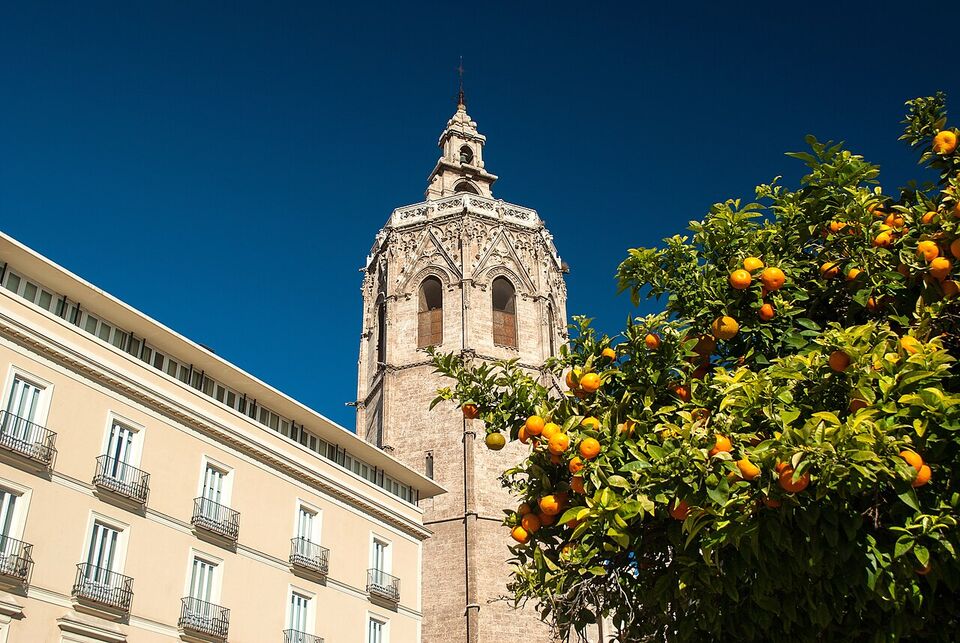
A cathedral that mixes Romanesque, Gothic and Baroque doors around a Gothic core. A side chapel holds an agate chalice that the church venerates as the Holy Grail. Climb the 207 steps of the octagonal bell tower, the Miguelete (Micalet in Valencian), for the best view over the old town.
Water Tribunal
Every Thursday at noon, farmers' representatives sit outside the cathedral's Apostles' Door to settle irrigation disputes over the huerta (market gardens), in Valencian and in public, as they have for centuries. It takes a few minutes and is on UNESCO's intangible heritage list. Arrive at 11:45 a.m.
La Lonja de la Seda
The 15th-century silk exchange, a UNESCO World Heritage site, with a hall of twisted stone columns that rise like palm trees. Entry costs a few euros; many municipal monuments are free on Sundays and holidays.
Mercado Central
One of Europe's largest fresh-food markets, under a 1920s iron-and-glass modernist dome, with hundreds of stalls. Open mornings Monday to Saturday; go before noon, and closed Sundays.
Torres de Serranos and Torres de Quart
Two massive towers of the medieval walls. Climb either for views; the Quart towers still show cannonball marks from the Napoleonic siege.
National Ceramics Museum
Spanish ceramics, from Moorish lusterware to Picasso, inside a palace with a wildly carved alabaster doorway.
Also look for the round Plaza Redonda, the Plaza de la Virgen at sunset, the Barrio del Carmen with its street art and bars, and the modernist North Station (Estació del Nord) with its orange-and-mosaic tiles next to the bullring. The Mercado de Colón, another modernist market, now holds cafés and a horchata bar in the smart Eixample district.
Save money
The Valencia Tourist Card starts at €17 (about $19), or €15.30 (about $17) online, for 24 hours. It covers buses, metro (including the airport stop), tram and commuter trains in the central zones, free entry to 14 museums and monuments and discounts elsewhere. It pays off on an arrival day when you take the metro from the airport and see several sights; check what is included at visitvalencia.com.
The Turia gardens and the City of Arts and Sciences
In 1957 the Turia river flooded the city and killed dozens of people. Valencia responded by digging a new channel south of town, the Plan Sur, and the old riverbed was left empty. After residents campaigned against plans for a highway, it became the Jardí del Túria: about 5.5 miles (9 km) of gardens, running tracks, sports fields, playgrounds and bike paths, crossed by the old stone bridges. It is the city's backyard, and the best way to move from one end of Valencia to the other.
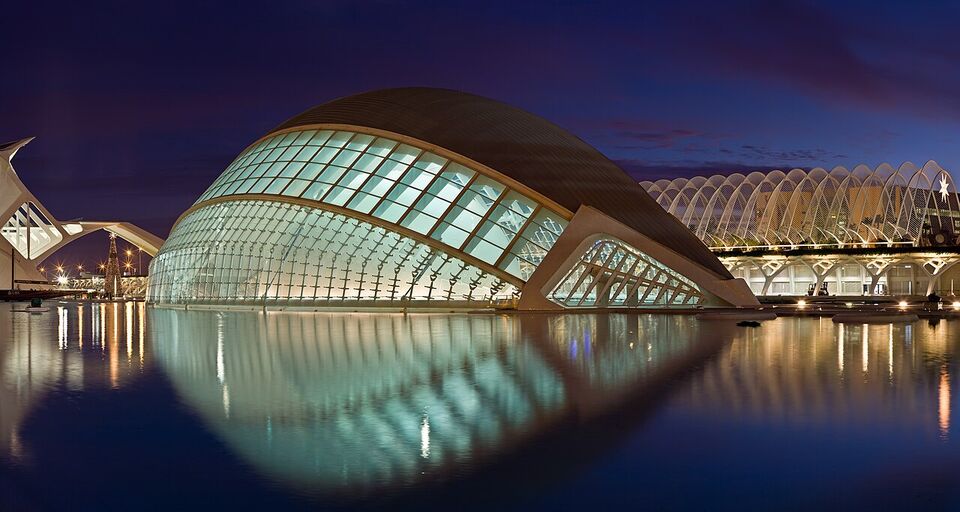
At the eastern end of the gardens stands the City of Arts and Sciences (Ciutat de les Arts i les Ciències), a group of white buildings mostly by Calatrava, set in shallow pools.
- Oceanogràfic: Europe's largest aquarium, designed by Félix Candela, with sharks, beluga whales and a dolphin show. Plan 3 to 4 hours. Adult tickets run about €36 to €43 (about $40 to $48) depending on the date, and children 4 to 12 and over-65s about €27 to €32 (about $30 to $36).
- Museu de les Ciències: a hands-on science museum in a building like a whale's skeleton; good for kids.
- Hemisfèric: an eye-shaped planetarium and giant-screen cinema.
- Palau de les Arts: the opera house, with a full season; check the program.
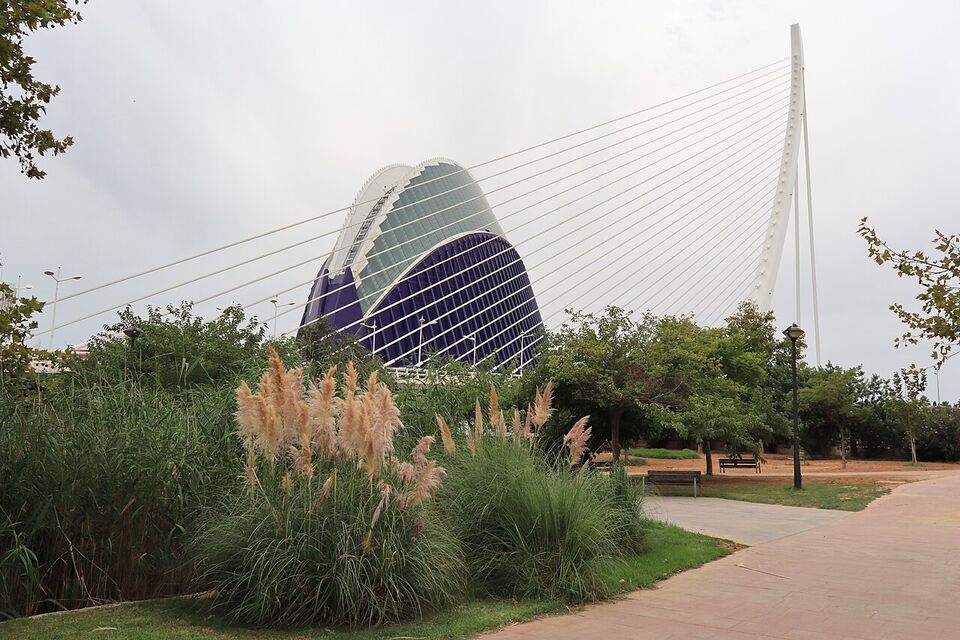
- L'Umbracle (a palm-lined walkway, free) and L'Àgora, now the CaixaForum cultural center.
Combined tickets with the Oceanogràfic, the Science Museum and the Hemisfèric run about €44 to €51 (about $49 to $57) for adults, depending on the date. Buy at entradas.oceanografic.org or the official City of Arts and Sciences site; prices vary by season and day, so check your date. Walking around the buildings outside is free and looks best at dusk when they are lit.
Insider tip
Rent a bike or use Valenbisi, the city bike share, and ride the Turia from the Bioparc zoo at the west end to the City of Arts and Sciences at the east, about 30 minutes of flat, car-free riding. Stop at the Gulliver playground, a giant figure kids climb all over.
Beaches and El Cabanyal
Valencia's city beaches, Las Arenas and La Malvarrosa, are wide stretches of fine golden sand with a long promenade, showers, lifeguards in season and restaurants along the front. They are 20 to 30 minutes from the center by tram or bus. North of the city, Patacona is quieter; south, the beaches of El Saler and La Devesa sit in the Albufera natural park, backed by dunes and pine forest.
Behind the beach, El Cabanyal is the old fishermen's quarter, a grid of low houses with tiled facades in green, blue and yellow. It was nearly bulldozed for a road extension in the 2000s, survived, and is now one of the city's most interesting neighborhoods for bars and casual restaurants. Its Holy Week, the Semana Santa Marinera, has processions by the sea.
The sea warms to near 80°F (26 to 27°C) by late August and stays swimmable into October. Swimming season is roughly June to October.
Paella and Valencian food
Paella comes from the rice fields around the Albufera lagoon just south of the city. The original paella valenciana has no seafood: rice cooked in a wide, shallow pan with chicken, rabbit, flat green beans, large white beans called garrofó, saffron, olive oil and sometimes snails or rosemary. Cooked well, it forms a toasted crust on the bottom, the socarrat, which locals scrape up last.
- Arroz a banda: rice cooked in fish stock, served with aioli.
- Arroz negro: black rice with squid ink and cuttlefish.
- Arroz al horno: oven-baked rice with pork, chickpeas, blood sausage and potato, an inland dish.
- Fideuà: like paella, made with short noodles instead of rice and seafood; from Gandia, on the coast south of Valencia.
- All i pebre: eel stew with garlic and paprika, the specialty of El Palmar in the Albufera.
Different from home
Paella is a lunch dish here, eaten around 2 or 3 p.m., often on Sundays with family. Restaurants usually make it for a minimum of two people and need 20 to 30 minutes to cook it fresh. A place that serves it at 8 p.m. from a photo menu, bright yellow and within minutes, is probably reheating it. Book a good rice restaurant for lunch and order the paella when you sit down.
The best-known paella houses are the old restaurants along the Malvarrosa beach promenade, some open since the 1890s, and the rice restaurants of El Palmar in the Albufera. Expect $$–$$$ prices for paella, which is priced per person. A weekday menú del día elsewhere in the city often includes a rice dish and costs much less.
Horchata and other local habits
Horchata (orxata in Valencian) is a cold, sweet, milky drink made from tiger nuts (chufas) grown in the village of Alboraya just north of the city. Drink it with fartons, long soft pastries for dipping, at one of the old horchaterías in the center. Valencians also take their esmorzaret (mid-morning sandwich break) seriously, and the local cocktail, agua de Valencia, mixes cava, orange juice, vodka and gin; it is stronger than it tastes. For more, see Spanish food and Spanish wine.
The Albufera
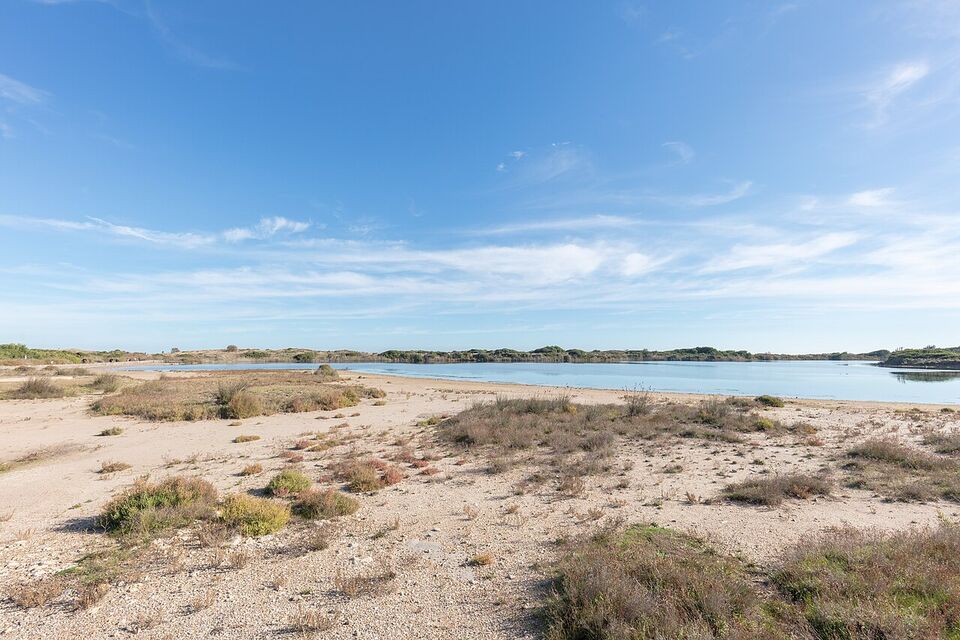
The Albufera is a large freshwater lagoon about 6 miles (10 km) south of the city, surrounded by rice fields, inside a natural park that also covers the Devesa forest and beaches. In winter the paddies are flooded and full of birds; in summer they turn bright green, and the rice is harvested in September.
The village of El Palmar is the place to go: take a short boat trip on the lagoon (best at sunset), then eat rice or all i pebre in one of its restaurants. Metropolitan buses run from the center, or you can cycle along the coast. Tour companies offer half-day trips with a boat ride and paella, a good option without a car.
Insider tip
Time your visit for the last two hours of daylight. The boat trips at sunset are the classic Valencia postcard, and the restaurants in El Palmar start serving lunch around 2 p.m., so a late lunch, a walk and an evening boat ride make an easy afternoon.
Las Fallas and other festivals
Las Fallas is Valencia's great festival and one of the wildest in Spain, on UNESCO's list of intangible cultural heritage since 2016. Each neighborhood association builds a falla: a huge satirical sculpture of wood, cardboard and polystyrene, some several stories tall. Hundreds of them go up in the streets, and on the last night almost all are burned.
- March 1–19: the mascletà, a deafening daytime firecracker show in Plaza del Ayuntamiento at 2 p.m. every day. Arrive early and protect your ears.
- March 15–16: the plantà, when the fallas are set up overnight.
- March 17–18: the Flower Offering, when thousands of falleras in traditional dress carry flowers to build a giant image of the Virgin in Plaza de la Virgen.
- Night of March 18: the Nit del Foc fireworks.
- Night of March 19: the cremà, when the fallas are burned, ending with the one in Plaza del Ayuntamiento around 1 a.m.
The dates are the same every year, so 2027 runs on the same schedule. During Fallas, hotel prices rise sharply, many streets close, firecrackers go off at all hours and the city is loud day and night. It is unforgettable if you like crowds and noise, and miserable if you do not. Book rooms many months ahead.
Other dates: Holy Week (March 21–28, 2027); the July fair with its Battle of Flowers; and La Tomatina in Buñol, about 25 miles (40 km) west, the tomato fight held on the last Wednesday of August (August 25, 2027), which requires a ticket. See Spanish festivals.
The 2024 floods and the recovery
On October 29, 2024, a slow-moving storm system, known in Spain as a DANA (an isolated low-pressure system at high altitude), dropped extraordinary rain on the hills west of Valencia. Flash floods swept through towns just south of the city, including Paiporta, Picanya, Catarroja, Massanassa, Alfafar, Benetússer and Sedaví, and inland towns such as Chiva and Utiel. More than 220 people died in the province, making it one of the deadliest floods in modern Spanish history.
Valencia's historic center and the main tourist areas were largely spared, in part because the Plan Sur channel built after 1957 carried the Turia's water around the city. The worst damage was in the towns of L'Horta Sud, a few miles away.
Recovery has been long. The flooded metro lines 1, 2 and 7 returned to full service in June 2025. In the hardest-hit towns, bridges and streets have been rebuilt, but local officials expect full reconstruction to take most of a decade. For visitors, the city is fully open. If you want to help, spend money in the affected towns: Catarroja's small port is a gateway to the Albufera, and the area's restaurants and shops welcome visitors.
Watch out
Autumn is the season for torrential rain on Spain's Mediterranean coast, roughly September to November. If the national weather agency, AEMET, issues an orange or red warning, or your phone receives an ES-Alert emergency message (a loud alert, usually in Spanish and sometimes also in English or Valencian), follow it: stay away from ravines, riverbeds and underground garages, and do not drive through flooded roads. See our safety guide.
Where to stay
Ciutat Vella
Walk to the cathedral, the market and the Turia. El Carmen is the liveliest part and noisy on weekend nights; the area around the cathedral and La Seu is calmer.
Ruzafa (Russafa)
The city's food and nightlife neighborhood, with a market, cafés and restaurants, a short walk from the train stations.
Eixample and Pla del Real
Elegant streets near the Mercado de Colón and the Turia, quieter at night, with good business hotels.
The beach
Best for a summer stay with kids. Beachfront hotels are 20 to 30 minutes from the old town by tram.
El Saler
The Parador de El Saler sits between dunes and pine forest with a golf course and its own beach, about 20 minutes' drive from the city. Best with a car.
Valencia has sharply restricted new tourist apartments since 2024, and the old town is the most regulated. Book only licensed rentals, which show a registration number in the listing; see where to stay in Spain.
Getting there and getting around
By train
High-speed trains from Madrid take about 1 hr 40 min to 2 hr, with Renfe (AVE and low-cost Avlo), Iryo and Ouigo competing on the route, so early fares are low. Book at renfe.com, iryo.eu or ouigo.com. Renfe's Euromed and other coastal trains reach Barcelona in about 3 hr to 3 hr 30 min, and trains also run south to Alicante.
Valencia has two main stations about a 10 to 15-minute walk apart: Joaquín Sorolla for most high-speed trains, and the Estació del Nord, next to the bullring, for commuter and many regional and long-distance trains. Check which one your ticket uses.
By air
Valencia airport (VLC) is about 5 miles (8 km) west of the center, with many flights from European cities. There are no regular US nonstops, so most Americans connect through Madrid or another European hub, or come by train from Madrid or Barcelona. See flights to Spain. Metro lines 3 and 5 run from the airport to the center (Xàtiva and Colón stations) in about 20 to 25 minutes.
In the city
The center is walkable, and the city is flat, with a large network of bike lanes. The metro and tram reach the airport, the beach and the port; EMT city buses cover the rest. Valenbisi bike-share stations are everywhere, but you need to sign up for a weekly or longer pass first. Do not drive in the old town; parking is scarce and many streets are restricted. See driving in Spain if you plan day trips by car.
The cruise port is east of the center, near the beach; shuttle buses and taxis are the easiest way into town. See cruises.
Day trips and sample days
Day trips
Sagunto
A hilltop fortress over half a mile long, with Iberian, Roman and Moorish layers, and a restored Roman theater below.
Xàtiva
A double castle on a ridge above a handsome old town, home of the Borgia family, which gave the Church two popes. Bring water for the climb or take a taxi up.
Peñíscola
A castle on a rocky headland, once the seat of a rival pope, with beaches on both sides.
Requena and Utiel
Inland vineyards known for the Bobal grape, with old wine cellars dug under Requena's medieval quarter. Utiel was hit by the 2024 floods; local wineries welcome visitors.
Cuenca
A cliff-edge town in Castilla-La Mancha with houses overhanging a gorge, on the high-speed line to Madrid. The high-speed station is outside town, so allow time for the bus.
Sample days
- Day 1
Old town
Mercado Central at 9 a.m., the Lonja across the street, the cathedral and the Miguelete climb, then the Water Tribunal if it is Thursday. Paella lunch, a siesta, and an evening in El Carmen.
- Day 2
The Turia and the City of Arts and Sciences
Bike the Turia from the Torres de Serranos to the City of Arts and Sciences. Spend the afternoon at the Oceanogràfic, then take the tram to the beach for dinner in El Cabanyal.
- Day 3
The Albufera
A morning at the beach or in Ruzafa, a late rice lunch in El Palmar, and a sunset boat ride on the lagoon.
- Day 4
Out of town
Sagunto or Xàtiva by commuter train, or Cuenca by high-speed train, and back for a horchata with fartons.
When to go
Valencia has a mild Mediterranean climate. January days average around 62°F (17°C) with nights near 45°F (7°C), and many winter days are sunny. Summer is hot and humid, around 88°F (31°C) in August, with warm nights. Spring and early fall are ideal, but September to November brings the risk of sudden heavy rain.
- March: Las Fallas (March 15–19, with firecracker shows from March 1). Expensive and crowded.
- April–June: the best all-round months, with beach weather from late May.
- July–August: beach season and the July fair; many locals leave in August and some restaurants close.
- September–October: warm sea, rice harvest, fewer people; watch the weather warnings.
- November–February: quiet, cheap and mild; the December Valencia Marathon is one of Europe's biggest. See Spain in November.
Safety and practical tips
The US State Department rates Spain at Level 2, "Exercise increased caution," because of terrorism and civil unrest. Valencia is a relaxed city, and the realistic risks are pickpockets in the Mercado Central, the Plaza de la Virgen and on the beach, and bags lifted from café chairs. Watch for bikes and scooters in the many bike lanes, which often run on sidewalks. During Fallas, firecrackers are everywhere; keep small children close and bring earplugs.
- Tap water is safe, but many locals prefer bottled for taste.
- Lunch is 2 to 4 p.m., dinner from 9 p.m.; the Mercado Central closes in the afternoon and on Sundays.
- Tipping is small: round up or leave 5 to 10 percent at a good restaurant. See money in Spain.
- Learn bon dia (good morning) and gràcies (thank you) in Valencian; see Spanish phrases.
- Emergency number: 112. See health for heat and sun.
What trips people up
- Eating paella at dinner from a tourist menu. Book a proper rice restaurant for lunch.
- Arriving at the wrong station. Joaquín Sorolla and the Estació del Nord are separate.
- Booking Fallas late. Rooms disappear months ahead and prices rise steeply.
- Visiting the Mercado Central in the afternoon. It is a morning market.
- Ignoring autumn weather warnings. Take orange and red alerts seriously.
- Skipping the city for the beach. Valencia rewards two or three full days.
Add it to a route in the trip builder, or ask us to plan the hotels, trains and guides for you.