Overview
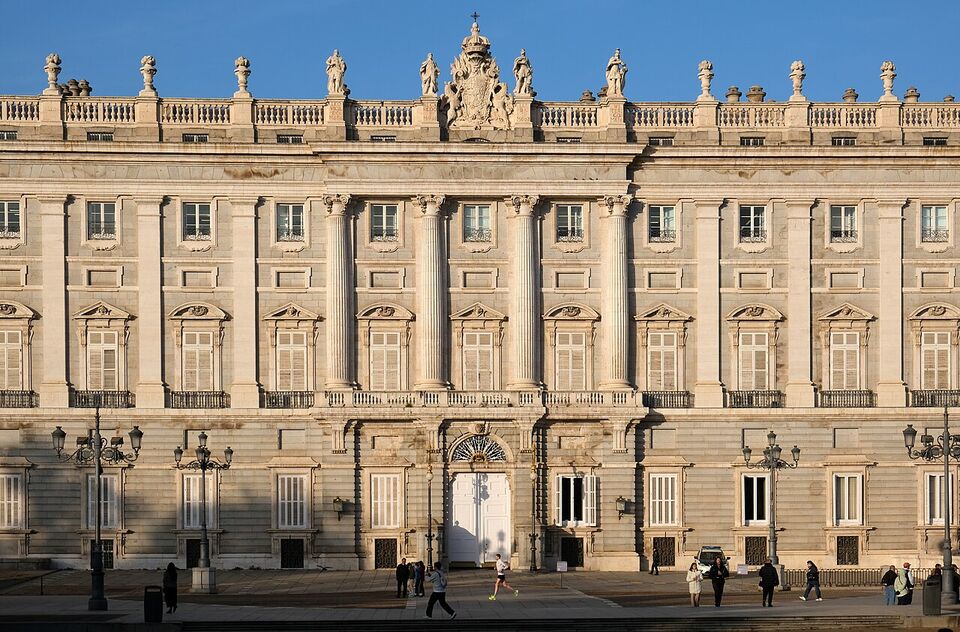
Madrid's sights cluster in two places. The Paseo del Prado, a 1-mile (1.6 km) boulevard on the east side of the center, holds the "Golden Triangle of Art": the Prado, the Thyssen-Bornemisza and the Reina Sofía, with the Retiro park behind them. On the west side, the Royal Palace, the cathedral and the new Gallery of Royal Collections sit on the bluff above the Manzanares river, a 20-minute walk away past the Plaza Mayor.
The Prado alone justifies the trip for many visitors: Velázquez, Goya and El Greco in depth, plus Bosch, Titian and Rubens collected by Spanish kings when Spain ruled half of Europe. The Reina Sofía carries the story into the 20th century with Picasso's Guernica. The Thyssen fills in what the other two lack, from early Italian panels to American painters such as Edward Hopper.
This page covers what to see, what it costs and how to time your visits. For the city's neighborhoods, hotels and transit, see Madrid. For eating between museums, see Madrid food, and for the bigger story of Spanish art from Roman mosaics to Dalí, see art and architecture.
Different from home
Many free-entry slots you will read about apply to someone else. The Royal Palace and other Patrimonio Nacional sites give free afternoons only to residents of the EU and Latin America, and many museum discounts go to students in the Spanish system. Americans pay full price outside the general free hours listed on this page.
Prices and hours at a glance
| Sight | Ticket | Open | Free entry |
|---|---|---|---|
| Museo del Prado | €15 (about $17); €7.50 over 65 | Mon–Sat 10 am–8 pm; Sun and holidays 10 am–7 pm | Mon–Sat 6–8 pm; Sun and holidays 5–7 pm |
| Museo Reina Sofía | €12 (about $13); €18 for two visits in a year | Mon and Wed–Sat 10 am–9 pm; Sun 10 am–2:30 pm; closed Tue | Mon and Wed–Sat 7–9 pm; Sun 12:30–2:30 pm |
| Museo Thyssen-Bornemisza | €14 (about $16), collection and exhibitions | Generally 10 am–7 pm; Monday hours shorter | Permanent collection Mon noon–4 pm |
| Royal Palace | €18 (about $20); €9 reduced | Daily, shorter hours in winter; closes for state events | Only for EU and Latin American residents |
| Gallery of Royal Collections | €14 (about $16); €24 (about $27) with the palace | Daily except some holidays | Only for EU and Latin American residents |
| Paseo del Arte card | €32.80 (about $37) | Valid 12 months | One visit each to the Prado, Reina Sofía and Thyssen |
Hours change on holidays: the Prado closes on January 1, May 1 and December 25, and closes at 2 pm on January 6, December 24 and December 31. The Reina Sofía closes on January 1 and 6, May 1, May 15, November 9 (Madrid's local holidays can shift these) and December 24, 25 and 31, and is free for everyone on April 18, May 18 (International Museum Day), October 12 and December 6. Prices are the 2026 rates; check each official site before you go, since Spanish museums tend to adjust fares in January.
Save money
The three museums bought separately cost €41 (about $46). The Paseo del Arte card saves you €8.20 (about $9) and covers temporary exhibitions. Better still, plan one museum around its free hours: Reina Sofía's 7 to 9 pm window is long enough to see Guernica and the main Spanish collection without rushing.
The Prado
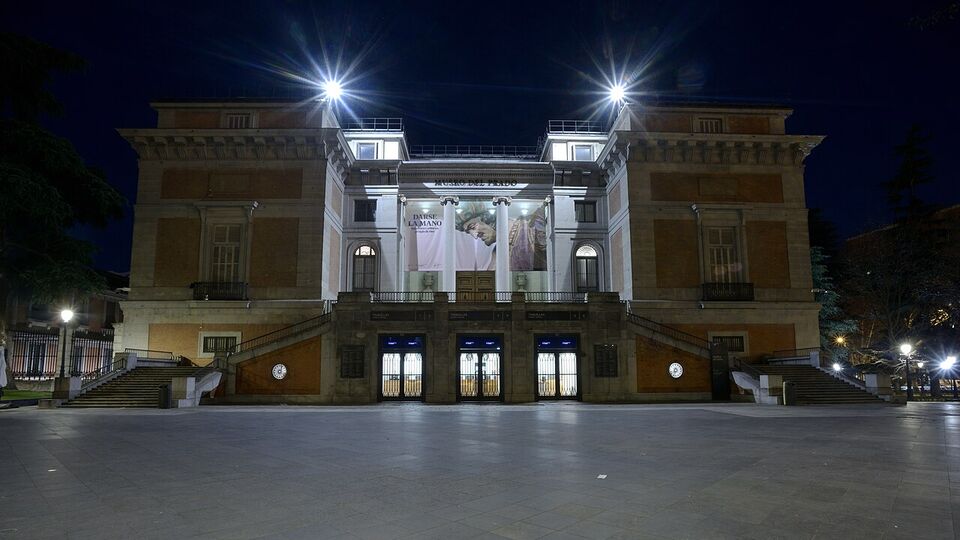
The Museo del Prado opened in 1819 to show the royal collections and is still the single best place to understand Spanish painting. It is big, but the core of a first visit fits into two and a half to three hours if you go with a plan.
What to see
- Velázquez. Las Meninas (1656), the most discussed painting in Spain, hangs in its own central room with his royal portraits, The Surrender of Breda and The Spinners nearby.
- Goya. The Second of May 1808 and The Third of May 1808, the firing-squad painting that shaped every war image after it; the two Majas, one clothed, one nude; and the Black Paintings on the ground floor, including Saturn Devouring His Son, which Goya painted on the walls of his house late in life.
- El Greco. The Nobleman with His Hand on His Chest and his tall, flickering religious canvases.
- Bosch. The Garden of Earthly Delights, a triptych you could stare at for an hour; get there early, because a crowd forms by late morning.
- Flemish and Italian masters. Rogier van der Weyden's Descent from the Cross, Bruegel's Triumph of Death, Fra Angelico's Annunciation, Titian's equestrian Charles V, Rubens's Three Graces and Dürer's self-portrait.
How to visit
- Buy a timed ticket on the Prado's official site. You choose a date and entry time; the ticket covers the collection and temporary exhibitions. Entry ends 30 minutes before closing.
- An audio guide costs €5 (about $5.60) extra. The Prado's free app and the wall texts are good; for real depth, a licensed private guide for two hours is the best use of money if art is your priority.
- Photography is not allowed in the galleries. Large bags and backpacks go to the free cloakroom.
- The galleries are on three levels and the layout is not intuitive. Pick up a map, and head first to the room you care about most before the tour groups arrive around 11 am.
Insider tip
The free last two hours (6 to 8 pm Monday to Saturday, 5 to 7 pm Sundays and holidays) draw a line that can stretch along the building, and free tickets are issued at the ticket office subject to capacity. Join it 30 to 45 minutes before the free period starts, or arrive about an hour in, when the line has cleared. Two hours is enough for Velázquez, Goya and Bosch if you go straight to them.
Reina Sofía
Spain's national museum of modern and contemporary art fills an 18th-century hospital opposite Atocha station (the Sabatini building, with glass elevators on the outside) and a red-roofed extension by Jean Nouvel. If you bought online, use the Nouvel entrance on the Ronda de Atocha.
- Guernica. Picasso painted it in 1937 after German and Italian planes bombed the Basque town of Gernika for Franco's side in the Civil War. It hangs on the second floor of the Sabatini building, surrounded by his studies and photographs of the work in progress. It is enormous, about 11 by 25 feet (3.5 by 7.8 m), and far more affecting in person than in reproductions. Photos of it are not allowed.
- Dalí, Miró and the Spanish avant-garde. Strong rooms on Dalí, Joan Miró, Juan Gris, Maruja Mallo and the Surrealists, plus films by Luis Buñuel.
- Retiro outposts. The museum also runs two exhibition spaces in the Retiro, both free: the Palacio de Velázquez and the glass Palacio de Cristal. The Palacio de Cristal is temporarily closed for architectural work, with an art installation covering the building that you can still see from outside.
Plan 90 minutes for Guernica and the 1930s rooms, longer if you like contemporary art. The museum is closed on Tuesdays, which catches many visitors out.
The Thyssen-Bornemisza
The Thyssen started as one of the world's great private collections, bought by the Spanish state in 1993, and it walks you chronologically through Western painting from the 13th century to the late 20th, top floor to bottom. It is the most manageable of the three and the easiest to enjoy in two hours.
- Early Italian and Flemish panels, Van Eyck, Dürer, Holbein, Caravaggio and Rembrandt on the top floor.
- Impressionists and Post-Impressionists (Monet, Degas, Van Gogh, Gauguin), German Expressionists, and the best American painting in Spain: Hopper, O'Keeffe, Pollock, Rothko and 19th-century landscapes of the American West.
- Big temporary exhibitions. This fall and winter they include The Freudian Universe of Dalí (through January 24, 2027) and a loan show from The Hague's Mauritshuis (through January 10, 2027).
The permanent collection is free on Mondays from noon to 4 pm. On some Saturday evenings the museum opens selected exhibitions free from 9 to 11 pm. Book on the Thyssen's official site.


The Royal Palace and Gallery of Royal Collections
The Palacio Real is the official residence of the Spanish king, though the royal family lives outside town at the Zarzuela palace and uses this one for state ceremonies. Built in the 18th century on the site of a Moorish fortress that later became the Habsburg Alcázar, it has more than 3,000 rooms; the visit covers about two dozen of the grandest.
- Highlights. The main staircase, the Throne Room with its Tiepolo ceiling, the Gasparini Room in silk and stucco, the Royal Chapel, a quartet of Stradivarius instruments, and the Royal Armory across the courtyard, one of the best collections of armor in Europe.
- Tickets. €18 (about $20), reduced €9 for over-65s and some other groups. Buy a timed ticket on the Patrimonio Nacional ticket site. Plan 90 minutes to two hours.
- Closures. The palace closes, sometimes at short notice, for state receptions and official events. Check the calendar on the ticket site the day before.
Gallery of Royal Collections
The Galería de las Colecciones Reales opened in 2023 in a striking granite building set into the slope beside the palace. It shows the art, tapestries, carriages, armor and furniture amassed by Spain's monarchs, including Caravaggio's Salome with the Head of John the Baptist and Velázquez's White Horse. A ticket costs €14 (about $16) alone or €24 (about $27) combined with the palace. Allow 90 minutes, and do it on the same day as the palace with lunch in between.
Changing of the guard
A small guard change takes place at the palace's Puerta del Príncipe on Wednesdays and Saturdays, roughly every half hour from late morning to early afternoon. The larger Solemn Changing of the Guard, with cavalry and band, is usually held at noon on the first Wednesday of the month in the Plaza de la Armería, except in summer and some winter months and on days with official events. Both are free; confirm dates on the Patrimonio Nacional site.
Watch out
Third-party sites sell "skip-the-line" palace tickets at double the official price. The official timed ticket already lets you skip the line. Book on the Patrimonio Nacional site and check that the URL is correct before you pay.
The Retiro
The Parque del Buen Retiro, about 300 acres (120 ha) of gardens, avenues and lawns behind the Prado, began as a royal retreat in the 1630s and opened to the public in the 19th century. On weekends it is Madrid's living room, full of families, runners, buskers and puppet shows.
- The Estanque Grande. The big rectangular lake, watched over by a colonnaded monument to King Alfonso XII. Rowboats rent by the half hour for a few euros; the line is shortest on weekday mornings.
- Palacio de Cristal and Palacio de Velázquez. The 1887 glass and iron pavilion by a pond (currently closed for works, see the Reina Sofía section) and the brick exhibition hall nearby, both free.
- La Rosaleda. The rose garden, at its best from mid-May to June.
- The Fallen Angel. One of the few public statues of Lucifer anywhere, on a fountain in the south of the park.
- Puerta de Alcalá and the Botanical Garden. The neoclassical gate at the park's northwest corner, and the Real Jardín Botánico next to the Prado, an 18th-century garden with a small entry fee.
The park is free and open from early morning until late evening, with longer hours in summer. It closes during high winds and storms, when falling branches are a risk.
Old Madrid and the free sights
Between the museums and the palace, the oldest part of the city is best seen on foot. A loop from Sol to the Plaza Mayor, the palace, the cathedral and back through La Latina takes about two hours with stops.
- Plaza Mayor. The arcaded main square from the early 17th century, rebuilt several times after fires. It is the place for a first coffee, though cafés on the square charge a premium. At Christmas it fills with a market of nativity figures and decorations.
- Mercado de San Miguel. A 1916 iron-and-glass market just west of the Plaza Mayor, now a gourmet tapas hall. Lovely building, high prices; see Madrid food for markets where locals shop.
- Almudena Cathedral. Madrid only got its cathedral in 1993, when Pope John Paul II consecrated it. The neo-Gothic interior has a colorful modern ceiling. Entry to the church is free with a suggested donation; the museum and dome terrace charge a fee.
- Monasterio de las Descalzas Reales. A convent of cloistered nuns founded by royal women in the 16th century, packed with tapestries after Rubens designs. Visits are guided only, in small groups, and sell out; book on the Patrimonio Nacional site.
- San Antonio de la Florida. A small chapel near Príncipe Pío with Goya's ceiling frescoes and his tomb. Free, and rarely crowded.
- Temple of Debod. A 2nd-century BC Egyptian temple, given to Spain in 1968 for help in saving monuments from the Aswan Dam, and rebuilt in a park west of Plaza de España. The park is the city's favorite sunset spot.
- El Rastro. The Sunday and holiday morning flea market along the Ribera de Curtidores in La Latina, from early morning to about 3 pm. Fun, crowded and a pickpocket favorite.
More museums
Madrid has dozens of smaller museums, and several are excellent on a second visit or a hot afternoon.
Museo Arqueológico Nacional
Spain from prehistory to the Middle Ages: the Iberian Lady of Elche, Roman mosaics, Visigothic votive crowns and Moorish art. Clear, modern displays. Free on Saturday afternoons from 2 pm and on Sundays.
Real Academia de Bellas Artes de San Fernando
The academy where Goya taught, with his paintings, Zurbarán's monks and works by Velázquez and Rubens in rooms most tourists walk past. Usually closed on Mondays.
Museo Lázaro Galdiano
A collector's mansion with Goya, El Greco, Bosch, enamels and jewelry, in a quiet garden setting.
Museo Cerralbo and Museo del Romanticismo
Two 19th-century homes preserved with their furniture and paintings. Cerralbo's ballroom is spectacular. Both are state museums with free hours (Cerralbo on Thursday evenings and Sundays, Romanticismo on Saturday afternoons and Sundays).
Museo de América
Spain's collection from the Americas, including one of the four surviving Maya codices. A useful counterweight to the royal story told in the center.
CaixaForum Madrid
Changing exhibitions in a former power station, with a vertical garden covering the wall outside. Good for a rainy afternoon.
At the Museo Sorolla in Chamberí, the painter's historic house and garden on Paseo del General Martínez Campos are temporarily closed for restoration, but the museum's new extension building at Calle Zurbano 68 has opened to visitors; check the official site for its hours and for the house's reopening. For the Santiago Bernabéu stadium tour, see football.
Free hours, all in one place
| Place | Free for everyone | Tips |
|---|---|---|
| Prado | Mon–Sat 6–8 pm; Sun and holidays 5–7 pm | Ticket office only, subject to capacity; collection only |
| Reina Sofía | Mon and Wed–Sat 7–9 pm; Sun 12:30–2:30 pm | Book a free ticket online; individuals only |
| Thyssen | Mon noon–4 pm, permanent collection | Exhibitions still charge |
| Arqueológico, Romanticismo, Cerralbo, América | Saturday afternoons and Sundays (Cerralbo and América also Thursday evenings) | State museums; check each site's exact hours |
| Retiro, Temple of Debod park, San Antonio de la Florida, Almudena (church) | Always | Check chapel hours; most close on Mondays |
| Royal Palace, Gallery of Royal Collections, Descalzas Reales | No general free hours | Free slots are for EU and Latin American residents only |
How to plan the days
The biggest mistake is cramming two big museums into one day. Most people hit a wall after three hours of paintings. Do one museum in the morning, a long lunch, and something outdoors or lighter in the afternoon.
- Day 1
The Prado and the Retiro
Prado at 10 am, straight to Velázquez and Goya, then Bosch. Lunch in the Barrio de las Letras. An afternoon in the Retiro, then the Puerta de Alcalá and Cibeles at dusk.
- Day 2
Royal Madrid
Royal Palace at opening, then the Gallery of Royal Collections next door. Lunch near the Plaza de Oriente. Walk the cathedral, Plaza de la Villa and Plaza Mayor, and finish at the Temple of Debod for sunset.
- Day 3
Thyssen and Reina Sofía
Thyssen in the morning (or Monday noon for free). Lunch in Lavapiés. Rest, then the Reina Sofía in its free evening window (not Tuesday) for Guernica.
Insider tip
Mondays are a good museum day in Madrid, a pattern that reverses many European cities: the Prado, Reina Sofía, Thyssen and Royal Palace all open. Tuesday is the day to avoid the Reina Sofía, and many smaller museums close on Monday.
Going with kids
Under-18s get into the Prado free, and the Retiro rowboats, the Royal Armory and the Temple of Debod tend to hold children's attention better than long galleries. Keep museum visits under two hours and build in a churros break; see Spain by interest for more family ideas.
Add it to a route in the trip builder, or ask us to plan the hotels, trains and guides for you.